Honors and Awards
The reviews for The Devil and Daniel Webster were mixed. Even those critics who found it very well made were hard put to describe its mixture of drama and comedy, reality and fantasy. The film was also not a box office success. It was estimated to be anywhere between $35,000 and $53,000 in the red after its initial run, in large part because of the great costs necessitated by re-shooting Daniel's scenes after Thomas Mitchell's accident. Subsequent revivals and reissues have made it something of a cult hit.
Bernard Herrmann won his only Academy Award for the score for The Devil and Daniel Webster, competing against himself for his score for Citizen Kane (1941).
Walter Huston was nominated for an Academy Award for Best Actor but lost to Gary Cooper in Sergeant York (1941).
The Critics' Corner: THE DEVIL AND DANIEL WEBSTER
"Out of that charming folk story, 'The Devil and Daniel Webster' by Stephen Vincent Benet, William Dieterle and a corps of associates have drawn their inspiration for a pleasantly provocative and slyly humorous film entitled All That Money Can Buy.... By all the signs and portents, it should be one of the best pictures of the year, for it has virtually everything in the way of cast and story that RKO could afford; it transcends the ordinary confines of the realistic film and climbs into the realm of free-thought fantasy, which should be most congenial to the screen. And it treats upon a theme of human destiny, which all of us are thinking about these days. ... This, we say, should be the substance of an extraordinary film. It is not. For Mr. Dieterle has failed to bring into related focus before our eyes that which is supposed to be real and that which is supernatural. ... [Benet's story] should never have been elaborated out of proportion to its original modest frame. ... And it should have been directed by someone who understood New England."
Bosley Crowther, New York Times, October 17, 1941
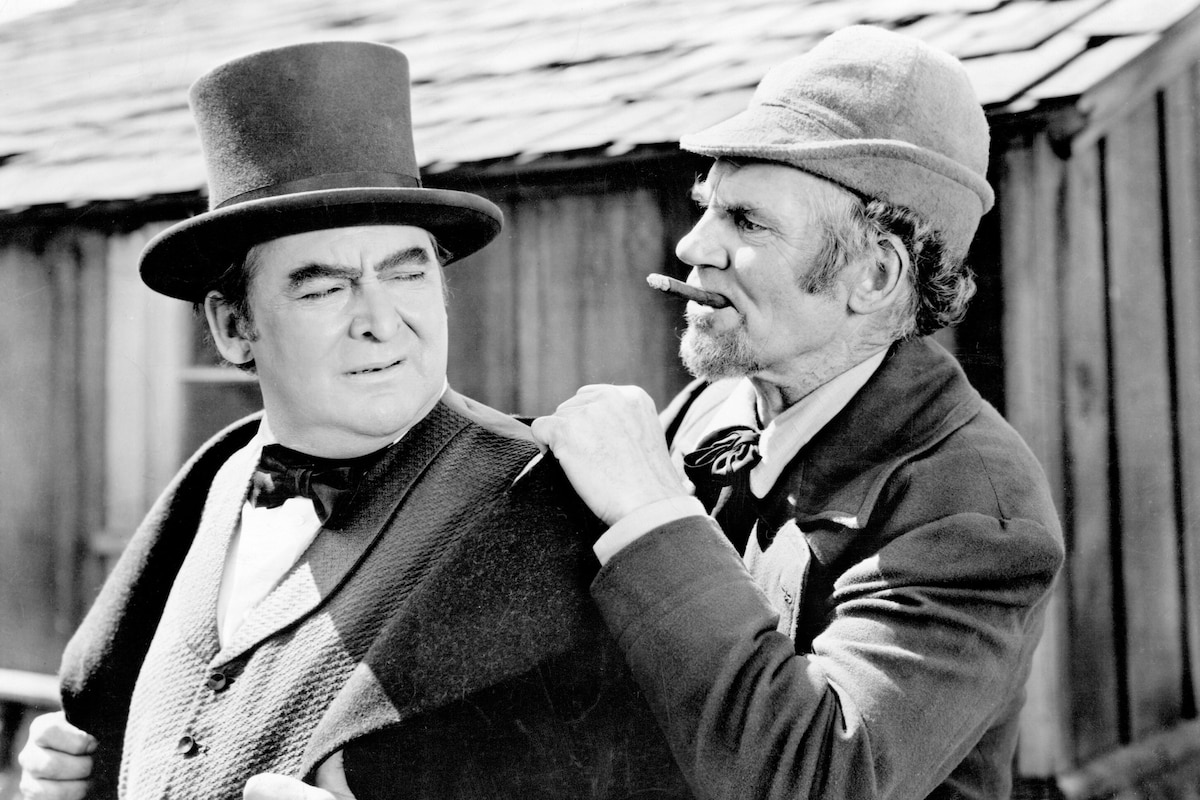
"Walter Huston plays Mr. Scratch with such consummate skill that it will be hard for me ever to think of Mephistopheles again without recalling his roguish and malignant portrayal of the part."
Howard Barnes, New York Herald Tribune, October 1941
"A melodramatic fever dream, a hallucinatory tour de force in which marvelous, evocative effects and extraordinary performances combine onscreen in ways sophisticated and sometimes not. ... And, as he has since Paradise Lost, the Devil gets the best lines."
author Tom Piazza in the booklet accompanying the Criterion Collection DVD release
"The Devil and Daniel Webster is resplendent in multiple levels of cinematic beauty: Dieterle's direction, its dexterousness striking a fine cinematic counterpoint to the movie's very Germanic mood and subject; August's chiaroscuro photography, which made every shadow on the screen memorable; Bernard Herrmann's score, a pastoral wonder that deserved at least as much recognition as Aaron Copland's "Appalachian Spring"; and Robert Wise's editing, which gave The Devil and Daniel Webster edges as finely cut as those of Kane."
film historian Bruce Eder, 1992
"A fascinating version of the Faust legend...it all looks terrific, directed by Dieterle in his best expressionist mood, with superb sets (Van Nest Polglase), score (Bernard Herrmann), camerawork (the great Joe August), and a township that looks as if it came straight out of a Grant Wood painting."
- Tom Milne, TimeOut Film Guide
"A brilliant Germanic Faust set in 19th-century New Hampshire and using historical figures, alienation effects, comedy asides and the whole cinematic box of tricks which Hollywood had just learned again through Citizen Kane. A magic act in more ways than one."
- Halliwell's Film & Video Guide
"The Faustian story is handled with considerable verve by Dieterle, who balances light and shadow, historical verisimilitude and fantasy, with a style that is consistently engaging. The photography (veteran cameraman Joseph August) is first-rate, and the film also boasts a magnificent score...The one real weakness is the central performance of Craig, a less than distinguished actor who tends to go overboard when he tries to emote. But it's a rousing yarn nevertheless.."
- Chris Dashiell, CineSceen.com
"It's a twist on the Faust theme, but Benet isn't Goethe...Trouble for Dieterle (and the audience) starts when Walter Huston appears on the scene via double-exposure and whispers beguiling temptations into the ear of the young husband-farmer...From there to the finish it's mostly symbols and morality play."
- Variety
"The result is one of the most convincing and entertaining socialist films ever made. The result has all the humanity of a Frank Capra picture without the sentimentality. This emphasis is clearly intentional, since Benet's original story and his operatic adaptation all have their emphasis on Stone's trial and defense by Webster; here that's almost an afterthought. The focus is really on the corrupting influence of wealth and power."
- Mark Zimmer, www.digitallyobsessed.com
"...a great picture with a primitive Americana feel, some unforgettable performances and one of Bernard Herrmann's best music scores...The script is literate, but in this long version dawdles a bit in some scenes and takes too long to get the story rolling...we can see why RKO wanted it cut."
- Glenn Erickson, DVD Savant
by Rob Nixon
Critics' Corner - The Devil and Daniel Webster
by Rob Nixon | April 09, 2009
SIGN UP FOR OUR NEWSLETTERS

CONNECT WITH TCM