SYNOPSIS
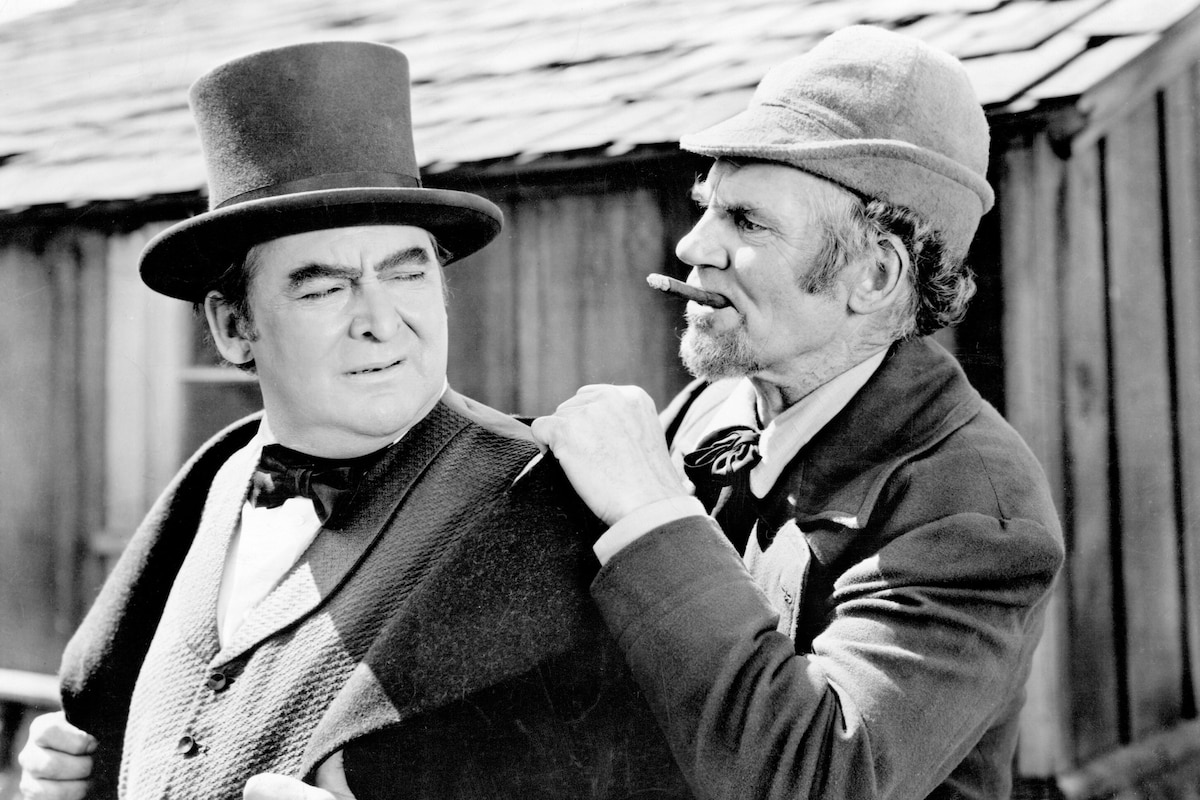
In 1840 New Hampshire, farmer Jabez Stone lives with his young wife and his mother, struggling to make a living. When a series of disasters befalls the poor family, Jabez decides to sell his soul in return for seven years of prosperity. The buyer is the mysterious Mr. Scratch, the incarnation of the Devil who roams the New England countryside looking for desperate people to tempt. Jabez gets his wish, but his good luck changes him. He becomes selfish and cold, betraying his wife with the "serving girl" that Scratch has sent to spy on him and turning his back on his friends and fellow farmers. He begins to see the error of his ways, and when his time is almost up, he begs famed orator-lawyer-politician Daniel Webster to argue his case against Scratch. The Devil agrees to a trial, but only if he can pick the judge and jury (notorious villains dredged up from Hell) and only if Webster will agree to forfeit his soul if he loses.
Director: William Dieterle
Producer: William Dieterle
Screenplay: Dan Totheroh, Stephen Vincent Benet, based on Benet's story
Cinematography: Joseph August
Editing: Robert Wise
Art Direction: Van Nest Polglase
Original Music: Bernard Herrmann
Cast: Edward Arnold (Daniel Webster), Walter Huston (Scratch), James Craig (Jabez Stone), Jane Darwell (Ma Stone), Simone Simon (Belle), Anne Shirley (Mary Stone).
BW-106m. Closed Captioning.
Why THE DEVIL AND DANIEL WEBSTER is Essential
Apart from epics based on the Bible and mythology, it's a rare film that can trace its source material back nearly four centuries. Even more interesting is how The Devil and Daniel Webster married a famous American historical figure to ancient European tales of men who sell their souls for wealth, knowledge, power, or sex. Inspired by the centuries-old variations on the Faust legend, Stephen Vincent Benet's short story was an amusing pastiche on folk tale that became, in the hands of director William Dieterle and his remarkable cast and crew, a fable of community and down-home values.
The film frequently recalls, without being strident or overtly ideological, the leftist, populist sentiments of the 1930s. Rather than liberal vs. conservative, common folk against the powerful, its moral point is that good will and working together for the benefit of all are virtuous, while the elevation of individual desires and personal greed brings about pain, tragedy and doom. Old-time faith, hope, and charity are pitted against the harsh realities of a changing modern world; the simple life of the land collides with business and "progress." It's a lesson that still resounds today and makes this relatively obscure gem of the early 1940s still timely today.
There is much to appreciate in The Devil and Daniel Webster in purely cinematic terms and it's no mere coincidence it was made during the reign of George Schaefer at RKO, a period at the studio of notable artistic flowering. The literate, often witty script, an adaptation of the story by playwright Dan Totheroh and Benet himself, combines high idealism with melodrama and moments of sly humor crossed with supernatural fantasy - an offbeat blend that likely worked against the picture at American box offices in 1941. The cast is uniformly deft in their performances, especially Walter Huston as the devilish Mr. Scratch and Edward Arnold (a replacement for injured Thomas Mitchell) as the upright and folksy Daniel Webster. Huston was Oscar®-nominated for his work, an uncanny performance that manages the tough trick of making Scratch both appealing and unsympathetic; the film is worth watching if only to see why he is considered one of the finest actors of his generation. Even the minor characters are memorable and fully realized through the performances of such players as John Qualen (the doomed Miser Stevens), Jeff Corey (the voice of communal reason), and Jane Darwell (once again as the homespun matriarch, as she was in her award-winning role in The Grapes of Wrath, 1940).
Dieterle and his cinematographer Joseph August (nearing the end of a distinguished 35-year career) present the story through a brilliantly appropriate use of light and shadow, weaving in subtle but effective special effects that heighten the fantasy. And of course, there is Bernard Herrmann's music, only his second motion picture score (after Citizen Kane, 1941) and, oddly, the only one in his long and highly acclaimed career to earn him an Academy Award. Hermann's use of leitmotifs, quotations from old folk songs, and scoring to the rhythms and meanings of the characters' speeches are a major component of the film's hallucinatory atmosphere. Taken all together, these elements create a cinematic tour de force and, in the words of author Tom Piazza in his liner notes for the Criterion DVD release, "a fascinating allegory, filmed on the eve of World War II, of a society gone mad with materialism, a premonition of the opportunities and dangers awaiting the United States as it recovered from the Great Depression."
by Rob Nixon
The Essentials - The Devil and Daniel Webster
by Rob Nixon | April 09, 2009
SIGN UP FOR OUR NEWSLETTERS

CONNECT WITH TCM