SYNOPSIS
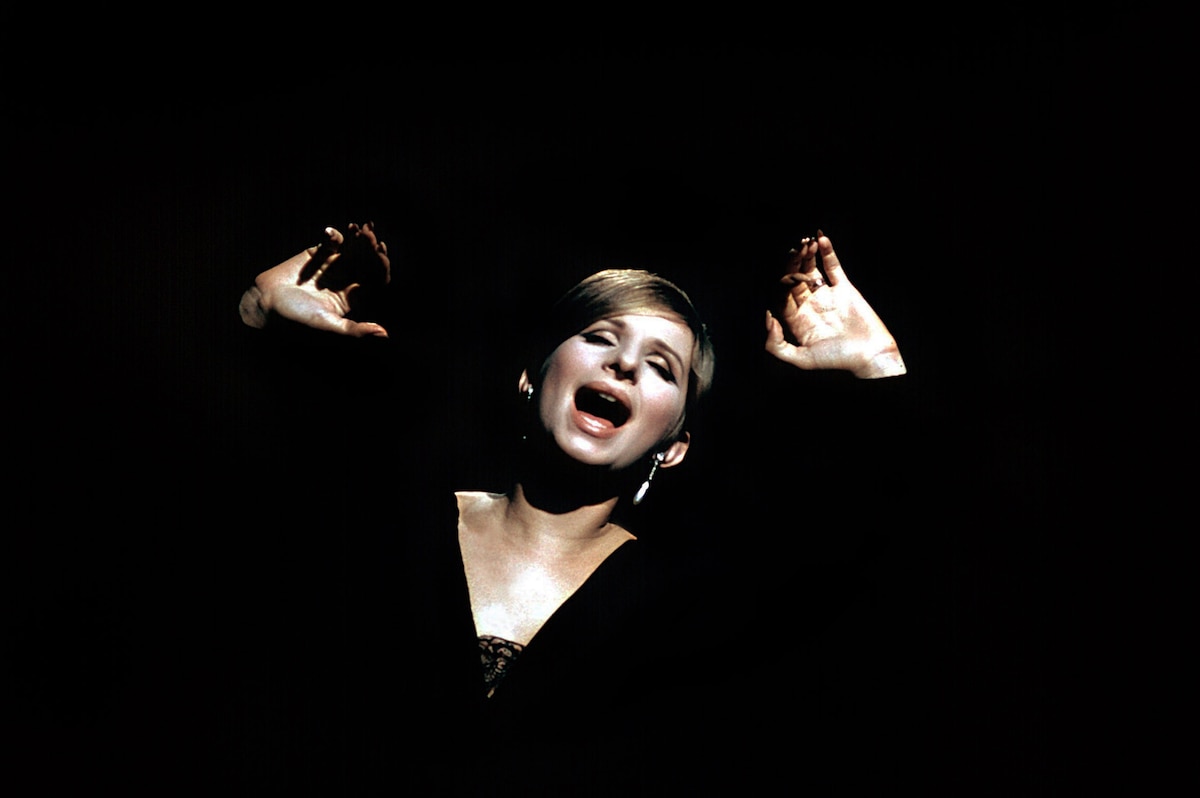
Based on the rags-to-riches life of real-life comedienne Fanny Brice, Funny Girl follows Fanny's life as a young ugly duckling from New York's Lower East Side to a headlining star with the Ziegfeld Follies. Hired into the Follies as a singer, Fanny (Barbra Streisand) causes a sensation with her immense talent and becomes one of Broadway's brightest stars. She meets and marries the man of her dreams, the charming gambler Nicky Arnstein (Omar Sharif). As Fanny's star rises, however, Nicky has trouble dealing with her success. His shady business dealings begin catching up with him and Fanny must face the possibility of life without him.
Director: William Wyler
Musical Numbers Director: Herbert Ross
Assistant Director: Jack Roe, Ray Gosnell
Producer: Ray Stark
Screenplay: Isobel Lennart (Based on the stage musical Funny Girl, music by Jule Styne, lyrics by Bob Merrill, book by Isobel Lennart)
Art Direction: Gene Callahan (Production Designer), Robert Luthardt (Art Director)
Cinematography: Harry Stradling
Editing: Robert Swink, Maury Winetrobe, William Sands
Set Decoration: William Kiernan, Richard M. Rubin
Costume Designer: Irene Sharaff
Cast: Barbra Streisand (Fanny Brice), Omar Sharif (Nick Arnstein), Kay Medford (Rose Brice), Anne Francis (Georgia James), Walter Pidgeon (Florenz Ziegfeld), Lee Allen (Eddie Ryan), Mae Questel (Mrs. Strakosh), Gerald Mohr (Branca), Frank Faylen (Keeney), Mittie Lawrence (Emma), Gertrude Flynn (Mrs. O'Malley), Penny Santon (Mrs. Meeker), John Harmon (Company Manager).
C-154m. Letterboxed. Closed Captioning.
Why FUNNY GIRL is Essential
It's hard to imagine a time when anyone didn't know who Barbra Streisand was, but Funny Girl introduced her to the world with her unforgettable first line, "Hello, gorgeous!" The film marked Streisand's big screen debut in a role that couldn't have been more perfectly suited to her. Funny Girl gave her a chance to showcase her immense talents as a singer, comedienne and a dramatic actress. It couldn't have been a more auspicious feature film debut. Streisand became an instant movie star and won the Academy Award for Best Actress for her funny and heartbreaking performance.
Streisand managed to do what many Broadway greats like Ethel Merman and Mary Martin had not been able to: successfully transition from a career on the musical stage to a career as a leading lady in films. Even though Streisand had caused a sensation with her portrayal of Brice on Broadway, many didn't believe that she had the looks to be a movie star. Streisand, however, proved them all wrong and showed that a girl with an unconventional face could still be a box office draw and beautiful in her own way.
While Funny Girl established Barbra Streisand as a superstar, it also confirmed her reputation as "difficult" that has followed her to this day. As a perfectionist, Streisand often found herself locking horns with producer Ray Stark and other crew members during the making of Funny Girl despite the fact that she was a film neophyte. Love her or hate her, however, there is no denying Streisand's immense talent that comes through in every frame of Funny Girl.
Funny Girl marked the first and only musical ever made by the legendary director William Wyler. Wyler, who had won Academy Awards for directing such films as Mrs. Miniver (1942), The Best Years of Our Lives (1946), and Ben-Hur (1959), was 65 years old and hard of hearing when Funny Girl came his way. Not one to back down from a challenge, Wyler tackled the project head-on and Funny Girl wound up being one of the top grossing box office films of 1968 and garnering eight Academy Award nominations including Best Picture. "If Beethoven could write his Eroica Symphony stone deaf," Wyler said to producer Ray Stark, "then William Wyler can do a musical."
by Andrea Passafiume
The Essentials - Funny Girl
by Andrea Passafiume | December 30, 2008
SIGN UP FOR OUR NEWSLETTERS

CONNECT WITH TCM