Awards and Honors
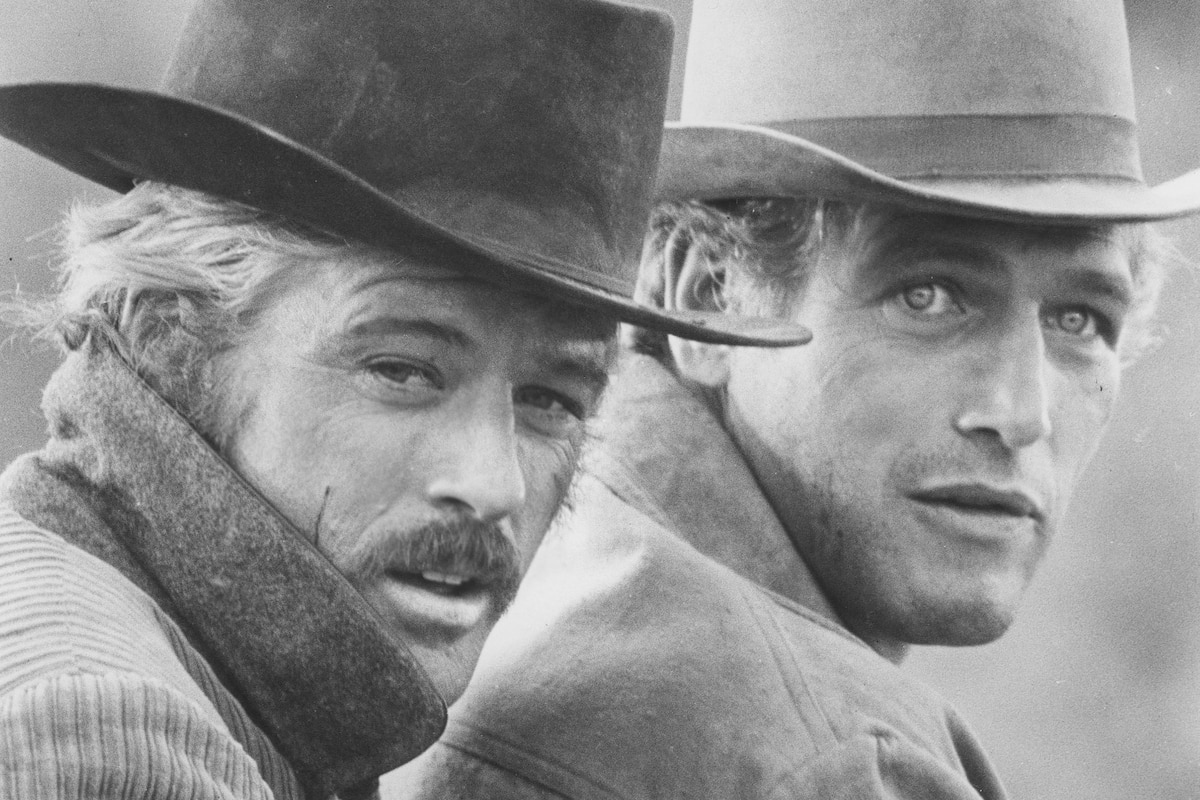
Butch Cassidy and the Sundance Kid was nominated for seven Academy Awards including Best Picture, Best Director, and Best Sound; it won for Original Screenplay, Cinematography, Score and Song ("Raindrops Keep Fallin' on My Head").
Butch Cassidy and the Sundance Kid ranked as the #73 Greatest Movie of All Time by the American Film Institute in 2007, and #7 on its 2008 list of the greatest Westerns.
In 2003, the National Film Preservation Board selected Butch Cassidy and the Sundance Kid as one of the American cinema treasures to be preserved in the Library of Congress National Film Registry.
Butch Cassidy and the Sundance Kid received British Academy Awards for Best Film, Actor (Robert Redford), Actress (Katharine Ross), Cinematography, Direction, Music, Editing, Screenplay, and Soundtrack. Newman was also nominated for Best Actor.
Other awards: The Golden Globe Award to Bacharach for his score plus nominations for Best Motion Picture-Drama, and Screenplay, and Song
The Writers Guild of America gave William Goldman its award for Best Drama Written Directly for the Screen, and the Directors Guild of America nominated Hill for his work.
Bacharach's score also won a Grammy Award and, in 1988, the theme song won an ASCAP Award as a Most Performed Feature Film Standard.
Paul Newman was named the #2 box office attraction for 1969.
The Critics' Corner: Butch Cassidy and the Sundance Kid
"Paul Newman at 44 is mellowing and maturing as an actor, with a quiet magnificence. ... Newman performs in a delightfully light and at times fey style, underplaying shrewdly, essaying comedy scenes...with an ease and insouciance I have never seen him display in such measure before.... He all but hands the picture to Robert Redford, who...is given a chance to display his arresting and distinctive talents...[infusing] his characterization with a compelling synthesis of lethal malevolence and human sentiment."
Lawrence Quirk, Screen Slants
"Mr. Goldman makes the stuff of legendary human, telling the tale of two men who run their crooked route with gusto and guts.... And not the least of the pleasures is the emergence of Redford as the fine actor he is in a role worthy of his talents, which include keeping Newman from making the entire movie his own."
Judith Crist, New York
"Production is episodic, but George Roy Hill's direction is so satisfying in catching full value of the Goldman screenplay that a high degree of interest is sustained...Newman and Redford both sock over their respective roles with a humanness seldom attached to outlaw characters, and Miss Ross...is excellent."
Whitney Williams, Variety, September 10, 1969
"George Roy Hill is a 'sincere' director, but Goldman's script is jocose; though it reads as if it might play, it doesn't, and probably this isn't just Hill's fault."
Pauline Kael, The New Yorker, September 27, 1969
"Butch Cassidy and the Sundance Kid must have looked like a natural on paper, but, alas, the completed film is slow and disappointing. This despite the fact that it contains several good laughs and three sound performances. The problems are two. First, the investment in superstar Paul Newman apparently inspired a bloated production that destroys the pacing. Second, William Goldman's script is constantly too cute and never gets up the nerve, by God, to admit it's a Western."
Roger Ebert, Chicago Sun-Times, October 13, 1969
"Every character, every scene, is marred by the film's double view, which oscillates between sympathy and farce. As Butch and the Kid, respectively, Paul Newman and Robert Redford are afflicted with cinematic schizophrenia. One moment they are sinewy, battered remnants of a discarded tradition. The next they are low comedians whose chaffing relationship-and dialogue-could have been lifted from a Batman and Robin episode."
Time, September 26, 1969
"The film gives a highly romanticized version of the exploits of two real outlaws...Cheerfully eclectic in style, and reminiscent of a range of films which includes Jules et Jim [1962] and Bonnie and Clyde [1967], it achieves its own distinctive charm and poignancy, with added appeal from its musical score and theme song..."
- The Oxford Companion to Film
"One of the funniest if slightest Westerns of recent years. Unashamedly escapist, ... the script is often hilarious, Newman and Redford making the best use of it when they get to parry dialogue with each other. It is much better and funnier than The Sting [1973] precisely because it allows the two stars to play off each other."
Rod McShane, Time Out Film Guide (Penguin, 2000)
"The slick escapade alternates slapstick with pathos, leading to a grim ending that doesn't suit the mood of the earlier scenes...Oddly, in some ways the screenplay reads better than it plays. One doesn't notice the anachronisms so much on paper. On screen it doesn't quite convey the feeling that this really is the Old West of fact or of legend or even of tall tales; it seems merely a modern colorful reshaping with a pair of bemused and essentially pathetic characters. The story is actually true, mostly, but the flip banter is in keeping with a Neil Simon play...Certainly the film is not nearly as sincere or important an effort as the contemporaneous The Wild Bunch [1969], but it's a grand entertainment."
- Brian Garfield, Western Films
"This is just an excuse for writer William Goldman's witticisms and for the male leads to spark off each other, which they do beautifully. All of which makes it even more astonishing to recall the trouble the studio had casting this."
- The Rough Guide to Cult Movies
"Goldman's script is too flip and it really doesn't apply to the western genre. The awful scene in which Sundance has a woman (Katharine Ross) strip at gunpoint while we're kept in the dark that they really know each other and are already lovers is where the film goes awry - from that point on we realize that everything is done with the sole intention of getting an audience reaction."
- Danny Peary, Guide For the Film Fanatic.
"Butch Cassidy and the Sundance Kid might not have invented the modern buddy comedy, but it may as well have. While Lethal Weapon [1987] screenwriter Shane Black was still toddling around playing cowboys and Indians, director George Roy Hill, cinematographer Conrad Hall, composer Burt Bacharach, stars Paul Newman and Robert Redford, and screenwriter William Goldman were meticulously crafting the gold standard for movies about rugged pals quipping and wisecracking their way through one perilous bonding situation after another...Though Hall's stunning vistas and gorgeous exploration of wide-open spaces hearken back to John Ford, Butch Cassidy otherwise radiates the youthful energy, manic pop playfulness, and antic clowning of the French New Wave. The film's subversive attitude toward genres and genre-mashing echoes the pioneering work of Jean-Luc Godard, and Newman and Redford deliver an extended master class on the uses of old-school, twinkly-eyed movie-star charisma. Though the encroachment of the modern world in the form of super-posses, vengeful tycoons, and the taming of the once-wild West spell doom for the film's loveable anti-heroes, that smartass, incorrigible modernity is precisely what ensures Butch Cassidy's timelessness."
- Nathan Rabin, The Onion A. V. Club
Compiled by Rob Nixon
Critics' Corner - Butch Cassidy and the Sundance Kid
by Rob Nixon | December 30, 2008
SIGN UP FOR OUR NEWSLETTERS

CONNECT WITH TCM