SYNOPSIS
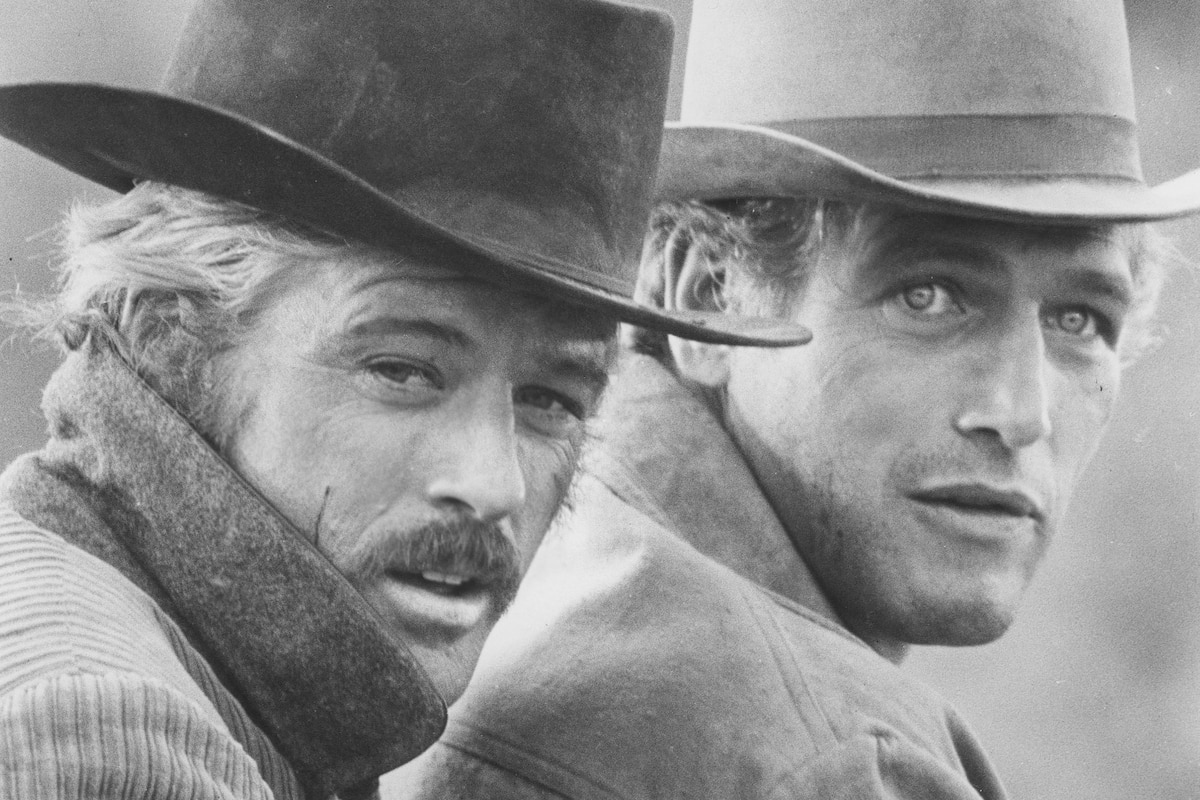
Two amiable, not-too-bright outlaws are finding it harder and harder to practice their trade - robbing banks and trains. The West is a changing place, and the world Butch Cassidy and the Sundance Kid knew is becoming history. When a railroad magnate hires a team of top law enforcers to stop them, the duo tries to outrun them, but it soon becomes obvious the posse will never let up. So along with the Kid's lover, adventurous schoolteacher Etta Place, they head for South America to start over. Yet even in this remote place, the law is never far behind.
Director: George Roy Hill
Producers: John Foreman, Paul Monash
Screenplay: William Goldman
Cinematography: Conrad Hall
Editing: John C. Howard, Richard C. Meyer
Art Direction: Philip Jefferies, Jack Martin Smith
Original Music: Burt Bacharach
Cast: Paul Newman (Butch Cassidy), Robert Redford (The Sundance Kid), Katharine Ross (Etta Place), Strother Martin (Percy Garris), Jeff Corey (Sheriff Bledsoe), George Furth (Woodcock).
C-110m. Letterboxed. Closed Captioning.
Why BUTCH CASSIDY AND THE SUNDANCE KID is Essential
When Butch Cassidy and the Sundance Kid was released in 1969, the Western as a dominant American film genre was about to go into an eclipse and would not re-emerge for many years, although no one knew it at the time. Only John Wayne, whose True Grit (1969) made him the sentimental favorite for the Best Actor Oscar® that year, would regularly continue to make cowboy films. But even his remaining pictures - touched with a growing awareness of the cancer that would take his life in 1979 - had a strong feeling of elegy to them. Times had changed, perceptions of history had been altered, and the standard Western mythologies and forms would no longer fly. In an age of counter-cultural rebellion and anti-government protest, such films as Arthur Penn's Bonnie and Clyde (1967), had transformed the criminal into the outlaw hero, the freewheeling, sympathetic rebel struggling to escape the tyranny of uptight society and oppressive authority. Into this atmosphere emerged two Westerns with decidedly different approaches from what had come before.
The first was Sam Peckinpah's The Wild Bunch (1969), a bleak bloodbath set in the waning days of the Old West that, along with the nightly news broadcasts of the Viet Nam War, forever changed our consciousness of screen violence. The other, Butch Cassidy and the Sundance Kid, was similarly set at a time when civilization was closing in on the heroes and sealing their inevitable fates. It was also a genial goof on Western conventions that served, in a way, to reaffirm our identification with the genre through characters that seemed to be more of our time than out of the past. Where Peckinpah and Penn showed their protagonists dying horrible bloody deaths in vivid slow motion, shocking yet oddly romantic, director George Roy Hill froze the final frame just before his bandit duo's demise, halting in time their affectionate, fun-loving friendship, as well as their legend. Nostalgia and satire, historical detail and modern sensibilities, a lament for lost times and a contemporary comic romp - Butch Cassidy and the Sundance Kid had it both ways, and audiences loved it.
Released to generally mediocre reviews, Butch Cassidy and the Sundance Kid became a word-of-mouth phenomenon and boosted the careers of everyone involved. Paul Newman, already a superstar, found a whole new generation of fans and his first success at playing a comic role (something he would revisit with Hill in The Sting, 1973, and Slap Shot, 1977). Robert Redford, up to this point just another handsome leading man, won major stardom overnight and respect for his talent. William Goldman established himself as a successful screenwriter with his first original screenplay (all his previous scripts were based on novels), and George Roy Hill furthered his reputation and gained greater directorial control over his work. Finally, for better or worse, the Newman-Redford pairing made male bonding the cinematic romance of the period and launched the popular craze for what became known as "buddy movies." (At the same time, its popularity probably contributed to a noticeable decrease in interesting roles and screenplays for working actresses).
Butch Cassidy and the Sundance Kid is also an interesting study for the way it mixes cinematic forms and references. It has been pointed out that the inclusion of stills, old black-and-white footage that appears to have come from a silent movie, and sepia-tinged shots, along with such anachronistic touches as Burt Bacharach's music and Goldman's wisecracking dialogue, heightens an awareness of the movie as a movie, one that is an obvious fiction about historical subjects who became semi-fictional legends in their own time, thus a comment on the ability of film, especially the Western, to treat the past as myth.
by Rob Nixon
The Essentials - Butch Cassidy and the Sundance Kid
by Rob Nixon | December 30, 2008
SIGN UP FOR OUR NEWSLETTERS

CONNECT WITH TCM