Not surprisingly, the "business of business" has enjoyed a long hold on the Hollywood attention span. As early as 1914, author Upton Sinclair executive produced a film version of his 1906 novel The Jungle, an expose of the meatpacking industry that was the eye-opening, stomach-churning Fast Food Nation of its day. Since then, a great many cinema classics have spun webs of intrigue, mystery, romance and betrayal around narratives of deal brokering and money-making, from Orson Welles' Citizen Kane (1941) and The Magnificent Ambersons (1942), Frank Capra's American Madness (1932) and It's a Wonderful Life (1946) and a number of films by Billy Wilder (but most specifically The Apartment [1960] and One, Two, Three [1961]) to Oliver Stone's Wall Street (1987), James Foley's Glengarry Glen Ross (1992) and the current hit TV series Madmen. And what is Francis Ford Coppola's The Godfather trilogy (1972-1992) but an epic parable about the dark side of the American dream of success and respect, whose enforcers and hitmen only make literal what was always symbolic in the cutthroat machinations of Wall Street, Madison Avenue and other nexuses of big business?
The economic boom in America after World War II beget a particular type of business drama that was hardwired to the nation's need to repurpose itself for the Cold War and the Space Race. A clutch of big studio films produced in the mid-Fifties sought to take audiences behind the normally closed doors of American enterprise. MGM's The Power and the Prize (1956) often takes a back seat to other entries in the business subgenre, behind United Artists' Patterns (1956) and MGM's earlier Executive Suite (1954). Nonetheless, in a review published on September 12, 1956, Variety averred that The Power and the Prize possessed "a great many truths - possibly too many for a single picture."
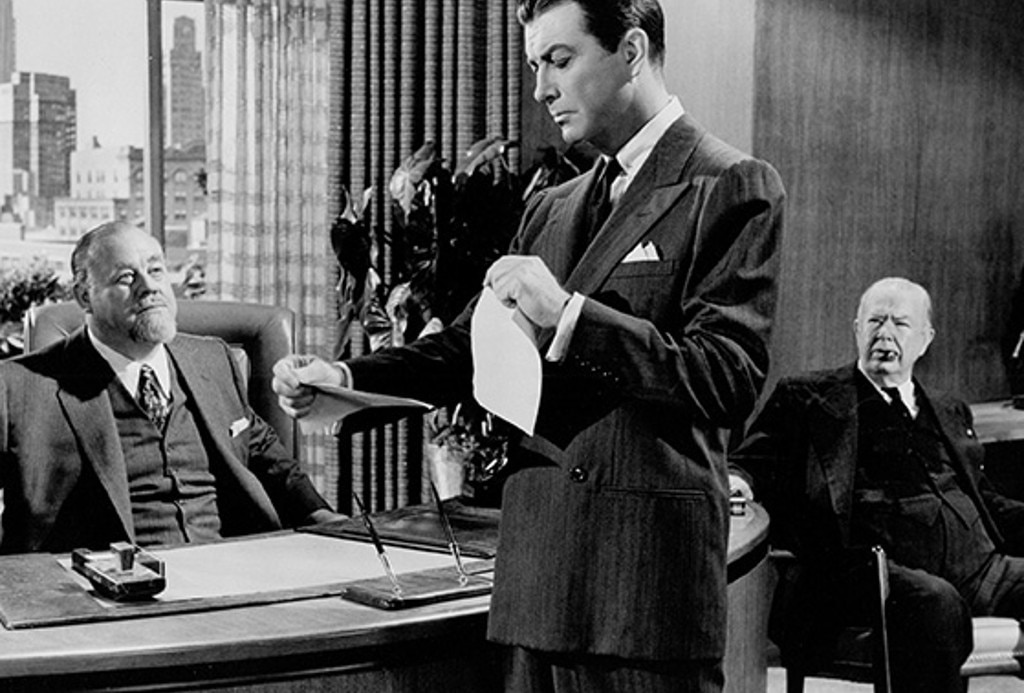
It's easy to see why The Power and the Prize might be overlooked when stacked up against the star-studded (William Holden, Barbara Stanwyck, Fredric March) Executive Suite (which spawned a short-lived TV series in 1976) and the Rod Serling-scripted Patterns (which Serling had adapted first for The Kraft Television Theatre the previous year). Nevertheless, when viewed and considered on its own terms, the film is a satisfyingly pointed exposé of corporate greed, even given the then-fashionably soap operatic bent of its romantic subplot. With his patent leather hair and trademark stoicism, star Robert Taylor (who had just come from an atypically villainous turn in Richard Brooks' The Last Hunt, 1956) seems at forty-four a bit long in the tooth to play the brash young protégé of Amalgamated World Metals head honcho Burl Ives (who was only two years Taylor's senior). While William Holden or Paul Newman might have been age-appropriate choices, Taylor acquits himself rather well in the part, bringing surprising nuance, charm and delicacy to the role of a corporate raider whose love affair with "a stateless, placeless, nameless refugee out of Central Europe" comes close to sparking an international incident when the woman in question is tagged as a possible Communist (and a prostitute to boot).
Based on the 1954 novel by Howard Swigett, The Power and the Prize places particular emphasis on the co-opting of individuality, of private lives and private rights, by "this society of power," which it likens angrily to both the death industry of the Nazi concentration camps and the Communist lockstep of the Iron Curtain. "There is no private life, not here," one character laments late in the film. "Not for a man that matters. No love, no inward rightness. There is only Public Relations."
The Power and the Prize marked MGM's first black and white feature shot in CinemaScope. (Director Henry Koster had previously directed The Robe [1953], the first film to be released in that widescreen process.) The experiment turned out to be something of a bust for Metro, with critics lamenting that the expanse of the 2.35:1 aspect ratio robbed intimate scenes of texture and warmth. The production is also noticeably setbound, with New York City reduced to a matte painting seen through Burl Ives' penthouse office window, Long Island shemped unconvincingly by the craggy Malibu coastline, and London represented by the same old backlot "New York Street," albeit hosed down to give it a sense of English damp. Nevertheless, Koster's ensemble cast makes up for the deficit with a core of strong performances, by turns amusing and passionate. Leading lady Elisabeth Mueller had been a find of Henry Koster (formerly Hermann Kosterlitz), who had seen the Swiss stage actress in a magazine photograph and invited her to Hollywood with the blessing of MGM (still on the lookout for the next Greta Garbo fifteen years after Garbo's retirement from films). Mueller received mixed reviews from the critics and returned to Europe postproduction, where she appeared opposite Robert Mitchum and Stanley Baker in Robert Aldrich's The Angry Hills (1959) before largely withdrawing from films.
In smaller roles, Sir Cedric Hardwicke is delightful as the head of a British smelting company that Amalgamated is keen to swindle, Richard Deacon is amusing as Taylor's former Yale buddy and both Mary Astor and Charles Coburn sit out nearly the entire film before Robert Ardrey's script gives both players a chance to kick out the jams in scenes of their own. Blink and you'll miss him in his brief encounter with Robert Taylor on a London stairway but delivering precisely one word of English is John Banner, destined for small screen greatness as the bumbling Sgt. Schultz of the CBS sitcom Hogan's Heroes.
Producer: Nicholas Nayfack
Director: Henry Koster
Screenplay: Robert Ardrey, based on the novel March or Die - The Story of the French Legion by Howard Swigett
Cinematography: George J. Folsey
Art Direction: William A. Horning, Hans Peters
Music: Bronislau Kaper
Film Editing: George Boemler
Cast: Robert Taylor (Cliff Barton), Elizabeth Mueller (Miriam Linka), Burl Ives (George Salt), Charles Coburn (Guy Eliot), Cedric Hardwicke (Mr. Carew), Mary Astor (Mrs. George Salt), Nicola Michaels (Joan Salt).
BW-99m. Letterboxed. Closed Captioning.
by Richard Harland Smith
Sources:
The Films of Robert Taylor by Lawrence J. Quirk
Henry Koster: A Directors Guild of America Oral History, interview by Irene Kahn Atkins
Halliwell's Film Guide
The Power and the Prize (1956) - The Power and the Prize
by Richard Harland Smith | December 04, 2008
SIGN UP FOR OUR NEWSLETTERS

CONNECT WITH TCM