With an assigned budget of $420,000, Dinner at Eight began shooting at MGM on March 16, 1933. Despite the complications of a large ensemble cast to juggle, the filming went smoothly with no unforeseen problems arising. According to Jean Harlow, the picture was shot as close to chronological order as possible "so we could all feel the dramatic power of the climactic scenes."
Though Marie Dressler hadn't fit George Cukor's idea of former beauty Carlotta Vance when she was first cast, she made the part her own with utter believability. "She acquired a peculiar distinction, a magnificence," said Cukor in a later interview. "She was a law unto herself. She'd mug and carry on-which she did in this picture-but she knew how to make an entrance with great aplomb, great effect." Co-star Jean Harlow was in awe of Dressler's talents and praised the veteran actress for her generosity. "Being in the same cast with Marie was a break for me," said Harlow. "She's one trouper I'd never try to steal a scene from. It'd be like trying to carry Italy against Mussolini."
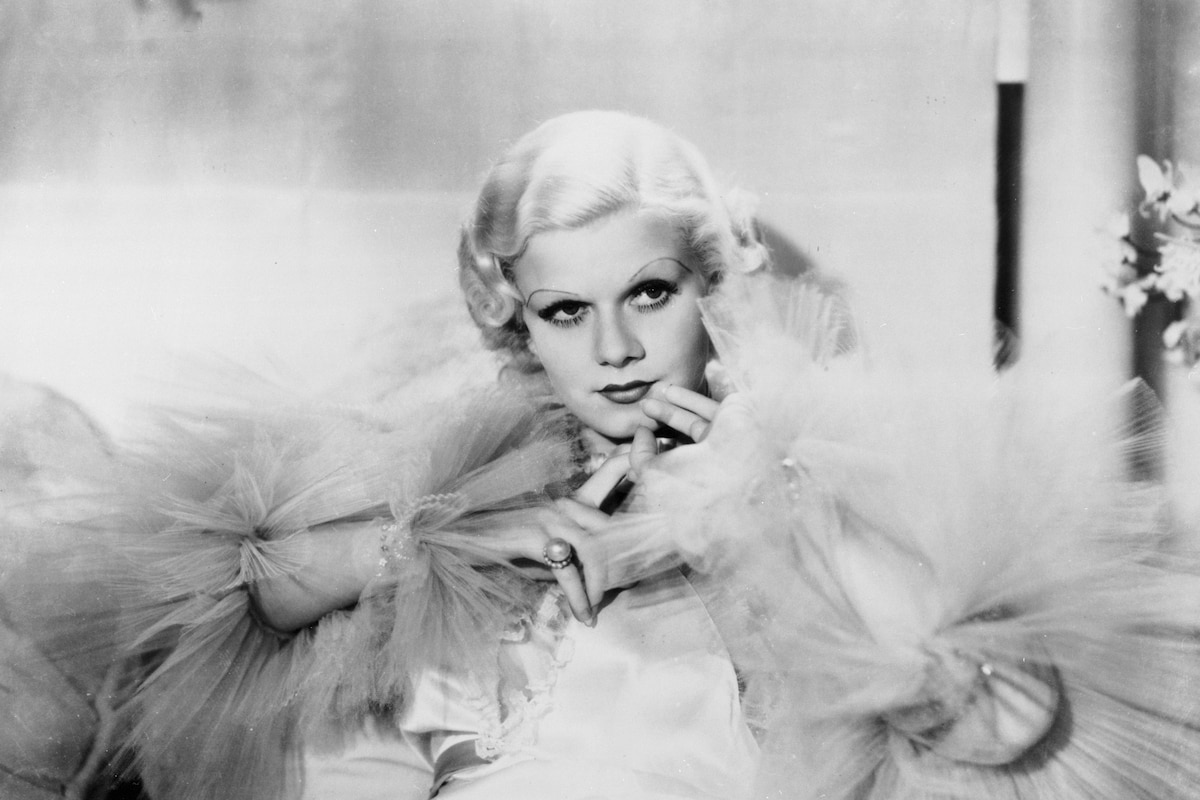
Marie Dressler was also impressed with Jean Harlow. "It was whispered behind more than one hand that Jean Harlow, Metro's much-advertised platinum menace, was picked for parts that called for more allure than art," said Dressler in her 1934 autobiography My Own Story. "And in Dinner at Eight, she had to throw a bomb in the works by proving that she is a first-rate actress! Her performance as the wife of the hard-boiled, self-made politician played by Wallace Beery belongs in that limited category of things which may with reason be called rare. The plain truth is, she all but ran off with the show!"
It was high praise indeed for Jean Harlow coming from Dressler, and Dressler's warmth helped put the actress at ease. Harlow was understandably insecure about holding her own against such immense acting talent, and it was important to her to do a good job with her part. Harlow was an actress who got along with everyone-with one exception: Wallace Beery. She had worked with Beery before in The Secret Six (1931) and the two had developed a dislike for each other that carried over into Dinner at Eight. Beery thought that Harlow wasn't experienced enough as an actress and treated her rudely. Harlow found Beery gruff and boorish. Since the two were playing a husband and wife that can't stand each other, the real-life feelings worked to the comic benefit of the characters.
John Barrymore, who bravely took on the role of a fading matinee idol, relished the challenge of a strong character part. "Although (Barrymore) was playing a second-rate actor," said George Cukor in a 1970 interview, "he had no vanity as such. He even put things in to make himself hammier, more ignorant." Barrymore got involved in his part, making suggestions along the way to play up his character such as having him misquote famous writers and botch his own suicide. Cukor was pleased that an actor of such prominence was confident and committed enough that he would be willing to sacrifice vanity for the greater success of the film.
Dinner at Eight was shot in a remarkable 27 days. "That was a wonderful record," said Cukor. "I owed it all to these marvelous performers; with them behind me, everything seemed possible." Later, Cukor considered his rapid directorial pace on Dinner at Eight as something more like a curse. "It's haunted me my entire career," he said. People ever since, he believed, expected him to deliver all his pictures in that short amount of time.
MGM's faith in Dinner at Eight paid off. Upon its release, it was a huge success with critics and audiences alike. Despite not receiving any Academy Award® nominations, the film endured and is now considered one of MGM's finest films from the '30s.
by Andrea Passafiume
Behind the Camera - Dinner at Eight
by Andrea Passafiume | November 20, 2008
SIGN UP FOR OUR NEWSLETTERS

CONNECT WITH TCM