The taglines on the poster for Psych-Out announced: "These are
the Pleasure Lovers! They'll ask for a dime with hungry eyes...but
they'll give you love - for NOTHING!"
Other taglines for the film include "Taste a Moment of
Madness...Listen to the Sound of Purple" and "Have you ever TASTED
FEAR or SMELLED MADNESS?"
After the immense success of The Trip (1967),
American-International Pictures realized there was boxoffice gold in
"psychedelic movies" and rushed Psych-Out into production
before rival studios began exploiting the same idea.
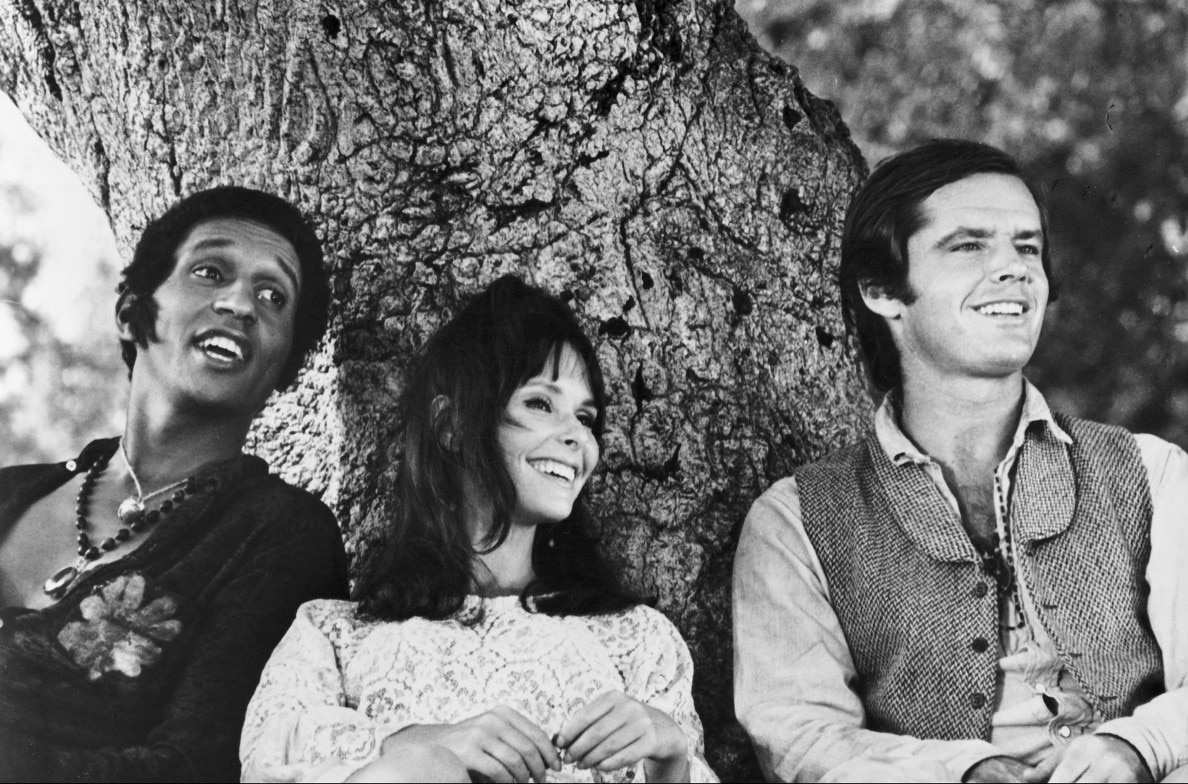
Jack Nicholson made Psych-Out after an appearance on The
Andy Griffith Show TV series but before his star-making turn in
Easy Rider in 1968. At the time, he still considered himself a
screenwriter more than an actor (even though he still struggled to win
roles) and would go to work on the screenplay of Head for
director Bob Rafelson immediately following Psych-Out.
The daughter of New York City acting coach Lee Strasberg and stage
actress Paula Strasberg, Susan Strasberg made her Broadway debut in
the title role of The Diary of Anne Frank in 1955 and her film
debut in 1955 with supporting roles in two films, Picnic and
The Cobweb.
After her marriage to actor Christopher Jones in 1965, Strasberg began
appearing in more unconventional films (The Name of the Game is
Kill, 1968) and B-movies such as The Trip (1967) and
Psych-Out (1968) for AIP which was also the studio that
released Wild in the Streets (1968), starring Strasberg's
husband Jones in the lead. She died of breast cancer at the age of 60
in 1999.
During the early part of his film career, Bruce Dern was typecast as
psychos or weirdos in many films and TV shows. Directly after making
Psych-Out, he played one of several villains in the Clint
Eastwood western, Hang 'em High (1968). He would begin to
receive better film offers and marquee placement after his performance
in the Oscar®-winning They Shoot Horses, Don't They? (1969)
which led to major roles in Jack Nicholson's directorial debut,
Drive, He Said (1971), Silent Running (1972), The
King of Marvin Gardens (1972), opposite Jack Nicholson, The
Great Gatsby (1974), and Alfred Hitchcock's Family Plot
(1976).
Dean Stockwell enjoyed a highly successful career as a child actor at
MGM and transitioned successfully into an adult career giving
critically acclaimed performances in Compulsion (1959), Sons
and Lovers (1960) and Long Day's Journey into Night (1962)
with Katharine Hepburn, Ralph Richardson and Jason Robards, Jr.
Stockwell's film career as a leading man faltered in the mid-sixties
and he concentrated more on television work while occasionally
accepting parts in offbeat films such as Psych-Out, The
Dunwich Horror (1970) and The Last Movie (1971), directed
by Dennis Hopper.
Stockwell's film career enjoyed a resurgence in the early eighties
when he appeared in Wim Wenders' critically acclaimed Paris,
Texas and David Lynch's Dune
(both 1984). He later
was featured in Lynch's Blue Velvet (1986) and received a Best
Supporting Actor nomination for Jonathan Demme's farce, Married to
the Mob (1988). His cult status was also given a boost by his
regular appearance in the TV series, Quantum Leap (1989-1993).
Director Richard Rush has had a very uneven career but is generally
perceived as a strong action director, due to his work on several
better-than-average exploitation films such as Hells Angels on
Wheels (1967), starring Jack Nicholson. The Stunt Man
(1980) is generally regarded as his best film and the pinnacle of his
movie career.
Cinematography Laszlo (aka Leslie) Kovacs, emigrated to the U.S. from
Hungary with fellow cinematographer Vilmos Zsigmond in the late
fifties and both found work in Hollywood, shooting low-budget
features. Kovacs' collaboration with director Rush began with A Man
Called Dagger (1967) and continued for five more features, ending
with Freebie and the Bean (1974). Kovacs was never nominated
for an Oscar® despite his acclaimed work on such films as Easy
Rider (1969), Five Easy Pieces (1970), What's Up,
Doc? (1972), Paper Moon (1973), Shampoo (1975) and
New York, New York (1977). He died in 2007 of an undisclosed
illness.
by Jeff Stafford
SOURCES:
afi.com
The Films of Jack Nicholson by Douglas Brode
Jack's Life: A Biography of Jack Nicholson by Patrick
McGilligan
Five Easy Decades: How Jack Nicholson Became the Biggest Movie Star
in Modern Times by Dennis McDougal
Things I've Said, But Probably Shouldn't Have by Bruce Dern
(Wiley)
Dean Stockwell Interview by Craig Edwards, Psychotronic Magazine
FilmFacts
Hollywood Rock: A Guide to Rock 'N' Roll Movies by Marshall
Crenshaw (HarperPerennial)
IMDB
In the Know (Psych-Out) - TRIVIA
by Jeff Stafford | November 04, 2008
SIGN UP FOR OUR NEWSLETTERS

CONNECT WITH TCM