In the relatively short amount of time that people have been talking about Allen Baron's Blast of Silence (1960), the long-unseen but recently resurfaced film noir footnote has been compared to everything from early Godard to vintage Scorsese, with a jigger of neorealismo thrown into the mix. Visually, those observations are spot on but the film's use of an omniscient narrator (an unbilled Lionel Stander) to taunt out-of-town hitman protagonist Frankie Bono (Baron himself, acquitting himself well) as he stamps around New York City at Christmas on a working vacation might put viewers of a certain vintage in the mind of the old E.C. Comic Crime SuspenStories. In that bi-monthly anthology of "jolting tales of tension" (hardboiled cousin to Tales from the Crypt and The Vault of Horror), venal tough guys and unlucky greenhorns alike were led to their doom by the siren call of unseen narrators/commentators who were not only good character judges but juries and executioners to boot. (Baron had worked as a young man as a comics illustrator, although he never collected a paycheck from E.C.) Lionel Stander's goading voiceover may also remind horror fans of the smudgy cult item Dementia (aka Daughter of Horror, 1955), in which a mentally unstable young woman is prodded to acts of desperation and violence by an off screen Greek chorus (future Tonight show second banana Ed McMahon). Though Blast of Silence eschews Dementia's Gothic blandishments, the release posters did promise moviegoers "an unforgettable experience in horror."
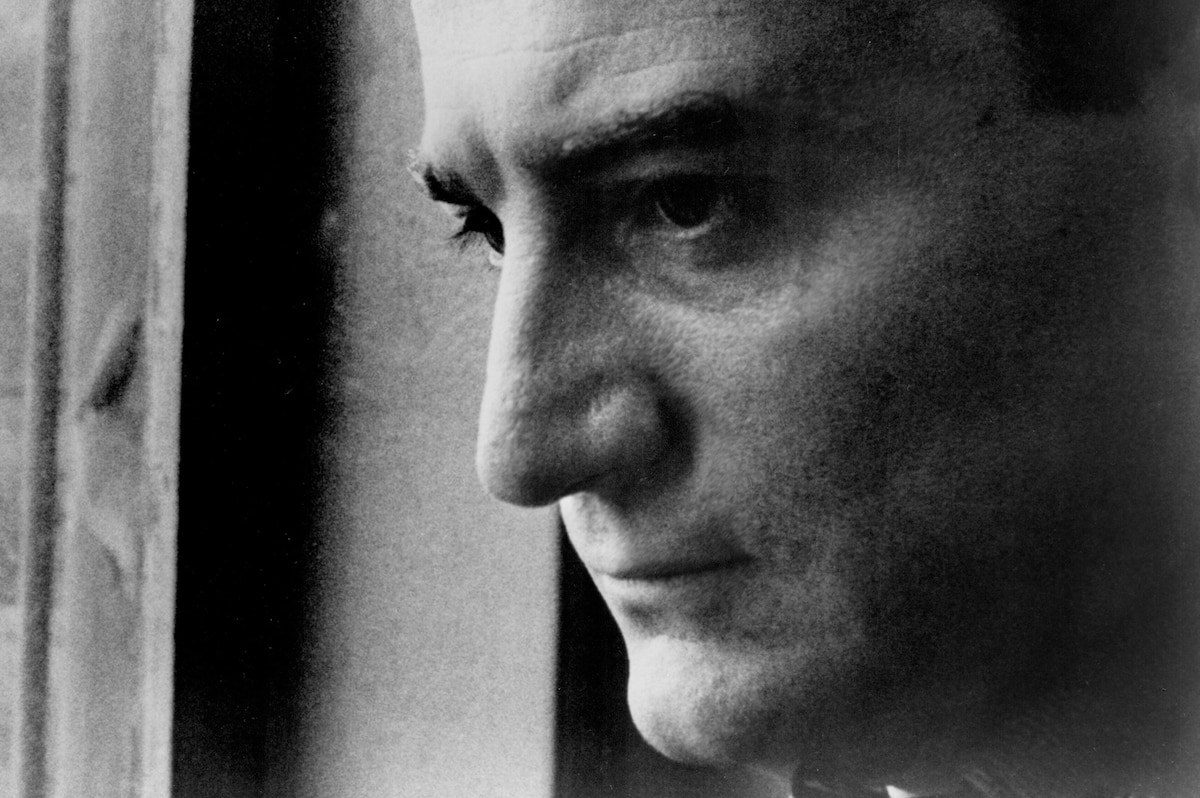
Baron had wanted drinking buddy Peter Falk to play the assassin antihero of Blast of Silence but had to take the gig himself when Falk jumped at the chance to star as Abe "Kid Twist" Reles in Twentieth Century Fox's Murder, Inc. (1960). The negligible dimming of star wattage in the passage of the role from Falk (who at the time had only a couple of films and some live television to his credit) to Baron (by any standards, a nobody) paid posterity a rather handsome dividend. While traces of vintage George C. Scott (circa 1961-1965) and Robert De Niro (circa 1980-1988) can be discerned in Baron's lidless gaze, nobody would mistake Baron for a movie star. With his gas pipe leak of a voice, Baron's Frankie Bono would be at best a minor character in anyone else's film but the fact that he is allowed to be Blast of Silence's focus of attention gives his film an undeniable power, a You Are There immediacy and urgency that makes even the great docu-drama noirs like The Naked City (1948) and He Walked by Night (1948) seem stagy and theatrical by comparison. Future movie loners, from Alain Delon in Le Samouraï (1967) to Robert De Niro in Taxi Driver (1976) were given moments (however fleeting) of grace that mitigated their more unattractive tendencies but Bono gets little sympathy from Baron. When Frankie Bono submits, as he must, to his third act bullet stitching, he doesn't even have a gun to defend himself and dies rather poorly in the icy backwash of Jamaica Bay.
His illustrator's eye for framing might explain why Blast of Silence is so eye-catching for a film shot on the fly with all of $20,000 in folding money and some deferred lab payments. It remains a toss-up as to whether Baron or producer-cinematographer Merrill S. Brody (a protégé of Curt Courant, who had shot Jean Renoir's La bête humaine in 1938) deserves the lion's share of the glory for Blast's visionary consistency, an existential POV never more acute than during the sustained long shot of Frankie traversing a frigid East 34th Street, appearing at first like a dot on the vanishing point and growing steadily larger in the frame as street lights pop on about him like accusing eyes. The feeling of doom that hags the film isn't restricted to its main character.
Native New Yorkers might well feel pangs of remorse at the sight of such landmark locations as The Village Gate and Penn Station. (On the other hand, seen in passing is Greenwich Village's Café Reggio, setting for a key scene in Shaft[1971].) Footage grabbed on the East River waterfront, with its fleet of tugboats and clapboard shacks, preserves a time in the city's history when such industrial space was considered moribund, before these same parcels were repurposed for shopping malls, music stadiums, condominium living and sea-air-space museums. Part time capsule, part tombstone for a New York that was and will never again be, Blast of Silence is a portrait in unalloyed urban loneliness, film noir's "Eleanor Rigby."
Director: Allen Baron
Writer: Allen Baron, Waldo Salt (narration)
Producer: Merrill S. Brody
Cinematography: Merrill S. Brody
Camera Operator: Erich Kollmar
Film Editing: Merrill S. Brody, Peggy Lawson
Art Direction: Charles Rosen
Music: Meyer Kupferman
Cast: Allen Baron (Frankie Bono), Molly McCarthy (Lorrie), Larry Tucker (Ralph), Peter H. Clune (Troiano), Milda Memonas (Troiano's Girl), Danny Meehan (Nightclub Singer), Charles Creasap (Contact Man on Ferry), Don Saroyan (Lorrie's Boyfriend), Ruth Kaner (Building Superintendent), Lionel Stander (Narrator).
BW-77m.
by Richard Harland Smith
Sources:
Film Noir by Alain Silver and James Ursini
e-mail from Allen Baron, March 29, 2009
The Gist (Blast of Silence) - THE GIST
by Richard Harland Smith | August 20, 2008
SIGN UP FOR OUR NEWSLETTERS

CONNECT WITH TCM