The eternal debate over nature versus nurture gets one of its most extreme tests in the case of Sonny Boy, an independent 1988 production so bizarre and shocking that it was immediately yanked from the few theaters bold or oblivious enough to play it for unsuspecting patrons. Quietly shuffled off to an under-the-radar video release and a handful of cable airings, the film began to amass a cult following among viewers and critics lucky enough to appreciate its wholly unique blend of domestic drama, crime-thriller plot mechanics, and David Lynch-style grotesqueries.
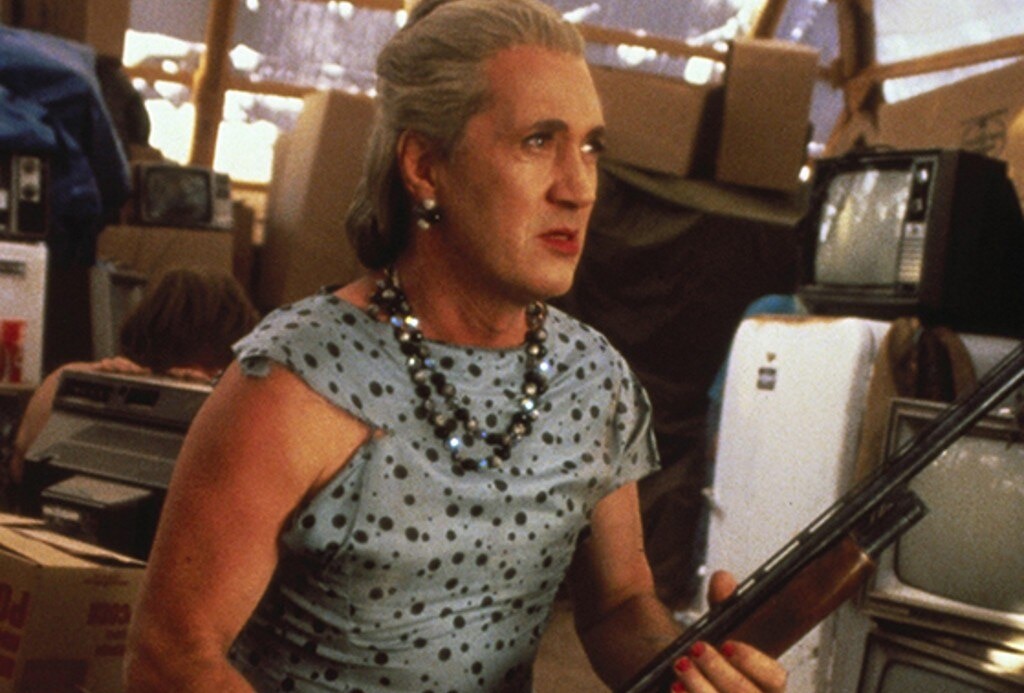
In the desolate New Mexico town of Harmony, lawlessness rules the land. One of its most ruthless practitioners is Slue (Paul L. Smith), a sociopathic thief, bully and aspiring painter who lives on a ranch with his companion, Pearl (David Carradine), who is either a transgender or cross-dresser (a distinction the film never quite clarifies). One day a botched kidnapping results in murder, and the victims' car back at their hideout has an unexpected surprise: a little baby named Sonny Boy. Pearl refuses to let her husband feed the tot to the pigs, and so Slue allows her to raise the boy after cutting out his tongue at the age of six. Sonny Boy is raised until the age of seventeen in a rusty water tower, where he's fed only live chickens to develop a killer instinct for crime sprees once he hits maturity. Occasionally Slue lets him out, only to drag him by rope behind a car or tie him up and burn him at the stake in the middle of the desert. Sonny Boy's day of reckoning finally comes when Slue decides to unleash him on the mayor, who gets a deadly bite in the jugular for his trouble.
Determined only to please his father (as conveyed through voiceovers, since he can't actually speak), Sonny Boy is distraught and confused by his situation, which is complicated by an assortment of odd characters including a drunken, washed-up surgeon, Doc Bender (Mork & Mindy's Conrad Janis). As Slue and Sonny Boy embark on a series of crime sprees and terrorize the townspeople, the animalistic young boy develops an emotional attachment to Sandy, a pretty town girl who takes a liking to him. Meanwhile Slue continues to stockpile his gang's stolen electronics and refrigerators in a giant glass pyramid next to his house. The town finally turns against them all in a violent final showdown which will ultimately determine whether Sonny will succumb to his brutal breeding or develop into a better human being.
Impossible to classify, Sonny Boy has yet to receive its full due as either a midnight movie or a cult home video title due to its extreme rarity over the years. Ideally it should be seen on the big screen as its often poetic, very wide Sergio Leone-style compositions of the desert lose much of their allure on the TV screen. However, in any form it's an attention grabber from the start. The script ranges from eloquent to profane to stilted, sometimes within the same scene, and the once-in-a-lifetime collaboration of astonishing character actors creates a chemistry that renders even the most mundane dialogue scenes with a surreal, off-kilter atmosphere.
Though many viewers have been confounded by initial viewings of the film, director Robert Martin Carroll explained in an online review response that he had three major themes he took from the original screenplay: "First: someone doesn't deserve your love just because they say they love you and they're your parents. Second: If there is good in you, it will eventually come out. That was the whole Jesus thing. That's also why after the fire, Sonny Boy actually rises from the ashes to start a new life. Finally, I'm also saying that once you're messed up, unlike in most movies there is no real happy ending. You will always be a bit off."
Buoyed by a surprisingly eloquent music score by the normally workmanlike Carlo Maria Cordio, Sonny Boy packs in enough exploitable elements to make it seem like a grindhouse natural including gunfights, frequent and often hilarious expletives, and gratuitous T&A, but its deeply eccentric characters, melancholy tone and dreamy, disjointed narration instead swerve it firmly into art house territory. Certainly not for all tastes but a delirious and rewarding experience for those attuned to its very peculiar frequency, Sonny Boy remains a misshapen but sparkling gem awaiting rediscovery.
Director: Robert Martin Carroll
Producer: Ovidio G. Assonitis
Screenplay: Graeme Whifler
Cinematography: Roberto D'Ettorre Piazzoli
Music: Carlo Maria Cordio
Cast: David Carradine (Pearl), Paul L. Smith (Slue), Brad Dourif (Weasel), Conrad Janis (Doc Bender), Sydney Lassick (Charlie P.), Michael Boston (Sonny Boy), Savina Gersak (Sandy), Alexandra Powers (Rose).
C-98m.
by Nathaniel Thompson
The Gist (Sonny Boy) - THE GIST
by Nathaniel Thompson | August 20, 2008
SIGN UP FOR OUR NEWSLETTERS

CONNECT WITH TCM