The product of a poor, broken family, Sylvester Stallone grew up in a series of foster homes in New York, Maryland, and a sleazy section of Philadelphia. He was booted out of 14 schools in 11 years, but his athletic prowess earned him an athletic scholarship at the American College in Switzerland. He studied acting for a time at the University of Miami, where instructors repeatedly discouraged him from entertaining notions of an acting career. In 1974, having failed to make any headway in New York, Stallone spent $40 for a beat-up Oldsmobile, packed up his loyal wife Sasha and his bull mastiff Butkus, and drove across country to seek his fortunes in California. The couple arrived with high hopes and a nest egg of $3500 which they planned to live on until Stallone broke into the business. But offers were not forthcoming and the money soon dwindled. The actor did appear in uncredited bits - usually as thugs - in such films as Woody Allen's Bananas (1971), Klute (1971), and The Prisoner of Second Avenue (1974) and had a major role in a minor picture, The Lords of Flatbush (1974). But he was hungry for stardom and respect. He tried his hand at screenwriting but got rejections on 32 different scripts. After viewing a fight between Muhammad Ali and underdog Chuck Wepner (who went 15 rounds with the champ), he sat down to write a new one about a hard-luck boxer with one shot at the big time, finishing a draft in three days. This one made an impression.
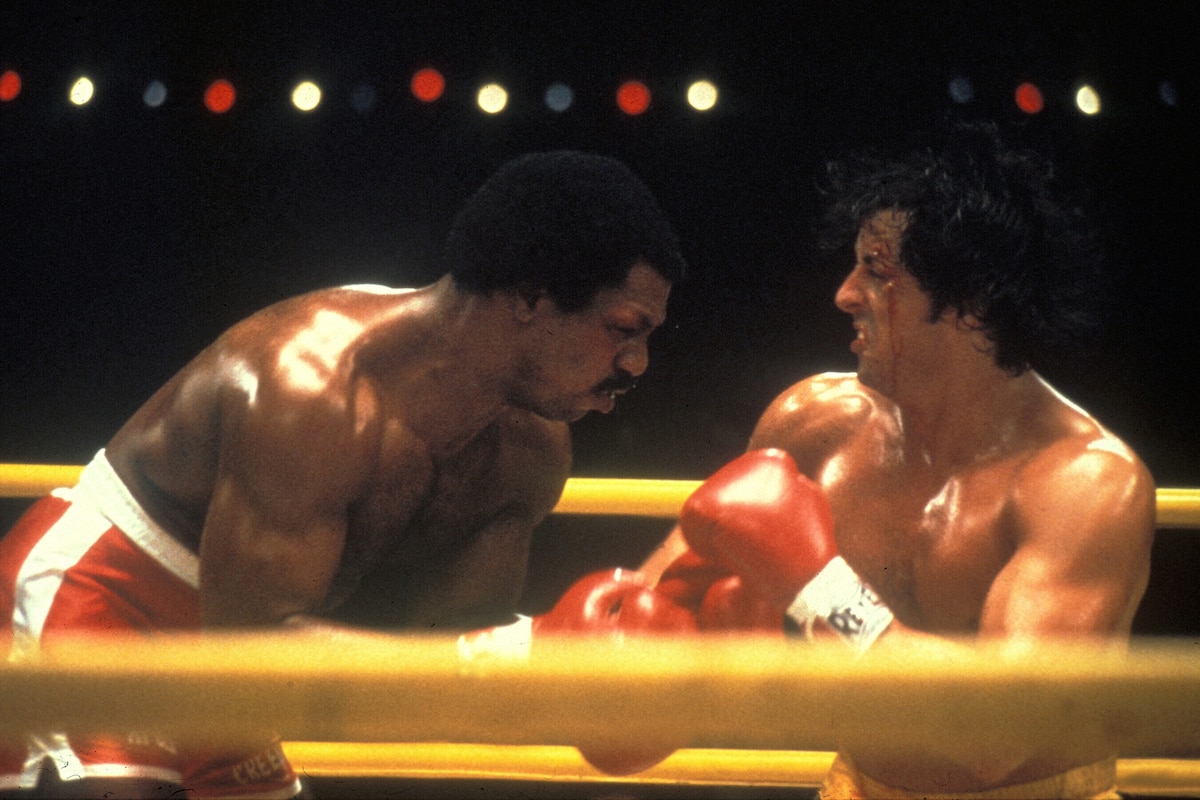
Producers Robert Chartoff and Irwin Winkler jumped at the chance to make Rocky as a star vehicle for either Burt Reynolds or Robert Redford (who couldn't have been farther from Stallone's conception). They offered the fledgling writer $75,000, certain he would take it - he and Sasha were down to their last $106. But Stallone told them he would not sell the screenplay unless he was attached to it as star.Rocky was his story, he said, and he set it in the ring because "I couldn't write a script about a down-and-out actor because no one would be interested. In the movie, Rocky loses but wins his self-respect." It was clear he intended the real winner to be Sylvester Stallone himself. United Artists was astonished at his audacity. But they wanted the property. The era had been dominated by dark, downbeat films - The French Connection (1971), The Godfather (1972), Cabaret (1972) - and the studio was sure audiences were ready for an old-fashioned hero they could cheer to victory. They upped the fee to $100,000, then $150,000, but Stallone stood firm. Finally, UA agreed to give him a chance, but only with a miniscule $1 million budget and the understanding that Chartoff and Winkler would put up an expensive completion bond to assure whatever funds were needed if the picture went over budget. The two producers mortgaged their homes as a guarantee and Rocky finally went before the cameras with Stallone in the lead. He got the standard writer's fee, five percent of the budget, and another $20,000 for playing the part. He also got a healthy cut of the profits, which the studio didn't mind conceding, convinced that Rocky wouldn't be more than a modest success.
"As far as I was concerned, if I didn't get this part it was the only shot I would ever get," Stallone said later. "I was willing to do it for nothing. No way it would turn out poorly. I was determined it would be good."
As pre-production began, Stallone put the final touches on the script, getting rid of Rocky's more abrasive edges and making him more vulnerable. He also refined the relationship with Adrian, realizing audiences would find more appeal in a story about two ordinary people giving each other the love and support they had been denied all their lives.
by Rob Nixon
The Big Idea (Rocky)
by Rob Nixon | February 09, 2009
SIGN UP FOR OUR NEWSLETTERS

CONNECT WITH TCM