After her successful comeback in MGM's The Philadelphia Story (1940), Katharine Hepburn took her time choosing a follow-up vehicle. Among the projects she considered were The Little Foxes (1941), which went to Bette Davis; Reap the Wild Wind (1942), which starred Paulette Goddard; and Take a Letter, Darling (1942), which became a Rosalind Russell vehicle.
Garson Kanin got the idea for Woman of the Year when he received a letter from sports writer Jimmy Cannon the day after he had spent an evening in the company of political columnist Dorothy Thompson. The juxtaposition of the two very different writers in his life made him wonder what would happen if two people like them were to fall in love. He thought a character like Thompson would be a natural for Hepburn, whom he had met through his friend Vivien Leigh during the Broadway run of The Philadelphia Story.
When Kanin was drafted, he handed the idea to his brother, Michael, who worked on the script with Ring Lardner, Jr.
When Kanin brought the idea to Hepburn, she was enthusiastic. She set up a meeting to pitch the story to MGM head Louis B. Mayer, and sat up all night with Lardner and the two Kanins finishing the treatment in a bungalow at the Garden of Allah Hotel. When their energies flagged she even sent out for gourmet food from Chasen's to get them back on track.
Hepburn sold the script to Mayer, not telling him it had been written by two virtual unknowns. She not only got them $100,000, the highest fee ever paid for an original screenplay, but pocketed an $11,000 agent's commission for selling the script.
Mayer was particularly well disposed towards Hepburn as The Philadelphia Story was the highest grossing stage adaptation to that time. As a result, she was able to negotiate co-star and director approval for Woman of the Year in addition to a $100,000 fee for acting. In return, she signed a seven-year contract with MGM, joining one of Hollywood's most glittering star lineups.
Hepburn wanted Spencer Tracy as her leading man, but when she first set up production, he was tied up on location in Florida shooting The Yearling (1946). Mayer suggested she consider Walter Pidgeon or Clark Gable, but then production on Tracy's film shut down because of a variety of location problems. Tracy signed on for Woman of the Year, but would never return to The Yearling. MGM finally put the film back in production with Gregory Peck as the male lead and the 1946 release became a major hit.
Wanting an equal balance between the film's male and female leads, Hepburn decided to bypass her good friend George Cukor, already known as a "woman's director" and the man who had directed The Philadelphia Story. Instead, she chose George Stevens, whom she had dated while working on Alice Adams (1935). Cukor was upset by her decision but did not let it interfere with their friendship. Some biographers have asserted that she had renewed her relationship with Stevens at the time, even though he was married.
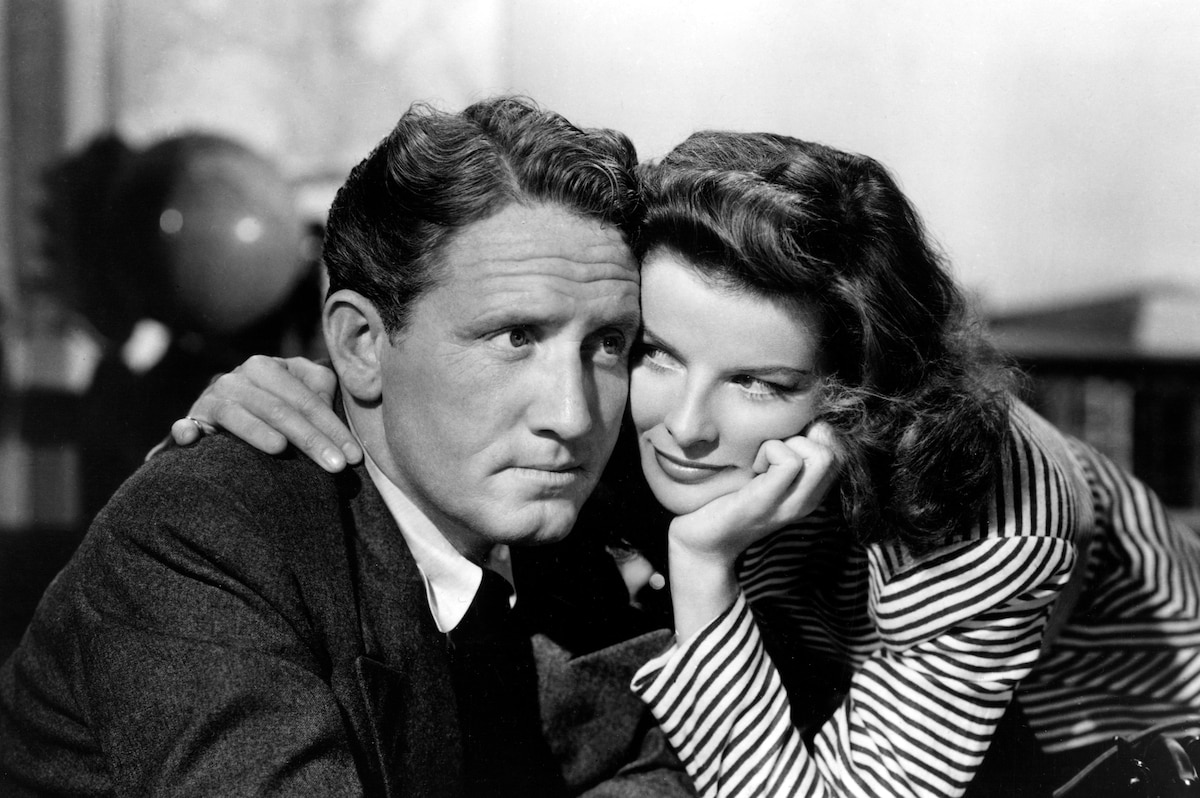
When Tracy and Hepburn finally met she was wearing heels, which made her slightly taller than him. There are several versions of the exchange that followed, but the most reliable has Hepburn saying, "I'm afraid I'm a little tall for you, Mr. Tracy," and producer Joseph L. Mankiewicz quipping, "Don't worry, he'll cut you down to size." Others have attributed the line to both Tracy and Garson Kanin.
According to Hepburn, Tracy needed to be convinced to work with her. At their first meeting, he was more upset about her dirty fingernails than her haughtiness, and allegedly said, "How can I do a picture with a woman who has dirt under her fingernails and who is of ambiguous sexuality and always wears pants." (from Me: Stories of My Life by Katharine Hepburn).
by Frank Miller
The Big Idea - Woman of the Year
by Frank Miller | January 08, 2008
SIGN UP FOR OUR NEWSLETTERS

CONNECT WITH TCM