SYNOPSIS
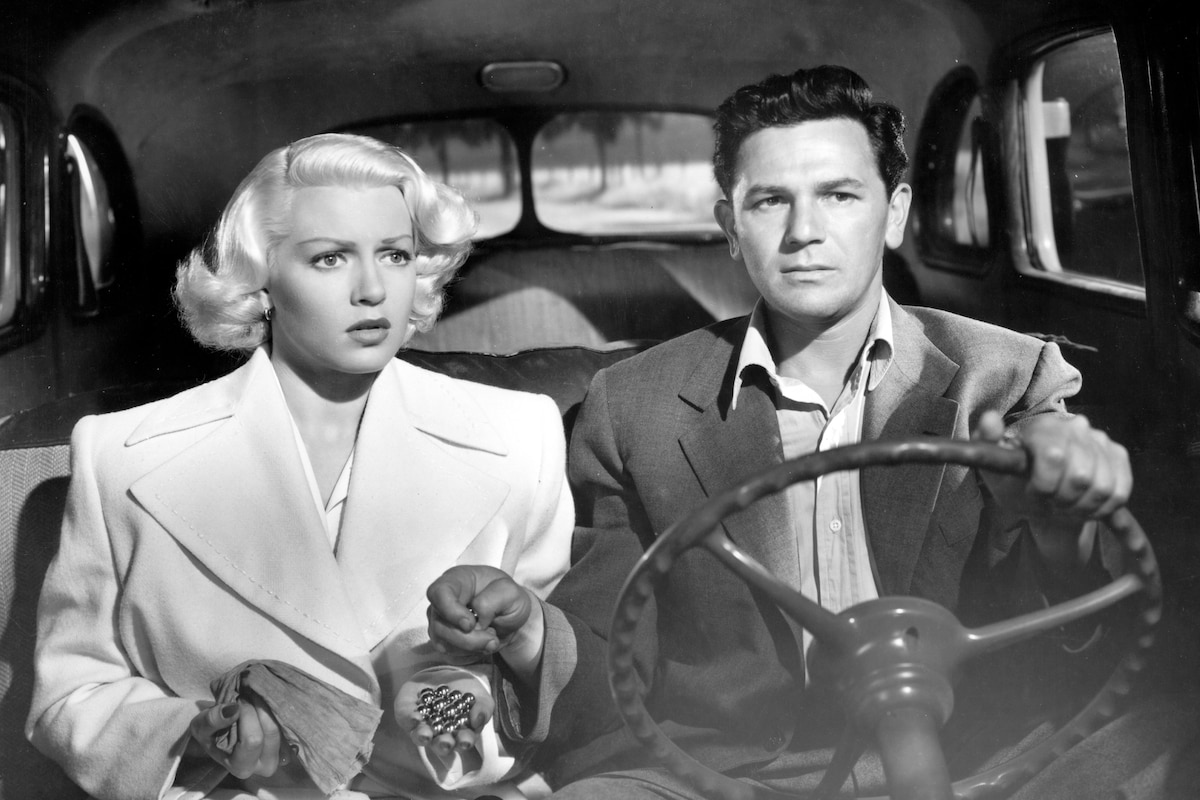
A hitchhiker, Frank Chambers, stops at a diner off the main road to Los Angeles and ends up accepting a job from the owner, Nick Smith. Part of the job's attraction is Nick's young, sexy blonde wife, Cora, who is at first aloof and cool to him. Soon a passionate romance develops between them and they run away together but quickly realize they won't get far without money and return before Nick finds Cora's farewell note. Determined to escape her drab, depressing existence with Nick, Cora suggests to Frank that they kill her husband for his insurance money. A first attempt to murder Nick in the bathtub fails but the second one is more elaborately orchestrated with the illicit couple getting Nick drunk and arranging his death to look like an auto accident. But there are no happy endings in store for Frank and Cora who fall victim to their own guilt and paranoia.
Director: Tay Garnett
Producer: Casey Wilson
Screenplay: Harry Ruskin and Niven Busch
Based on the novel by James M. Cain
Cinematography: Sidney Wagner
Editing: George White
Art Direction: Randall Duell, Cedric Gibbons
Music: George Bassman
Cast: Lana Turner (Cora Smith), John Garfield (Frank Chambers), Cecil Kellaway (Nick Smith), Hume Cronyn (Arthur Keats), Leon Ames (Kyle Sackett), Audrey Totter (Madge Gorland), Alan Reed (Ezra Liam Kennedy), Morris Ankrum (Judge), Byron Foulger (Picnic Manager), Philip Ahn (Photographer), Betty Blythe (Customer)
BW-113m.
Why THE POSTMAN ALWAYS RINGS TWICE is Essential
With its depiction of a blonde femme fatale (Lana Turner) leading astray a veteran (John Garfield) adrift in a world of corruption, The Postman Always Rings Twice stands as one of the key works in the development of film noir.
The film represents one of the ultimate depictions of doomed love in the film noir genre, making it a major influence on more recent films such as Body Heat (1981), Final Analysis (1992) and The Last Seduction (1994). The final pay-off, in which the protagonist who has escaped punishment for one crime is executed for something he didn't do, turns up again in the Coen Brothers The Man Who Wasn't There (2001).
The success of The Postman Always Rings Twice opened the door for more film noirs at MGM, even though studio head Louis B. Mayer had a distinct dislike for the genre.
The film was a breakthrough in the battle against screen censorship. Although the Production Code Administration had kept James M. Cain's novel off the screen for twelve years, they approved the 1946 picture despite its sizzling love scenes. Shocked fans even insisted the two stars were French kissing on screen.
Garfield's restrained performance marked a turning point in his career, a transition from the kinetic street toughs of early films such as Four Daughters (1938) and Dust Be My Destiny (1939) to the introspective, emotionally distant characters of more mature films like Body and Soul (1947) and Force of Evil (1948).
Lana Turner's portrayal of Cora Smith is her best performance of the '40s and a rare look at what she could do with a solid dramatic role.
The Postman Always Rings Twice is the most famous film from director Tay Garnett, a critics' favorite noted for his pioneering work on sound films such as Her Man (1930) and One Way Passage (1932) and his atmospheric direction of such popular entertainments as China Seas (1935) and Seven Sinners (1940). It also marked the end of his career at MGM, where he refused to renew his contract after years of corporate interference in his work.
The Postman Always Rings Twice is a feast for lovers of character acting, who point to Hume Cronyn and Leon Ames' courtroom scenes as defense attorney and district attorney, respectively, as prime examples of how to steal a film in a small role. Equally popular is Alan Reed, the future voice of Fred Flintstone, as a crooked private eye.
The film marked Audrey Totter's entry into the world of film noir, where she would distinguish herself with femme fatale roles in such movies as Lady in the Lake (1947) and Tension (1949).
by Frank Miller
The Essentials - The Postman Always Rings Twice
by Frank Miller | January 08, 2008
SIGN UP FOR OUR NEWSLETTERS

CONNECT WITH TCM