In casting 3:10 to Yuma, Daves first hired actors from his previous two movies, Glenn Ford and Felicia Farr. Ford had been the lead in an equally offbeat Western by Daves, a tale of jealousy and betrayal based in part on Shakespeare's Othello, called Jubal (1956). Farr was in that picture, too, as well as Daves's next feature, The Last Wagon (1956). In the latter film, a group traveling by wagon train must depend for protection against the Comanches on a man who has lived for many years with the Indians and is wanted for three murders. Due to their work on these movies, Ford and Farr were quite used to the complex characters and themes that Daves brought to the genre.
Glenn Ford rejected Daves's offer of the role of farmer Dan Evans and suggested himself instead for the "villain" role, counter to his screen image.
In addition to studio work at the Columbia/Warner Brothers Ranch in Burbank, California, much of 3:10 to Yuma was shot on location in Arizona, near Elgin, Sedona, Willcox, Texas Canyon and in the Old Tucson historic district.
The film was lensed by cinematographer Charles Lawton, Jr., noted for several previous Westerns, including Daves's Jubal and the earlier picture based on an Elmore Leonard story, Budd Boetticher's The Tall T (1957), released just a few months before this movie.
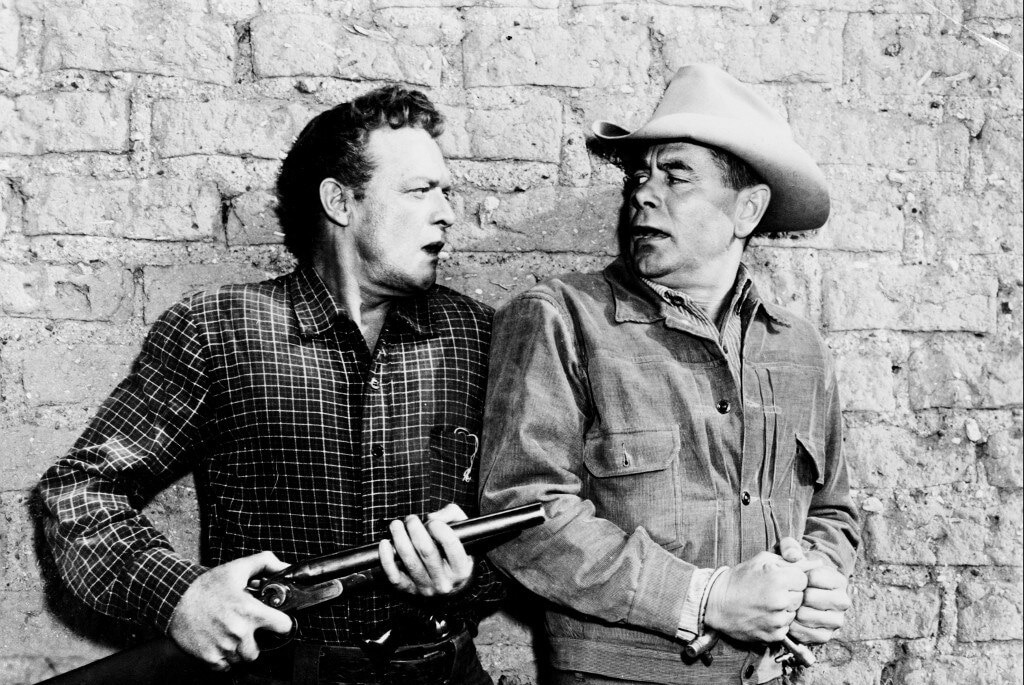
Although most Westerns by this time, including Daves's previous two films Jubal and The Last Wagon, were being produced in color, Daves and Lawton opted to shoot this one in black and white. Lawton used red filters on his lenses, however, to give the landscape an even more starkly parched look, befitting the story's setting amidst a lengthy drought.
by Rob Nixon
Behind the Camera - 3:10 to Yuma
by Rob Nixon | January 08, 2008
SIGN UP FOR OUR NEWSLETTERS

CONNECT WITH TCM