SYNOPSIS
Radio reporter Marcia Jeffries (Patricia Neal) interviews a
backwoods philosopher named Lonesome Rhodes (Andy Griffith) at a southern jail and his
down home wit, personality, and talent with a guitar impresses her. Soon, she begins
to develop him as a radio personality and after his initial debut Lonesome quickly
becomes a star of the airwaves. But as his radio fame grows, the singer/philosopher
sets his sights on television. His Will Rogers-like appeal to audiences is perfectly
captured by the TV cameras and soon transforms him into a powerful national celebrity.
However, Lonesome has a dark side and it begins to emerge as his ego grows larger,
eventually requiring Jeffries and her assistant Mel Miller (Walter Matthau) to take
control of their "creation."
Producer/Director: Elia Kazan
Screenplay:
Budd Schulberg, based on his story "The Arkansas Traveler"
Cinematography: Gayne
Rescher, Harry Stradling, Jr.
Editing: Gene Milford
Music: Tom Glazer
Art
Direction: Paul Sylbert, Richard Sylbert
Cast: Andy Griffith (Lonesome Rhodes),
Patricia Neal (Marcia Jeffries), Anthony Franciosa (Joey Kiely), Walter Matthau (Mel
Miller), Lee Remick (Betty Lou Fleckum), Percy Waram (Colonel Hollister).
B
W-126m.
Why A FACE IN THE CROWD is Essential
A potent message film about the power of celebrity in the mass media, A Face in the
Crowd was not a big success when first released in 1957. Clearly ahead of its
time, and certainly one of the first movies to question the influence of television,
director Elia Kazan and screenwriter Budd Schulberg's jaundiced view of TV now seems
entirely prescient. In this modern age of American culture, where the confluence of
media and politics has never been more tightly intertwined, there have been many media
celebrities who have captured the attention and the imagination of the American
populace, not by their message, but by how they look and sound on television. Kazan
and Schulberg intended A Face in the Crowd to stand as a warning: when we turn
on our television sets, radios, or exercise our right to vote, we should be wary of
the specter of Lonesome Rhodes. It is a warning that still rings true
today.
A Face in the Crowd was made during a time when film
productions fueled by independent producers were crossing the content line of what
Hollywood studios had previously deemed inappropriate or too daring. Kazan and
Schulberg's film crosses this line by not just criticizing Hollywood and the media,
but demonizing it in scenes that demonstrate how it could be complicit in fooling the
masses with charlatan personalities such as Lonesome Rhodes. Other films had spoofed
Hollywood, such as Singin' in the Rain (1952), but very few major productions
exposed the inner workings of the mass media and the calculated methods in which they
influenced the opinions of urban and rural viewers
In Kazan on Kazan
by Michael Ciment, the director commented on A Face in the Crowd: "One of the
points we wanted to make with the picture was the fantastic upward mobility in this
country, the speed with which a man goes up and down. That we both knew well, because
we'd both been up and down a few times. It's best illustrated in the film when he goes
down in the elevator. We were thinking of suicide at one time, but we abandoned
it....Our basic interest in this picture was Lonesome Rhodes as a legend. It was to
make a legendary figure of him, and to warn the public: look out for television.
Remember, this was Eisenhower's time, and Eisenhower won the elections because
everybody looked at him and said: "There's Grandpa!" We're trying to say: never mind
what he looks like, never mind what he reminds you of, listen to what he's
saying....We were also saying, however, that television is a good thing. Abraham
Lincoln said: 'Tell the people the truth, and they will decide what to do.' Well, we
said that television is good for that - it's a better way. Television deludes some
people, exposes others."
A Face in the Crowd was filmed in various
locations in Arkansas, Memphis, Tennessee, and New York City. It was in the 'Big
Apple' that the production utilized the old Gold Medal Studio in the Bronx where D.W.
Griffith and Thomas Ince made many of their pioneering pictures. But, if anything, the
film's authentic milieu is due to the presence of a number of well-known television
personalities playing themselves, such as Mike Wallace, Bennett Cerf, John Cameron
Swayze, Betty Furness, Sam Levenson, Virginia Graham, and Walter Winchell. The film is
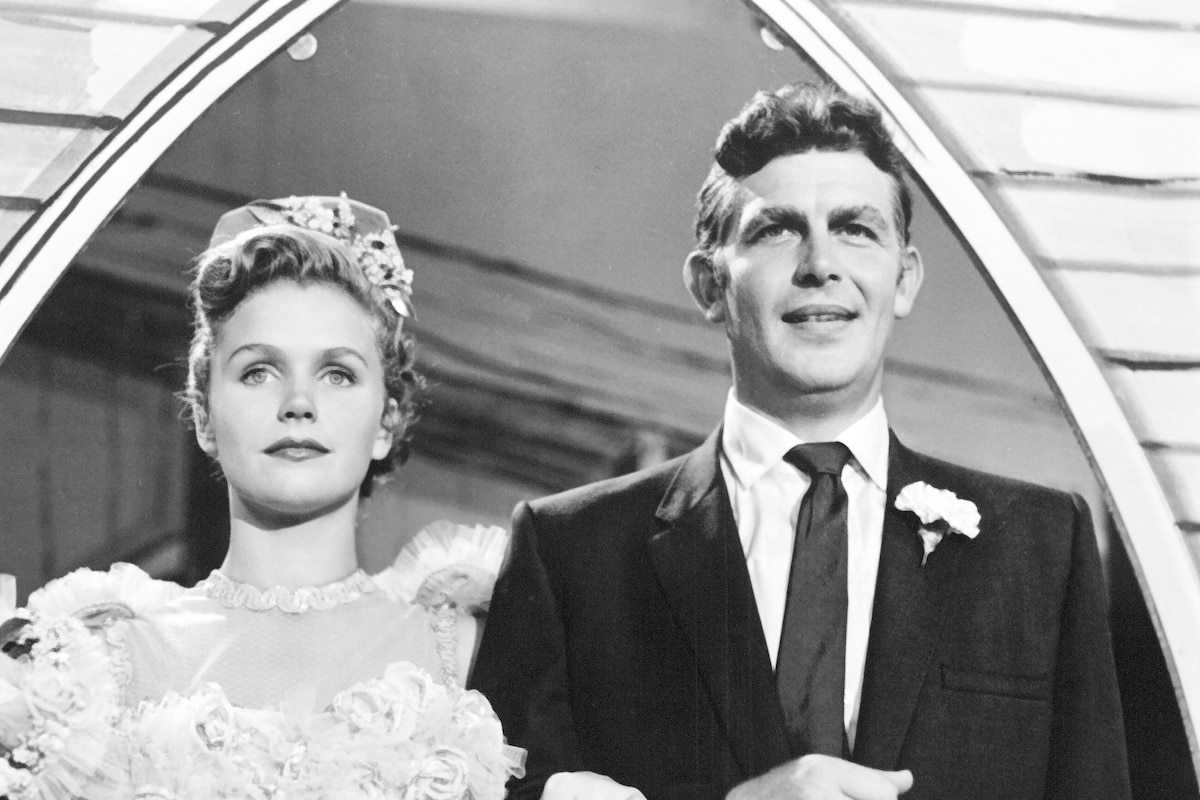
also notable for launching the film careers of Andy Griffith and Lee Remick, both
making their screen debuts here.
At the time of its release, A Face in the
Crowd received a lukewarm welcome from the public and critics alike. Both its
reputation has improved considerably over the years and French director Francois
Truffaut was a champion of the film, writing, " What is important is not its structure
but its unassailable spirit, its power, and what I dare call its necessity. The usual
fault with 'honest' films is their softness, timidity and anesthetic neutrality. This
film is passionate, exalted, fierce, as inexorable as a 'Mythology' of Roland Barthes
- and, like it, a pleasure for the mind."
by Scott McGee & Jeff
Stafford
The Essentials - A Face in the Crowd
by Scott Mc | January 08, 2008
SIGN UP FOR OUR NEWSLETTERS

CONNECT WITH TCM