Shooting Joshua Logan's English-language film on French locations proved confusing to at least one local. A Frenchwoman saw the sign over Chevalier's shop reading "Panisse & Son" and wrongly read it as "Panisse and His," wondering why they hadn't finished the sign.
Marcel Pagnol visited the set to watch the filming of Marius' departure on the Mailaisie.
During the filming of Fanny, Logan and his wife visited businessman George Schlee and Greta Garbo at the house he shared with her at Cap d'Ail.
Because Boyer had not made a film in three years, he received third billing, behind Chevalier and Caron, who had scored a big hit together in 1958's Gigi.
The running times of the original films in the trilogy are Marius, 121 minutes; Fanny, 125 minutes; and César, 124 minutes. By contrast, the remake runs 133 minutes, with less than an hour spent on the plots of the first two films and less than half an hour on the third.
Fanny brought in $4.5 million at the box office, placing it in a three way tie with Come September and North to Alaska as the 11th highest grossing film of the year.
Fanny entered the awards season with major buzz around it, and Maurice Chevalier, in his first non-singing role in an American film, was considered a front-runner in the Best Actor race.
The one market where the Pagnol trilogy failed was New York, where the films were shown without English subtitles in 1938 and quickly faded from the screen.
In 1948, the Pagnol trilogy was re-released in New York City, this time with subtitles. In the wake of a surge of interest in European films since World War II, they became big hits on the art house circuit.
Pagnol's films, which also include Harvest (1937) and The Baker's Wife (1938), would later be hailed by Vittorio de Sica and Roberto Rossellini for their local color and non-judgmental presentation of realistic characters. The Italian directors would even label them the first "neorealist" films.
Taglines promoted Fanny's romantic element: "Reserve your deepest emotions...your sweetest tears and your warmest smiles for Fanny," "Fanny is Life. Fanny is Love" and "Fanny is all the love stories of the world rolled into one."
Original plans to bill the picture as "Joshua Logan's Fanny" were scrapped when members of the press pointed out the phrase's double meaning.
During the Oscar® race and awards season, Chevalier's agent took out a trade ad touting his client's first dramatic performance in a U.S. film: "Introducing a new young dramatic star - Maurice Chevalier."
Memorable Quotes from FANNY
"You know, I always tell you that you have ruined my life, but..." -- Charles Boyer, as César, saying goodbye to his son Marius (Horst Buchholz).
"Were you lying to me last night?"
"No, I wasn't lying to you."
"Then, you're lying to me now."
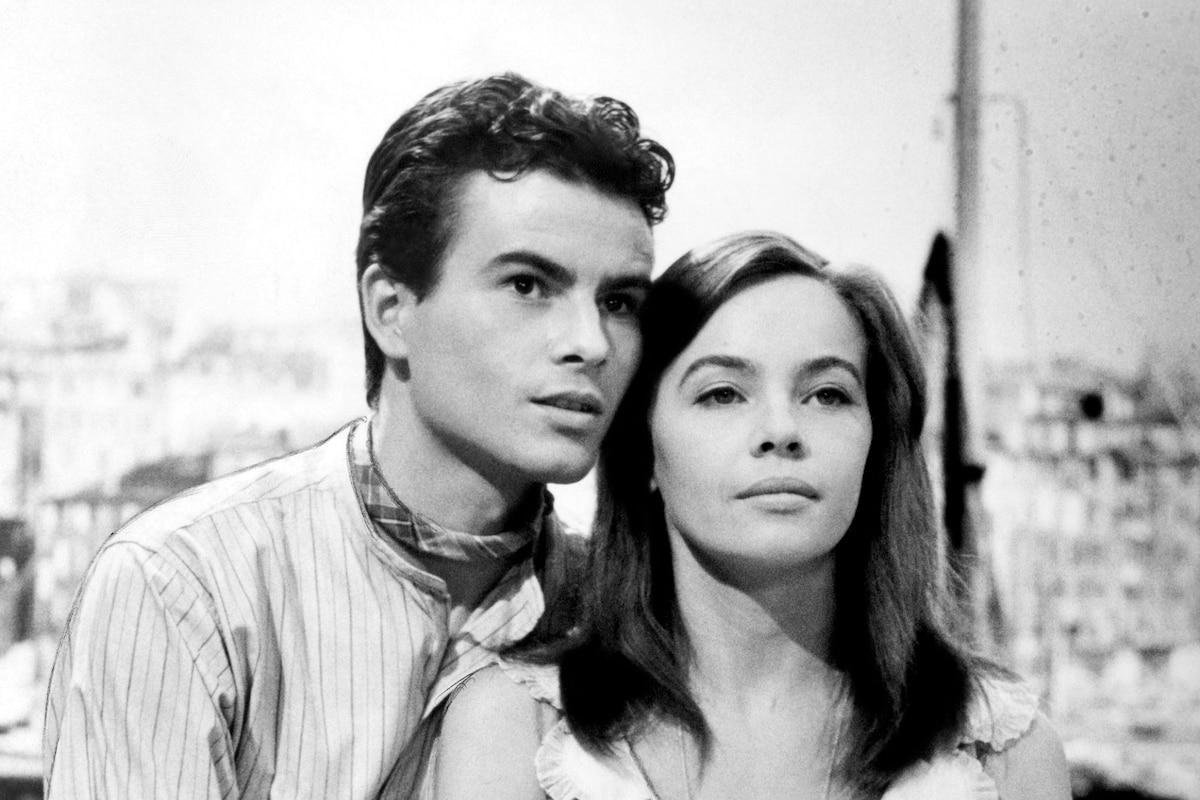
"Oh, God help me!" -- Buchholz, as Marius, quarreling with Leslie Caron, as Fanny.
"I saw that look in his eye. It was as close to passion as you can expect from a man of his age." -- Georgette Anys, as Honorine, advising her daughter -- Caron, as Fanny -- to marry Maurice Chevalier, as Panisse.
"You're a mad dog, and you ought to be shot."
"This is the gun. Shoot!" -- Boyer, as César, quarreling with Chevalier, as Panisse, about his marriage to Caron.
"Volcanic ash." -- Buchholz, describing the reality of the tropical islands of which he had once dreamed.
"Love is like cigarette smoke. It doesn't weigh very much. It takes a lot of love to make 23 pounds." -- Boyer, explaining Chevalier's love for his adopted son, Cesario (Joel Flateau).
"The one who gives the love, he is the father." -- Boyer, settling the issue of Cesario's (Flateau) parentage.
"If I ask your daughter to marry me, it won't be because of your threats, but because I love her."
"If? If? What do you mean, 'If!' -- Buchholz, asking Anys, as Honorine, for Caron's hand.
Compiled by Frank Miller
Trivia - Fanny - Trivia & Fun Facts About FANNY
by Frank Miller | January 08, 2008
SIGN UP FOR OUR NEWSLETTERS

CONNECT WITH TCM