The characters in Fanny appeared in French writer Marcel Pagnol's 1929 play Marius, which would be followed by Fanny in 1931. Both drew on his memories of growing up in Marseilles, where they are set.
Marius reached Broadway as Marseilles, an adaptation by Sidney Howard directed by Gilbert Miller. Dudley Digges starred as Cesar, with Guy Kibbee as Panisse, Frances Torchiana as Fanny, Alexander Kirkland as Marius and Alison Skipworth as Fanny's mother, Honorine. The production only lasted 16 performances.
Marius and Fanny were so popular Pagnol brought them to the screen, with Alexander Korda directing the first in 1931 and Marc Allégret directing the second a year later. Both starred Raimu as César, Pierre Fresnay as Marius, Pagnol's mistress Orane Demazis as Fanny and Fernand Charpin as Panisse. Both proved to be great hits in the international market.
In 1936, Pagnol turned the films into a trilogy with César, directing and writing the new film, in which the stars repeated their roles. The three films have come to be referred to as The Marseilles Trilogy, The Fanny Trilogy or simply The Trilogy. The stage version of César would debut in 1946.
Lawyer David Merrick had long dreamed of becoming a Broadway producer. After a few flops, he bought the stage rights to the trilogy for $30,000 and interested director Josh Logan in adapting it as a musical. They first tried to get Richard Rodgers and Oscar Hammerstein to do the score, with Hammerstein also writing the book. The pair was interested, but wanted sole producing credit. When Merrick asked for the line "In association with David Merrick" below the title, they withdrew. Shortly before his death, Hammerstein admitted to Logan that he should have done the show no matter how the credits read.
Merrick eventually hired noted playwright S.N. Behrman to collaborate with Logan on the book and Harold Rome to write the score for the stage production.
The musical, titled Fanny, opened on Broadway in 1954. Ezio Pinza starred as César, with Walter Slezak as Panisse, Florence Henderson a Fanny and William Tabbert as Marius. The show was a major hit, running 888 performances and bringing Slezak the Tony Award for Best Actor in a Musical.
The musical's success inspired Logan, who moved into film directing in 1955 with Picnic, to propose a film version to Jack Warner, offering to direct and produce the film if Warner would let him shoot it in Marseilles. In picking up the film rights, Warner also withdrew the original Pagnol trilogy from exhibition for decades.
Julius J. Epstein was the only writer Logan considered. They had worked together well on the 1960 comedy Tall Story, but the writer turned him down, claiming that he didn't believe Marius would go away to sea at the story's start. After lengthy discussions, they agreed they could motivate his departure by having him leave to get away from his father.
Logan and Epstein returned to Pagnol's original film scripts for inspiration, but kept the ending from his stage version. Where Marius and Fanny's son had been a young adult in the original César, he is still a child in the re-make. More important, Pagnol had killed Panisse at the start of the third film, which Logan felt had robbed it of suspense. Instead, Logan and Behrman had kept Panisse alive so that, on his deathbed, he could work out the reconciliation between Fanny and Marius.
One crucial decision was Warner's decree that they not make Fanny as a musical on the grounds that musicals were losing money at the time. Although portions of Rome's score were used on the soundtrack, the film itself was a straight comedy-drama. Ironically, the year Fanny opened, one of the biggest moneymakers was the musical West Side Story (1961).
The decision to make Fanny as a straight comedy-drama opened up one casting choice. Logan had approached Charles Boyer about playing César, but that actor had initially refused, stating that he did not sing and would not lip sync to another's voice. When Warner Bros. dropped the musical numbers, he agreed to play the role.
Even without the music, Logan stuck to one of his first choices and cast Maurice Chevalier as Panisse. He and Boyer were old friends, so they were delighted to be working together for the first time.
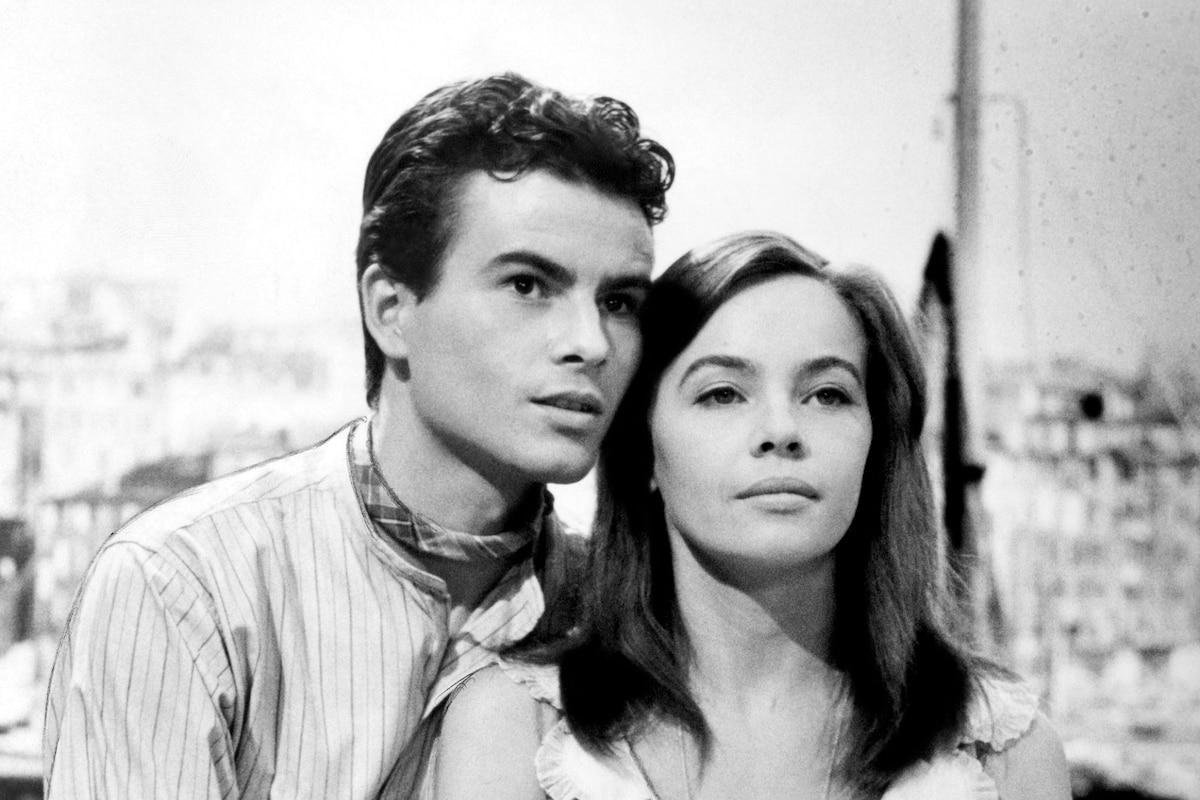
Although he was a German actor, Horst Buchholz was the first choice to play Marius because Logan had been impressed by his performance as a sailor in Tiger Bay (1959). When Logan announced the casting, the French press was appalled, but Buchholz won the reporters over at a news conference.
Logan had a verbal agreement from Audrey Hepburn to play Fanny but other commitments prevented her from doing it. He then courted Leslie Caron, who had scored a hit with Chevalier in Gigi (1958). She was hesitant at first, convinced that the French would hate the film on principle because it was being made in English. She was so moved by the script, however, and eager to work with Boyer, Chevalier and Buchholz, that she agreed three weeks before the start date.
A British actress had been cast as Fanny's mother, Honorine, but during costume tests, Logan realized that she was too ladylike for the role. He paid off her contract and offered the role to French actress Georgette Anys, who had been cast as the woman's assistant. Her only problem was that she barely spoke English. When Logan asked if she could learn the role phonetically, she said, "I could do anything for a good part" (from Movie Stars, Real People and Me).
by Frank Miller
The Big Idea - Fanny - THE BIG IDEA - The Origins of FANNY (1961)
by Frank Miller | June 01, 2008
SIGN UP FOR OUR NEWSLETTERS

CONNECT WITH TCM