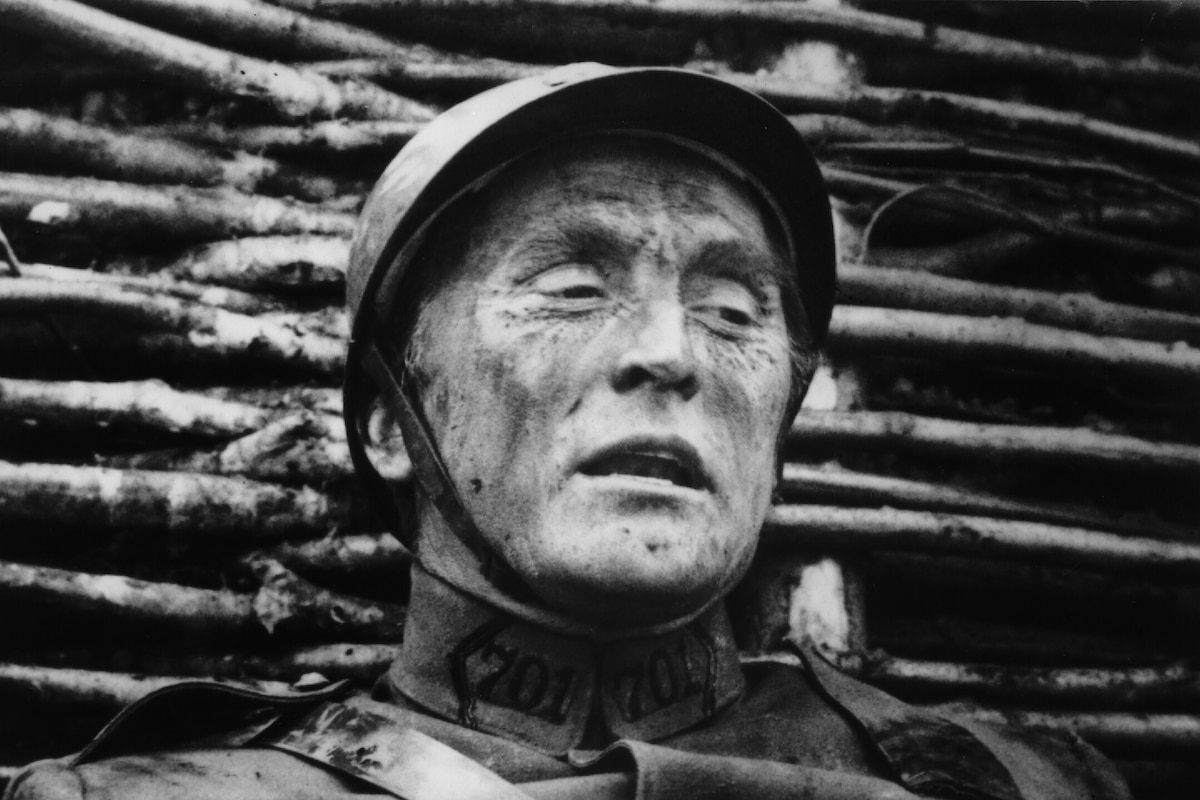
Paths of Glory is but one of many Stanley Kubrick literary adaptations. Starting with The Killing (1956), every one of Kubrick's films after that were adapted from novels or works of fiction.
Paths of Glory has often been compared to director Lewis Milestone's All Quiet on the Western (1930), another literary adaptation that condemned war yet aroused compassion for the men in the trenches. Made when sound equipment was still cumbersome and unwieldy, Lewis Milestone's film broke expectations with an extremely mobile camera, employing many startling tracking shots across "No Man's Land", a technique that Stanley Kubrick adapted and refined in Paths of Glory.
Paths of Glory is an important work in Stanley Kubrick's career. The work shows traces of such formative influences as Max Ophuls, famous for lengthy dolly shots, and Sergei Eisenstein, for his influential dialectical editing and formal framings - all techniques that Kubrick adopted for Paths of Glory and for each of his successive films. Kubrick paid homage to Ophuls throughout Paths of Glory, particularly during the shooting of the scene when Broulard and Mireau first meet. The two men enjoy the luxuries of their rank while wandering around Mireau's salon. Kubrick, who shot much of the film himself, composed this sequence in a series of tracks, following them as they weave around columns, pause at priceless tables for a whiff of cognac, and so on. Kubrick decided to film this sequence midway into the production, so naturally the crew was puzzled about its inclusion. Only at the end of the day's shooting did he whisper to supporting actor Richard Anderson, "Max Ophuls died today. This shot is in his honor."
In 1958, Stanley Kubrick spoke at length about the soldier's experience, as depicted in Paths of Glory: "The soldier is absorbing because all the circumstances surrounding him have a kind of charged hysteria. For all its horror, war is pure drama, probably because it is one of the few remaining situations where men stand up for and speak up for what they believe to be their principles."
by Scott McGee
