SYNOPSIS
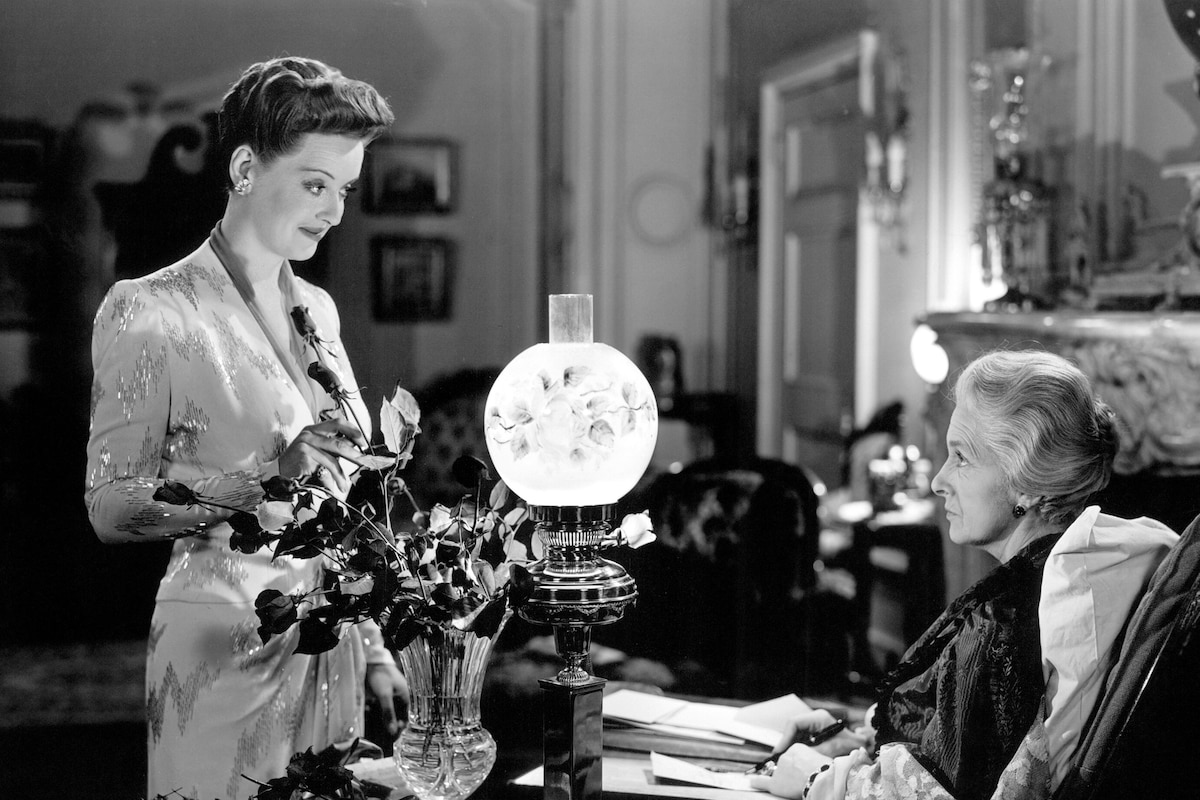
Charlotte Vale (Bette Davis) lives under the thumb of her tyrannical mother (Gladys Cooper) until a nervous breakdown sends her to a sanatorium run by kindly Dr. Jaquith (Claude Rains). After extensive mental treatments, a slimmer, radiant but still painfully sensitive Charlotte stretches her wings on a Latin American cruise where she finds love, almost too late, with unhappily married Jerry Durrance (Paul Henreid). She leaves the cruise a stronger woman, but still has to face life with her mother, the woman who drove her to the brink of insanity once before.
Director: Irving Rapper
Producer: Hal B. Wallis
Screenplay: Casey Robinson
Based on the novel by Olive Higgins Prouty
Cinematography: Sol Polito
Editing: Warren Low
Art Direction: Robert Haas
Music: Max Steiner
Cast: Bette Davis (Charlotte Vale), Paul Henreid (Jerry D. Durrance), Claude Rains (Dr. Jaquith), Gladys Cooper (Mrs. Henry Windle Vale), Bonita Granville (June Vale), John Loder (Elliot Livingston), Ilka Chase (Lisa Vale), Lee Patrick ("Deb" McIntyre), Franklin Pangborn (Mr. Thompson), Janis Wilson (Tina Durrance), Mary Wickes (Dora Pickford), Charles Drake (Leslie Trotter), Reed Hadley (Henry Montague), Tempe Pigott (Mrs. Smith), Frank Puglia (Giuseppe), Georges Renavent (M. Henri), Ian Wolfe (Lloyd)
BW-117m.
Why NOW, VOYAGER is Essential
Now, Voyager was Bette Davis' biggest box office hit of the '40s, marking the pinnacle of her career at Warner Bros. as a romantic leading lady.
The picture also marked the first of four collaborations between Davis and director Irving Rapper, who would reteam for The Corn Is Green (1945), Deception (1946) and Another Man's Poison (1951). Although not as much of an artistic influence on her as director William Wyler, Rapper played an important role in shaping her film career in the forties.
For many historians, Now, Voyager is the ultimate "women's picture" - a romance deftly constructed to delight female viewers by appealing to their romantic fantasies.
Others have pointed to the way Charlotte's growing independence paralleled the plight of American women during World War II, who were forced to draw on inner reserves to raise families and take on factory jobs vacated by men off serving in the military.
In recent years, feminist critics like Jeanne Allen, who edited the published screenplay, have praised Now, Voyager for its depiction of a woman's move into adulthood and independence.
Those factors have also made the film a favorite among gay audiences who feel an identification with both leads, the repressed Charlotte and Jerry, who is trapped in a loveless marriage.
Now, Voyager established Paul Henreid as a major romantic star and launched his association with Warner Bros., his home studio for most of the forties.
by Frank Miller
The Essentials - Now, Voyager
by Frank Miller | January 04, 2008
SIGN UP FOR OUR NEWSLETTERS

CONNECT WITH TCM