The filming of The Bad and the Beautiful began on April 9, 1952.
All of the scenes set at Jonathan Shields' studio were shot on the MGM lot, using the studio's actual facilities. In addition to studio sets, The Bad and the Beautiful would also feature location shots of the Beverly Hills Hotel and of Lake Arrowhead.
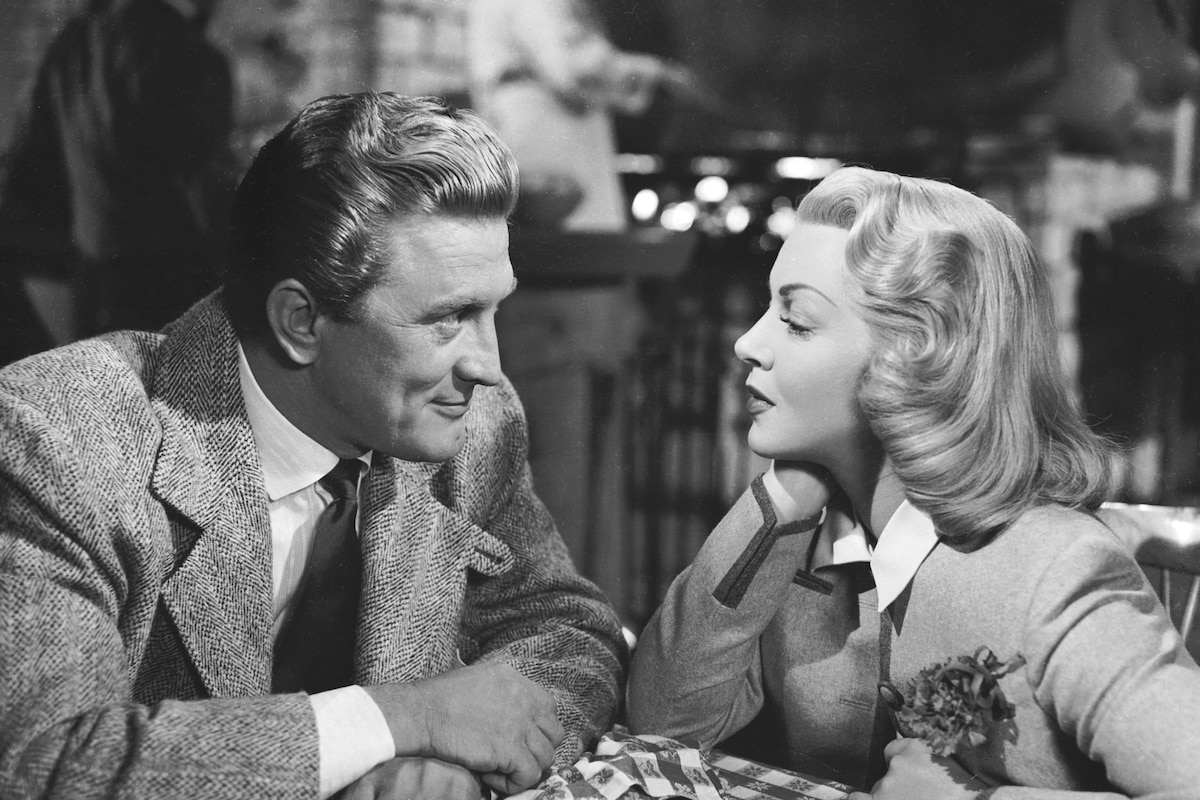
In conferences with Kirk Douglas, director Vincente Minnelli suggested he downplay his character's explosive side and focus on charm instead. Douglas agreed, but throughout shooting whenever he finished a scene, he would say, "I was very charming in that scene, wasn't I?" After The Bad and the Beautiful was completed, Douglas sent Minnelli a note complimenting him for "[getting] out of me a much more quiet quality than I have ever been able to get in any picture" (Douglas quoted in Minnelli, I Remember It Well).
Concerned about Lana Turner's insecurities and talk of her limited acting abilities, Minnelli got her through her first scene by telling her that every retake was the result of somebody else's problem. Through gentle coaching he got a strong performance out of her while also keeping her confidence intact.
Minnelli was so impressed by Ned Glass' performance as the wardrobe man trying to foist his cat suits on Kirk Douglas and Barry Sullivan for their first film, The Doom of the Cat Men, he kept expanding his role. After two days of shooting, he still needed a close-up of Glass, but the next day the actor did not show up. Having failed to do a thorough background check before shooting started, MGM had hired Glass without realizing he had been blacklisted. The night before his final shot, studio security had called to inform him he would not be allowed on the lot. After a hasty conference with studio executives, MGM decided they would rather ignore the blacklist than pay the $20,000 to $30,000 it would require to re-shoot the key scene.
Minnelli wanted the music for the long, silent scene in which Lana Turner runs from her dressing room through a deserted sound stage, composed before shooting. That way he could match his blocking and camera movements to the score.
Realizing the film's shooting title, Tribute to a Bad Man, could lead audiences to expect a Western, Houseman put out a call for new title suggestions. MGM Vice President in Charge of Publicity Howard Deitz quickly sent back The Bad and the Beautiful, an acknowledged bow to F. Scott Fitzgerald's story "The Beautiful and the Damned." Houseman and Schnee did not like that title which sounded like a cheap paperback novel, but MGM production head Dore Schary overruled them.
The scene in which Turner drives off into the rainy night after discovering that Douglas has been cheating on her was so complicated it took weeks after she had finished the rest of her scenes before she got to film it. Minnelli put the car's interior on a turntable, then choreographed the cameras moves in and out as the turntable shifted position. He then instructed Turner to build her emotions to hysteria throughout the complicated take. It took a day to get all the angles Minnelli wanted, by which time Turner truly was hysterical. The scene was one of the most memorable in The Bad and the Beautiful.
Composer David Raksin had scored a huge hit with the theme song for the film Laura (1944) but resented the fact that the lyricist received an equal share of the profits. As a result, he insisted that the love theme from The Bad and the Beautiful be released strictly as an instrumental. It became a hit, but not at the same high level of his theme for the earlier film.
The filming of The Bad and the Beautiful finished on June 4, 1952, with Houseman bringing the film in on a tight budget of $1,558,263.
To somewhat soften the depiction of Douglas' character, Minnelli cut a scene in which he accepts the Best Picture Oscar® for the film whose idea he had stolen from his best friend. In the scene, Shields devotes most of his speech to his late father, then makes only a brief mention of his friend at the end.
Stories about the film's basis in fact were so strong that independent producer David O. Selznick asked one of his lawyers to view the film and let him know if it contained anything libelous about him. Despite the parallels between Selznick's life and that of the father-obsessed independent producer played by Douglas, the lawyer determined that there were no grounds for a lawsuit.
Although preview audiences were generally positive about The Bad and the Beautiful, many felt it was too long, prompting MGM to cut almost 12 minutes, including shots of Douglas in Paris as he phones to ask his former friends to work on his next film and a scene in which Turner and Powell meet for the first time.
Publicity for The Bad and the Beautiful focused on the romance between Douglas and Turner's characters. Taglines included "I took you out of the gutter...I can fling you back!" and "The story of a blonde who wanted to go places, and a brute who got her there -- the hard way!"
The Bad and the Beautiful had its New York premiere at the Radio City Music Hall on January 15, 1953.
by Frank Miller
Behind the Camera - The Bad and the Beautiful
by Frank Miller | January 03, 2008
SIGN UP FOR OUR NEWSLETTERS

CONNECT WITH TCM