A gripping thriller set on a doomed German submarine during the final years
of WWII, Das Boot (1981) established Wolfgang Petersen's gift for
directing action films. Petersen received Academy Award nominations for
Best Director and Best Adapted Screenplay as his film garnered a total of
six nominations. Costing almost $12 million to make, Das Boot was
the most expensive German film of its time and significantly altered the
common perception of the German cinema as anti-Hollywood intellectualism
typified by directors like Wim Wenders and Rainer Werner Fassbinder.
The story for Das Boot was taken from the actual experiences of
photographer Lothar-Guenther Buchheim (played in the film by Herbert
Gronemeyer) who chronicled his wartime adventures in a best selling
semi-autobiographical novel published in 1973. In addition to the
insights into submarine warfare provided in his novel, many of Buchheim's
photos of the interior of a German U-boat proved invaluable in recreating
the look of life on the sub.
The film centers on the dramatic shifts that occur on board a U-boat
patrolling the North Atlantic in 1941 as experienced by the sub's
strong-willed Captain (Jurgen Prochnow) and his crew. Das Boot is
comprised of moments of extreme tedium, as the crew awaits their next
battle or the medic
examines the men for venereal disease in the ship's cramped quarters.Petersen's film then shifts suddenly and dramatically to heart-pounding
tension as the sub engages in battles with British warships. One of the
film's most memorable scenes is a battle that occurs midway through the
picture as the U-96 tries to
penetrate the British-controlled Strait of Gibraltar by sneaking past a
flotilla of enemy destroyers. Petersen's edgy, intense use of hand-held
cameras enhances the
reality-effect inside the ship and magnifies the tension throughout the
film. That sense of veracity was achieved through a great deal of unseen
preparation on the part of the film's photographer Jost Vacano who raced
back and forth within a claustrophobic submarine interior in order to film
the action without
injury to self or camera.
The gloomy, doom-filled ambiance of Das Boot, in which every battle
seems like the crew's last, was backed up by historical fact. Of the
40,000 members of German U-boat crews who served during WWII, only 10,000
survived.
Das Boot is notable for its sympathetic treatment of the naive,
young men
aboard the submarine who seem to sense their own impending doom in a
near-suicidal self-destructive drinking binge that opens the film.
Combining rousing action with an anti-war message, Das Boot conveys
the yearning and loneliness of soldiers missing home and wives who have
been placed in an inescapably desperate situation by the rulers of the
Reich. Strangely enough, the events of the film bear a strong resemblance
to a 1933 Ufa production called Morgenrot (Dawn) a film
endorsed by Hitler and Goebbels as
brilliant military propaganda for the masses.
Many critics of the film upon its original release (a longer Director's Cut
was later released in 1997 with newly added footage and redesigned sound
effects) noted the absence of any real character development in this cast
largely composed of unknowns. The boat itself, some noted, seemed to
instead serve as the audience's primary point of identification. But that
lack of focused attention to one individual also helps make the film more
resonant as a statement about war in which the horrific circumstances of
many soldiers are privileged above the unique suffering of just one.
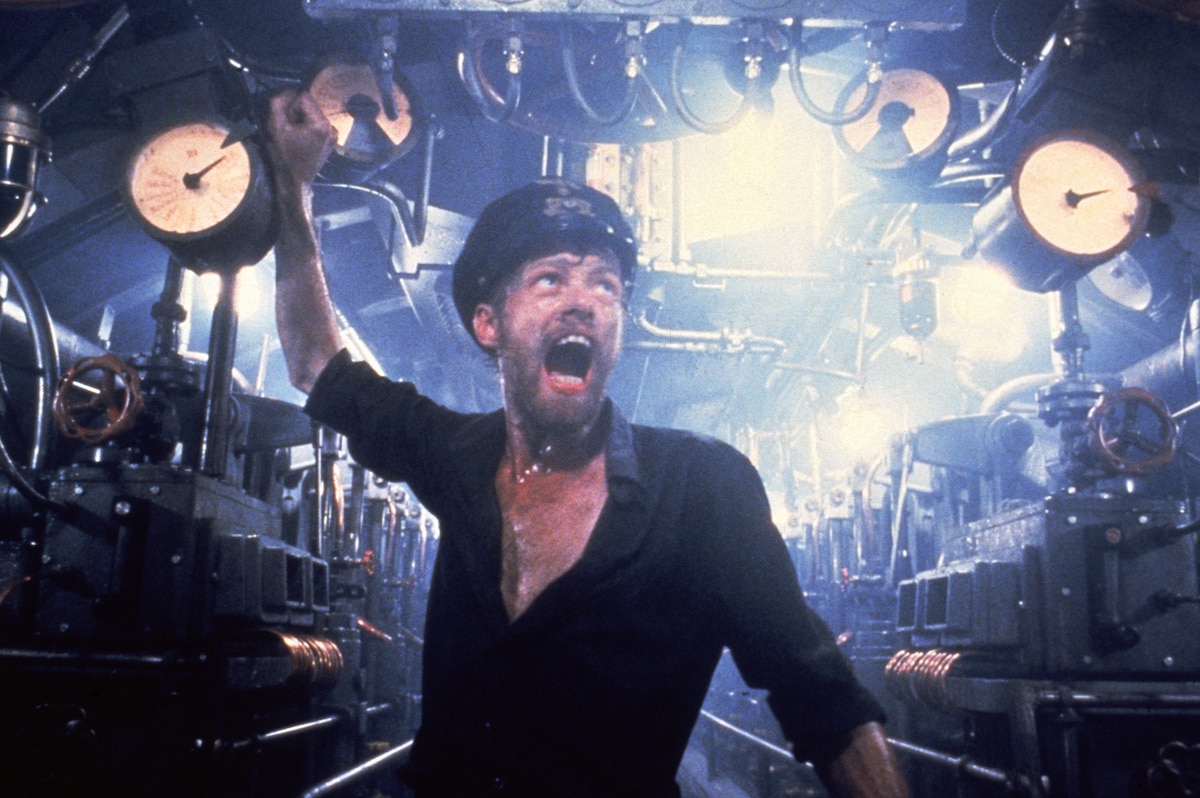
Most of all, Das Boot is revered as a film of remarkable technical
proficiency and skill including Rolf Zehetbauer's production design of the
U-96 interiors and the rapid editing of Hannes Nikel. Das Boot went
on to secure the Hollywood futures of both Petersen (The Neverending
Story (1984), In the Line of Fire (1993), Outbreak
(1995), Air Force One (1997) and Director of Photography Vacano
(Starship
Troopers (1997)) as two of Hollywood's most sought after talents.
Considered a major influence on the contemporary action film, Das
Boot was especially notable for its innovative use of sound to enhance
the claustrophobic sense of entrapment inside the small
submarine, as with the creaking pressures on the beleaguered sub of tons of
seawater crushing in upon its frame.
Das Boot's effectiveness as an action film was best evidenced in the
film's public reception. The film went on to be the highest grossing
production in the history of the German cinema and the most successful
foreign language film ever released in the United States.
Director: Wolfgang Petersen
Producer: Guenter Rohrbach
Screenwriter: Wolfgang Petersen from the novel by Lothar-Guenther Buchheim
Director of Photography: Jost Vacano
Production Design: Rolf Zehetbauer, Goetz Weidner
Music: Klaus Doldinger
Cast: Jurgen Prochnow (The Captain), Herbert Gronemeyer (Lt.
Werner/Correspondent), Klaus Wennemann (Chief Engineer), Hubertus Bengsch
(1st Lt./Number One), Martin Semmelrogge (2nd Lieutenant), Bernd Tauber
(Chief Quartermaster).
C-209m. Letterboxed.
In German with English subtitles
by Felicia Feaster
Das Boot
by Felicia Feaster | December 18, 2002
SIGN UP FOR OUR NEWSLETTERS

CONNECT WITH TCM