Since The Fast and the Furious marks so many "firsts" for Corman himself, it's worth remembering the names of others who got their first directorial chops at the "Corman film school." As is oft cited, Corman is credited with having launched the careers of several directors who went on to bigger budgets and critical acclaim. They include Francis Ford Coppola, Martin Scorsese, Peter Bogdanovich, Joe Dante, Jonathan Demme, John Sayles, Ron Howard, and James Cameron.
As to Corman himself, although commonly referred to as "King of the Bs" (in reference to the hundreds of films he's made that many people think of as "B-movies"), Corman resisted the term "B-movie" because the proper definition of that term points to an old distribution pattern used by the studio system for short and cheap "filler" films that were meant to be paired up with bigger-budgeted "A-movies" that had recognizable actors. Instead, Corman thought of himself, initially, as a maker of "exploitation films" in the vein of, for example, earlier RKO pictures that were stand-alone and low-cost features powered by showmanship in their appeal to broad audiences. In the mid-seventies, when horror and science-fiction films obtained blockbuster status with the likes of Jaws (1975) and Star Wars (1977), Corman began describing himself as a "genre filmmaker." What moniker does he prefer now? If his official website is any indicator, it seems he likes the ring of "Reigning King of Independent Films."
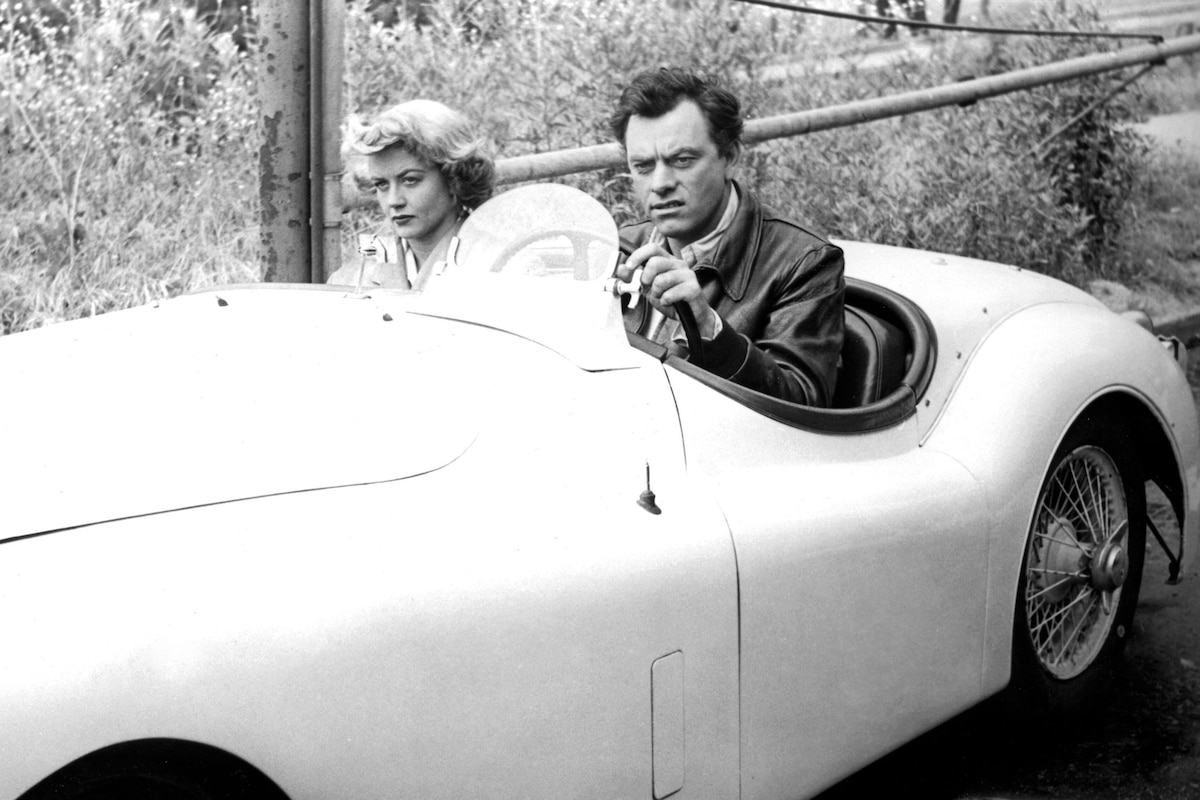
According to the Internet Movie Database, "a running gag in Hollywood was that Corman could negotiate the production of a film on a pay phone, shoot the film in the booth, and finance it with the money in the change slot." If that seems like an exaggeration, consider that he set the world's record for the shortest shooting schedule for a feature film by making The Little Shop of Horrors (1960) in two days. That makes the nine days it took to shoot The Fast and the Furious seem like chump change, by comparison. And, speaking of change:
When Corman branched out into distribution with his brother (Gene Corman) via their company New World Pictures in 1970, along with all the usual films one might associate with Roger Corman, he was also responsible for importing to the U.S. such notable European art-house staples as Bergman's Cries and Whispers (1972), Fellini's Amarcord (1973), Truffaut's Small Change (1976), Kurosawa's Dersu Uzala (1975), and Herzog's Fitzcarraldo (1982). Corman's own website boasts that "in a 10-year period, New World won more Academy Awards for Best Foreign Film than all other studios combined." Lest the Canadians be forgotten, it should be mentioned that David Cronenberg also got a boost from New World Pictures when it distributed Rabid (1977) and The Brood (1979). And speaking of Canadians:
John Ireland (1914-1992) started out as a performance swimmer in a water carnival but he went on to land acting parts on Broadway before becoming a film actor in the 1940's. A well-known lothario, Ireland also found himself in the tabloids in connection to such starlets as Natalie Wood and Sue Lyon. In Red River (1948), Howard Hawks added a scene in which Ireland and Montgomery Clift compare gun sizes in an allusion to how Ireland was physically endowed. In 1949 he became the first Vancouver-born actor to be nominated for an Academy Award® for Best Supporting Actor as a reporter in All the King's Men (1949). In the early 1950's Ireland mostly worked in "B" pictures, but still got the occasional supporting role in a major motion picture, such as Spartacus (1960). A few years after the release of The Fast and the Furious, when Ireland was 45, he was quoted on his affair with 16-year-old Tuesday Weld as saying "If there wasn't such a difference in our ages I'd ask her to marry me. That and her mother are the only things that stop me."
Ireland wasn't the only cast member from The Fast and the Furious to get award kudos. Cinematographer Floyd Crosby (1899-1985, father of musician David Crosby) won the Academy Award® for his work on Tabu (1931) and also earned a Golden Globe® for High Noon (1952). Only three years after playing Connie in The Fast and the Furious, Dorothy Malone received the Oscar® for Best Actress for Written on the Wind (1956). Roger Corman has been feted several times with "Lifetime Achievement" awards and, in 1998, received the first Producer's Award ever given at the Cannes Film Festival.
The writers: Jerome Odlum (1905 1954) would die of a heart-attack soon after the release of The Fast and the Furious. He was better known as a novelist, and fans of prison films would surely recognize a couple of his works to make it to the screen: Each Dawn I Die (1939) and Dust Be My Destiny (1939). Jean Howell (1927-1996) was mainly a TV actress, but she had a brief role in The Fast and the Furious as Sally Phillips and was married to Larry Thor, who also had a role in The Fast and the Furious as Detective Sergeant. Where Kevin Bacon has his six degrees of separation it seems like Roger Corman connections could be made with far fewer degrees of separation (and Corman would milk them all for far more).
Compiled by Pablo Kjolseth
SOURCES:
The Film Encyclopedia by Ephraim Katz
VideoHound's Complete Guide to Cult Flicks and Trash Pics
Internet Movie Database
Roger Corman, Blood-Sucking Vampires, Flesh-Eating Cockroaches, and Driller Killers by Beverly Gray
B-Notes User's Guide to Dubious Movies, by Jabootu
In the Know (Fast and The Furious) - TRIVIA
by Pablo Kjolseth | October 22, 2007
SIGN UP FOR OUR NEWSLETTERS

CONNECT WITH TCM