When surveying the impressive resume of the prolific, pugnacious Hollywood
director William A. Wellman, the pre-code potboiler Midnight Mary (1933)
won't likely be amongst the most recognizable entries. It is, however, well worth rediscovery, as a crisply
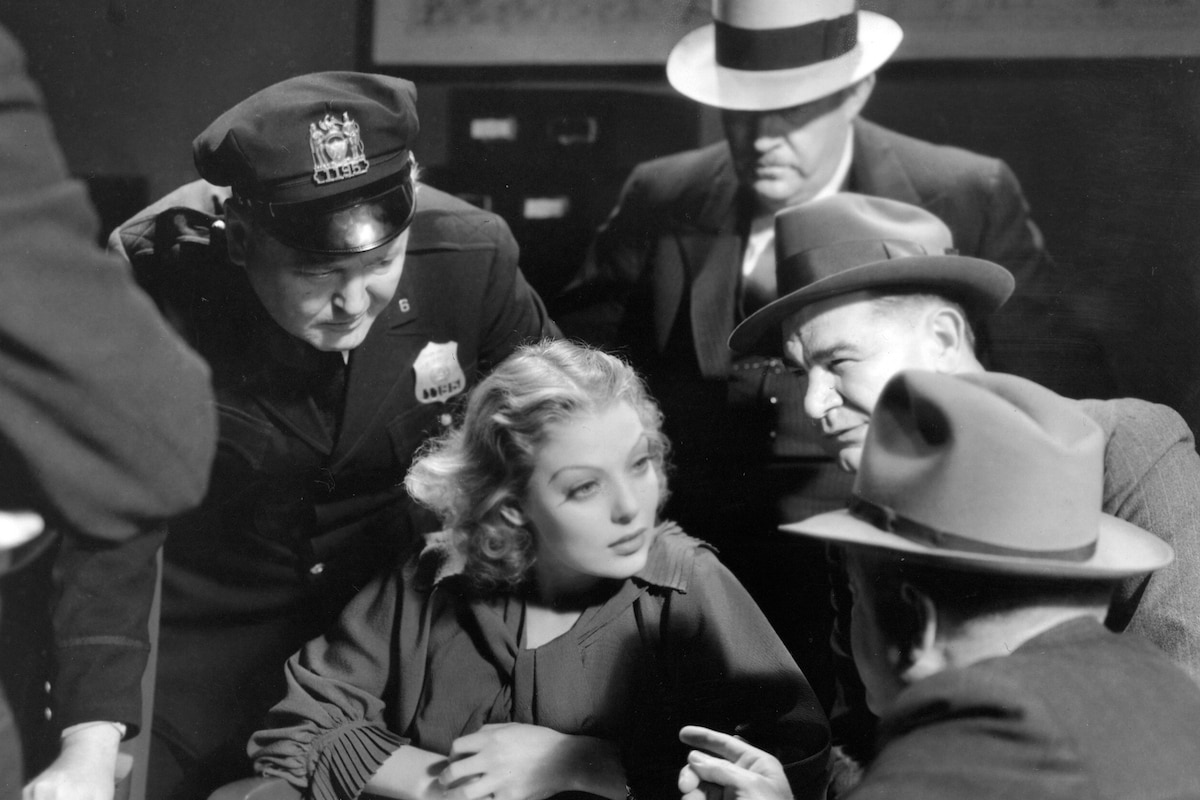
told tale of Depression-era desperation showcasing Loretta Young at the height of
her beauty, with plenty of Wellman's signature motifs and touches in play.
The story opens with Mary Martin (Young) in the docket, awaiting the jury's
findings in her just-concluded trial for murder, and reflecting on the tawdry
past that brought her to her present circumstances. As a young orphan, she takes
a bum rap on a thievery charge, leading to years of institutionalization. Upon
her release, she and her cohort Bunny (Una Merkel) are at loose ends when they
fall in with the slick thug Leo Darcy (Ricardo Cortez), who has no problem using
the girls as unwitting accomplices in a robbery. Mary leaves Leo in disgust, but
after her efforts at leading an honest life are rebuffed, she slinks back to an
existence of working his rackets and sharing his bed.
A few years later, Mary is casing a gambling house Leo intends to knock over, when she catches the eye of upper-crust attorney Tom Mannering (Franchot
Tone). The smitten lawyer helps her escape when the robbery goes awry, and hides
her from the cops at his home. Moved by Mary's desire to go straight, Tom sets
her up with stenography lessons and a secretarial position at his firm. Unfortunately,
the truth about her past ultimately comes to light; hoping to spare Tom's
feelings and let him move on with his life, Mary gives him a brusque brush-off
on her way back to prison. Leo's all too happy to have her back in the fold once
she gets out, but he's much less pleased when he discovers her lingering
affections for Tom.
The film's scenario was adapted from an Anita Loos story by the team of Gene
Markey and Kathryn Scola, a duo who provided plenty of pertinent pre-code
proto-feminist sagas during the era, such as Baby Face (1933) and
Female (1933). Wellman had a marked fondness for the device of flashing
back to the youth of his pivotal characters; in this instance, he took a risk by convincing Young and Merkel to portray themselves
as pre-teens. "By shooting them without makeup and slightly elevating the
camera's gaze to look down on them, the effect was quite convincing," declared
Frank T. Thompson in William A. Wellman (The Scarecrow Press).
MGM received the services of both Young and Wellman on loan from Warner, and
Midnight Mary marked the macho and often abrasive filmmaker's first
effort for Metro since his dismissal after completing The Boob (1926).
While it seems unlikely that "Wild Bill" could be very simpatico with the demure
actress, only Barbara Stanwyck made more appearances (five) as Wellman's female
lead. (Young's other Wellman vehicles included The Hatchet Man (1932),
Heroes for Sale (1933) and The Call of the Wild (1935), where she
had her notorious off screen liaison with Clark Gable.)
"I felt very secure when I was
working with Wellman," the actress was quoted in Joe Morella and Edward Z.
Epstein's Loretta Young: An Extraordinary Life (Delacorte Press). "There was
nothing phony or artificial about him. He was also attractive in every way. He
liked to shoot fast, in one take, and his energy went right through him and into
the actors. A director is boss for a reason, and Bill was good."
Wellman came through on the project professionally, with the possible exception
being his tenuous relationship with assistant director Mike Lally, whom the
director had reportedly once fired a gun at for moving too slowly. Later that
year, the two would get into a well-publicized fistfight on the set of the
rather ironically titled Looking for Trouble (1934). Midnight Mary
is also notable as it represents one of the very rare bad-girl
assignments on the famously strait-laced Young's career resume. "In one scene
she couldn't understand why [the Cortez character] slaps her," Morella and
Epstein recounted. "'Because you're his girl,' Wellman explained. 'He doesn't
have to slap me.' 'Yes, he does.' Wellman never came right out and said, 'Because you're
sleeping with him,' and Young said years later that even if she had known what
Wellman was talking about she would have put it out of her mind."
Producer: Lucien Hubbard
Director: William A. Wellman
Screenplay: Gene Markey, Kathryn Scola, Anita Loos
Cinematography: James Van Trees
Film Editing: William S. Gray
Art Direction: Stan Rogers
Music: William Axt
Cast: Loretta Young (Mary Martin), Ricardo Cortez (Leo Darcy), Franchot Tone (Thomas Mannering, Jr.), Andy Devine (Samuel Travers), Una Merkel (Bunny), Frank Conroy (District Attorney).
BW-74m.
by Jay S. Steinberg
Midnight Mary
by Jay S. Steinberg | September 12, 2007
SIGN UP FOR OUR NEWSLETTERS

CONNECT WITH TCM