"Attempting to yoke the horror film with the appeal of the blaxploitation movies of the early seventies notably crime pictures like Shaft (1971) Blacula emerges as a largely unenterprising 'gimmick' movie." ... "Besides not making use of the protagonists blackness for any purpose of social or philosophical provocation, the film is dully scripted and for the most part flatly directed."
- Phil Hardy, The Overlook Film Encyclopedia of Horror.
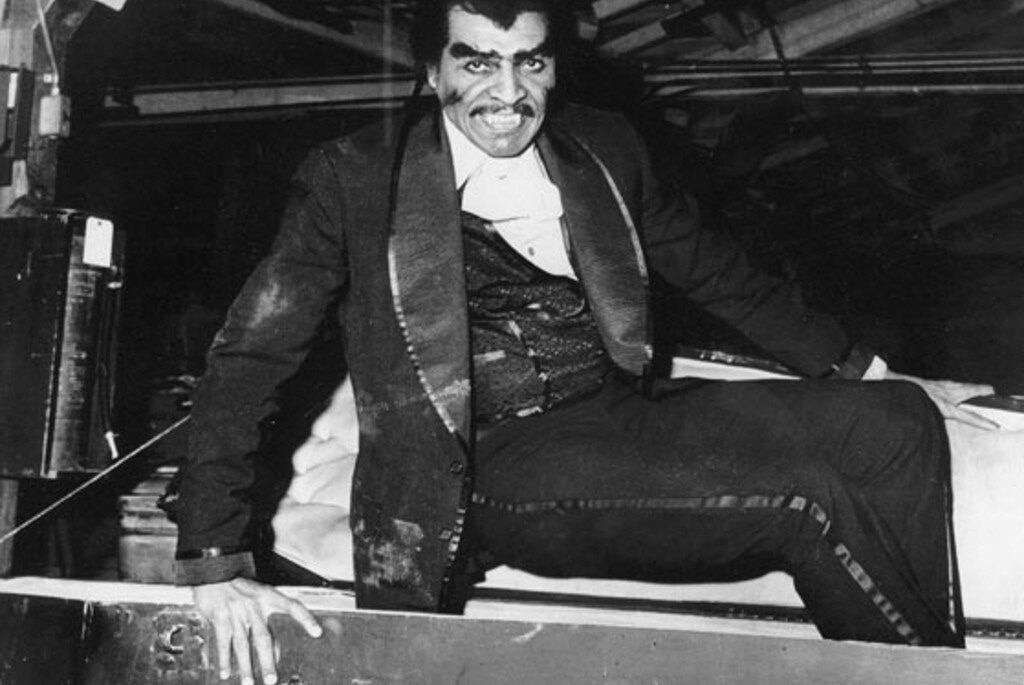
"Racist twist on the old vampire cliché: A black African Prince (William Marshall) is resurrected in Transylvania and shipped to L.A. As if the city isn't cursed enough, Prince Mamuwalde inflicts his own pain via punctures in the neck. Blacula falls for a reincarnated princess and pursues low-life types and cops through ghetto streets. It's such bloody good fun, it's a crying shame when the sun comes up."
-John Stanley, Creature Features Movie Guide Strikes Again
"Successful melding of blaxploitation and horror benefits from stately performance by Shakespearean vet Marshall (later the King of Cartoons on Pee Wee's Playhouse). With Denise Nichols (of TV's Room 222), Thalmus Rasulala, and Elisha Cook, Jr. (as a hook-handed hospital orderly). Followed by an inferior sequel, Scream, Blacula, Scream [1973] with Pam Grier (directed by Bob Kelljan of The Return of Count Yorga [1971] fame) and numerous pathetic imitators (Blackenstein [1973], Dr. Black and Mr. Hyde [1976], Abby [1974])." Three Bones.
- Carol Schwartz, Video Hound's Guide to Cult Flicks and Trash Pics
"Better than most of the black horror films, but besides the initial novelty, it's pretty ordinary. William Marshall is good as Mamuwalde, a vampire in modern L.A. As a former African prince bitten by the original Dracula, he's appalled by contemporary customs and morals, putting the bite on drug dealers and homosexual antique dealers to help clean things up. Thalmus Rasulala finally defeats him. With Denise Nicholas (Room 222), Elisha Cook, Jr., (with a mechanical hook hand), Vonetta McGee, and Gordon Pinsent. It was billed as the first black horror film. It wasn't. Scream, Blacula, Scream was the sequel. Music by The Hues Corporation."
- Michael Weldon, The Psychotronic Encyclopedia of Film
"Though dated by its costumes and jive-talkin' dialogue, this remains the best of the early '70's blaxploitation horror films. Marshall is magnificent as African Prince Mamuwalde, cursed by Dracula and unearthed in modern L.A., where he puts the bite on a pair of gay antique dealers, a lady cabbie, and a night club photographer while romancing a young woman (the beautiful McGee) he takes for the reincarnation of his late wife. Sometimes looks like a cross between Count Yorga, Vampire and an episode of Good Times, but strong acting and some effective shock sequences make it a kick to watch." Three stars.
- James O'Neill, Terror on Tape
"If Blackenstein was one of the worst blaxploitation films ever made, Blacula is easily one of the best. Respected stage actor Marshall is outstanding in this subtle tongue-in-cheek version of the vampire legend... Although Blacula is surprisingly conventional (given the concept's potential) and painfully low-budget, the hammy performance by Marshall makes it enjoyable." Three stars.
- TV Guide
"Anybody who goes to a vampire movie expecting sense is in serious trouble, and Blacula offers less sense than most. But it does provide such bits of knowledge as the 'well-known fact' (not well-known to me) 'that vampires multiply geometrically . . .', or the useful information that a silver cross will also work against Third-world vampires from emergent African nations."
- Roger Greenspun, The New York Times.
"Some terrific shocks and some very lively dialogue."
- Leonard Maltin's Movie Guide
Compiled by Pablo Kjolseth
Yea or Nay (Blacula) - CRITIC REVIEWS OF "BLACULA"
by Pablo Kjolseth | August 22, 2007
SIGN UP FOR OUR NEWSLETTERS

CONNECT WITH TCM