Blacula was directed by William Crain, whose TV work would include directing episodes of The Mod Squad, S.W.A.T. , Starsky and Hutch, and The Dukes of Hazzard.
Most critics of Blacula agree that William Marshall's central performance as the vampire played straight and with a deep, rumbling voice - is what both anchor and elevate the film to something beyond initial expectations. Marshall's background included training in Grand Opera, Broadway, and Shakespeare, and is also recognizable for his many acting roles on TV (The Alfred Hitchcock Hour, Bonanza, Star Trek, The Wild Wild West, etc.) In the 1980's he was known as the King of Cartoons on Pee Wee's Play House.
Marshall is credited with suggesting his character be an African prince and that the name be changed from Andrew Brown (a reference to Amos and Andy) to Mamuwalde. He is quoted as saying: "I daresay the vast majority of people don't go to the theater, so I don't mind that I'm still so strongly identified with Blacula. I did enjoy Blacula to a great extent. Early on, young Black people who didn't know my name would yell at me on the street 'Mamuwalde, hey! Mamuwalde!' It was especially pleasing that I was being called by the African name I gave the character. I asked one young fan 'Who do you think I am?' He said, quoting from the nightclub scene, 'You know, you're the strange dude!'"
Blacula's first theatrical run was a financial success and it spawned a sequel, Scream, Blacula, Scream (1973). It also inspired many other entries in the blaxploitation/horror genre such as Blackenstein (1973), Ganja & Hess (1973), the Exorcist rip-off Abby (1974, also starring William Marshall), The House on Skull Mountain (1974), Sugar Hill (1974), Dr. Black and Mr. Hyde (1976), and J.D.'s Revenge (1976) but none were as successful at the box office as Blacula. Rumors of a film called Black the Ripper (1976) appear to be based on a Variety ad for the film's pre-production put out by the writer and director Frank R. Saletri (1928-1982), but aside from some word-of-mouth assertions by viewers who claim to have seen it no copies have yet surfaced.
The trailer for Blacula is reported to have been so popular with black audiences that many supposedly went to the cinema just to see the trailer.
Blacula's song credits, "What the World Knows," "There He Is Again," and "I'm Gonna Get You," were written by Wally Holmes and performed by The Hues Corporation who are also seen performing in Blacula. The name of this Santa Monica soul trio is a pun on the Hughes Corporation (with the word "hue" referring to their African-American heritage). They are best known for their #1 hit "Rock the Boat" (1974) and they would later share the stage with the likes of Frank Sinatra and Glen Campbell. Blacula was their first big break. The song "Main Chance" was sung by 21st Century Limited.
In 2003 a reissued CD of Blacula was made available. The track listings are below:
1. Blacula (The Stalkwalk)
2. Heavy Changes
3. Run, Tina, Run!
4. There He Is Again
5. Movin'
6. Main Chance
7. Good to the Last Drop
8. Blacula Strikes!
9. What the World Knows
10. I'm Gonna Catch You"
11. Call
12. Firebombs
13. Finding Love, Losing Love
14. Wakeeli (Swahili Farewell)
Sandy Dvore, who worked on the film title credits, was first known for designing the cover art for Buffalo Springfield's first album, and he went on to design the title sequences for TV shows (The Partridge Family) and soaps (The Young and the Restless, Knots Landing) and films (Blacula, Lipstick, 1976).
Anyone inclined toward an academic perspective with a focus on "the male gaze" can have a field day with Blacula. A scene at the nightclub is hilariously un-P.C., as the camera zooms in on a dancing woman's shaking butt and jiggling breasts. Of course, there is no "male gaze" quite like that of a vampire; once they stare deep into your eyes you become their slave and do their bidding. The last topic could have been rich fodder for a blaxploitation film but was left curiously untouched.
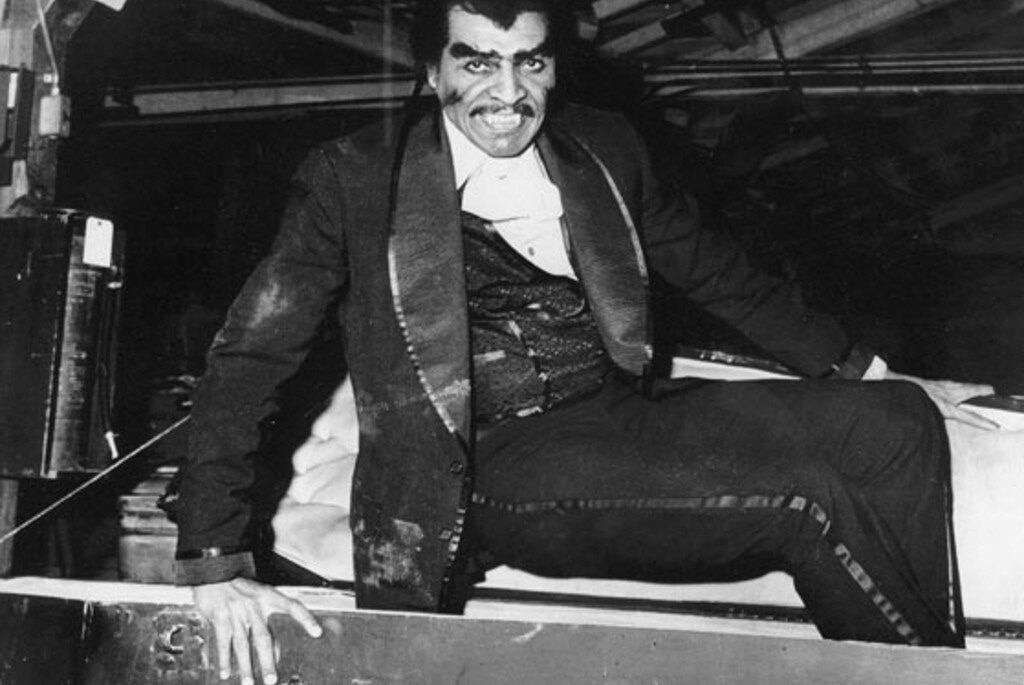
When Prince Mamuwalde is feeling social, he looks as dashing as he did back in 1870. But when he's angry or hungry he's Blacula - and he sports bushy eyebrows and hairy upper cheeks.
Roger George (Special Effects) got his start with Invisible Invaders (1959), and has worked on such recognizable titles as The Howling (1981), The Terminator (1984), and Repo Man (1984).
Compiled by Pablo Kjolseth
Sources:
Internet Movie Database
The Seventies Movies Rewind: Blacula by Jimmy Green
TV Guide, Maitland McDonagh
Insider Info (Blacula) - BEHIND THE SCENES
by Pablo Kjolseth | August 22, 2007
SIGN UP FOR OUR NEWSLETTERS

CONNECT WITH TCM