1972 was the same year that Hammer's varied attempts at reviving the vampire mythos had already stretched past its expiration date with Dracula AD 1972 (aka: Dracula Chelsea 72, Dracula Chases the Mini Girls, Dracula Today). The next year, Hammer would finally lay down the famous cape after The Satanic Rites of Dracula. During this time there were still plenty of other attempts at cashing in on the classic monsters of yesteryear but, after the horrors of Vietnam and Charles Manson invaded the living room, the nightmares of the country were going in new directions. Put another way: 1972 still had plenty of vampires, werewolves, devils, and demons, but it was also the same year that Wes Craven unleashed The Last House on the Left and Brian De Palma received critical praise for Sisters from such high profile critics as Pauline Kael. The blood was on the wall and the horror genre was moving toward more credible ways of scaring (and shocking) its audience. Among other cinematic developments in the early 1970's; Sweet Sweetback's Baadasssss Song and Shaft both made a splash in 1971 and proved that money could be made by targeting an urban black audience, thus giving rise to "blaxploitation" films. With these things in place it's no surprise that Blacula (1972), just by virtue of its name alone, would get made; it was born in the overlap of the fading revival of one genre and the encroaching dawn of another. What is a bit of a surprise, however, is that despite pushing Dracula's curse into the dirty streets of Los Angeles and having the opportunity to capitalize on upping the ante on spilled blood or even reworking the xenophobic tropes inherent in the original material about somebody from another country suddenly moving into the neighborhood and stealing the women, Blacula instead adheres primarily to a romantic and tragic model revolving around the doomed effort to regain a lost love.
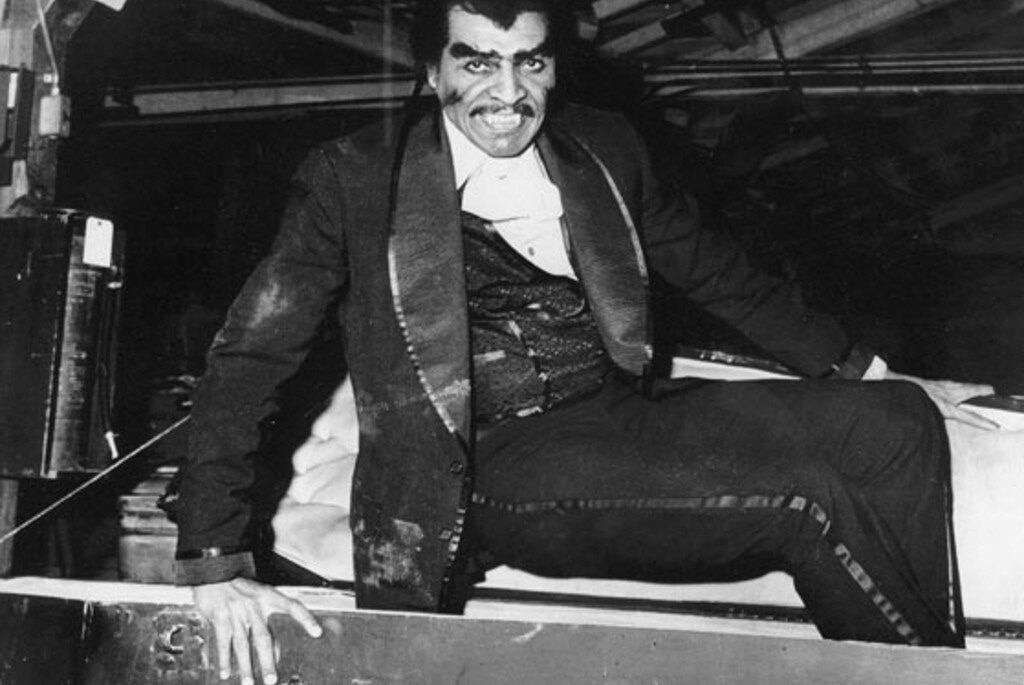
A prologue transports us to a dark and stormy night where a title card tells us we are in "Transylvania, 1780, Castle Dracula." Inside the castle walls an African prince, Mamuwalde (dressed up in what looks like a Prom tux), and his beautiful wife, Luva, sit down for dinner with their host - Count Dracula. Mamuwalde is a leader of the Eboni tribe (the wordplay here is not very sophisticated, but you are watching a film called Blacula, after all), and he has come to Europe looking for assistance in fighting the slave trade. So you can imagine how offended he is when the Count, instead, offers to buy his wife. Those are, of course, fighting words. But before Mamuwalde can do anything the Count unleashes his goons, bites Mamuwalde on the neck, puts a curse on him - anoints him "Blacula" - and then closes him up in a coffin that is hidden deep within the castle in a secret room.
The low-budget lighting, costumes, and lackluster make-up within the prologue do not raise expectations. But then, seven-minutes in, we are treated to an inspired animated title-sequence by Sandy Dvore that shifts gears radically and suggests there might be some fun ahead; a funky score plays over a sequence that shows a bat chasing a red blob of blood through a maze of black-and-white veins - with the blood turning into a woman that is eventually attacked by the bat. This title sequence also works as a transition device from the stiff tone set by the prologue to what follows: a sunny exterior scene of the same castle, but now transporting us almost 200 years forward to "Transylvania, present day." Inside the castle two antique buyers, an ostentatious, stereotyped gay couple (wildly overacting) buy everything and ship it all back to L.A., where they open the coffin and become the first victims of Blacula's long-held thirst for blood.
Later, at the funeral home, Mamuwalde looks out from behind the curtains to see one of his victim's mourners, Tina, and identifies her as the reincarnation of Luva (yes, it's a small world, and a small budget always makes it even smaller). Alongside Tina is her sister, Michelle, and Michelle's boyfriend Dr. Gordon Thomas. Dr. Thomas is a forensic pathologist who, given how much time he is about to spend going after Blacula, may as well be the reincarnation of Van Helsing. Mamuwalde will soon chase after Tina in the dark streets of L.A., eventually meeting her at a night club. She is there celebrating her sister's birthday along with Dr. Thomas, who is suspicious of Mamuwalde. Perhaps it's the cape he wears? With those plot points out of the way we can settle into a serious seventies groove full of turtle-necks and polyester and watch as Blacula puts more moves on Tina, and puts the bite on anyone who gets in his way.
Producer: Joseph T. Naar
Director: William Crain
Screenplay: Joan Torres, Raymond Koenig
Cinematography: John M. Stevens
Film Editing: Allan Jacobs
Special Effects: Roger George
Music: Gene Page (conductor) & Al Simms (music coordinator)
Cast: William Marshall (Prince Mamuwalde, aka: Blacula), Vonetta McGee (Princess Luva, aka: Blacula's reincarnated wife, Tina), Charles Macaulay (Count Dracula), Ted Harris (Bobby McCoy), Denise Nicholas (Tina's sister, Michelle), Gordon Pinsent (Lt. Jack Peters), Thalmus Rasulala (forensic pathologist with "the Scientific Investigation Division," Dr. Gordon Thomas), Ketty Lester (cabbie, Juanita Jones), Emily Yancy (photographer, Nancy), Rick Metzler (Billy Schaffer), Logan Field (Sgt. Barnes), Elisha Cook, Jr. (hook-handed hospital orderly, Sam), Eric Brotherson (Real Estate Agent), Ji-Tu Cumbuka (Skillet), Flemming Williams (himself).
C-93m. Letterboxed. Closed captioning.
by Pablo Kjolseth
The Gist (Blacula) - THE GIST
by Pablo Kjolseth | August 22, 2007
SIGN UP FOR OUR NEWSLETTERS

CONNECT WITH TCM