To say that William Castle's 13 Ghosts fails to add up to the sum of its parts (or ghosts) isn't to deny its occasional charms. The film begins well, with a genuinely unsettling title sequence (all the more powerful for the accompanying chorus of ghostly groans and monstrous moans), which gives way in the first scene to a sly Robb White speech. Delivered by impoverished paleontologist Donald Woods to a high school class gathered in the fossil room of the Los Angeles County Museum, the monologue suggests that life in the cutthroat age of dinosaurs wasn't much different from the (then) contemporary Hollywood scene. Later, a sad family gathering around a birthday cake (in an empty house from which all the furniture has been repossessed) yields a Monkey's Paw style wish for a new home... followed by a knock at the door. Castle stages a good false scare in the form of cadaverous messenger David Hoffman (the talking head from Universal's Inner Sanctum series), who bears a telegram informing Woods that such a house is now his, courtesy of his late millionaire uncle Plato Zorba, ghost collector.
13 Ghosts falls apart in its second act when Castle is forced to show his hand and make his baker's dozen of horripilating haints appear. In the film's theatrical release, a special color process that Castle dubbed "Illusion-O" was used that (when combined with special giveaway glasses called "ghost viewers") allowed audiences to see the ghosts or not, if they felt faint-hearted. Most versions of the film now are solely in black-and-white, with the ghosts plain as day and minus Castle's opening and concluding on-camera remarks. Any way you view them, Castle's thirteen ghosts disappoint, being nothing more than simple double exposures when they're not represented by props "floating" on piano wire. Midway through, Castle stages a dud set piece involving a ghost lion but even worse is he keeps cutting away from a decent séance scene for business with a juvenile actor. Uncharacteristic of a Robb White script, the specters are revealed to be genuine but a grab-the-will B-plot is tacked on in the form of the only suspect available; if you can't guess the identity of the scoundrel early on, you're just not paying attention.
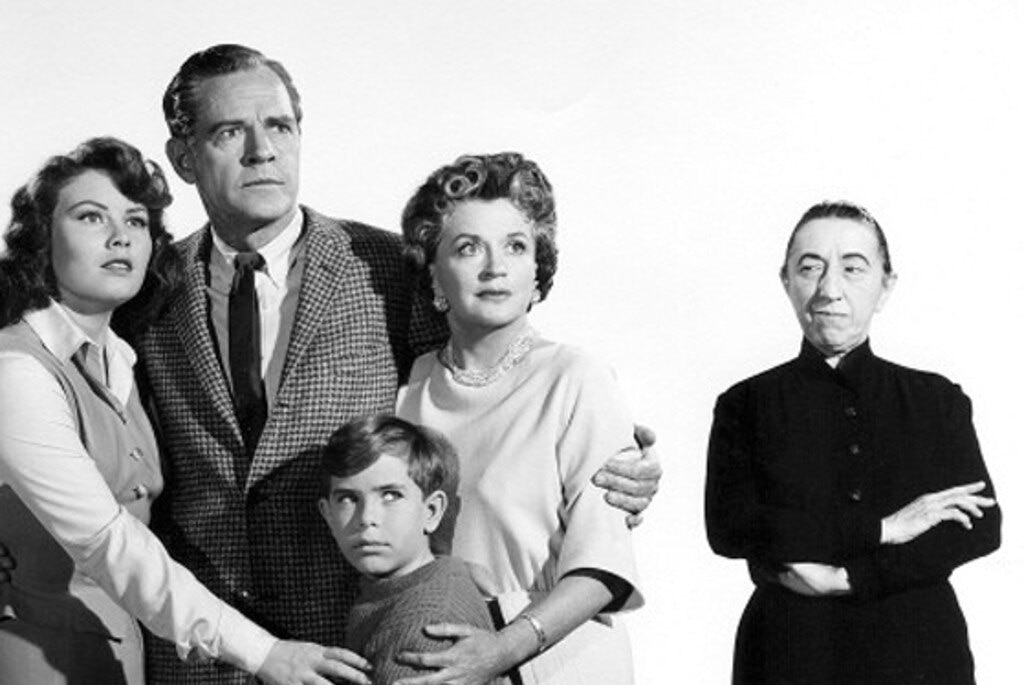
Happily, Castle's assembled cast keeps the proceedings lively and quick. Donald Woods and Rosemary De Camp make for appealing Hugh and June Cleaver surrogates (and we get to see what Woods does for a living) but Jo Morrow and Charles Herbert are an inspired brother and sister act. Morrow had already played a bottle blonde leading lady to dreamy Kerwin Mathews in The Three Worlds of Gulliver (1960) and Herbert went from bit work in The Monster That Challenged the World (1957) to prominent roles in The Fly (1958) and The Colossus of New York (1958). In a career-spanning interview with film writer Tom Weaver, Morrow claimed that she and Herbert hit it off during the filming of 13 Ghosts and even socialized off-camera. (Lucky kid!) Castle should have spun the pair off into their own TV series. Also keeping spirits light is Margaret Hamilton, some twenty years past her career high as The Wizard of Oz's (1939) Wicked Witch of the West, having great fun as a hag-eyed housekeeper who gives good séance.
Producer: William Castle
Director: William Castle
Screenplay: Robb White
Cinematography: Joseph Biroc
Film Editing: Edwin Bryant
Art Direction: Cary Odell
Music: Von Dexter
Cast: Charles Herbert (Buck Zorba), Jo Morrow (Medea Zorba), Rosemary De Camp (Hilda Zorba), Martin Milner (Ben Rush), Donald Woods (Cyrus Zorba), Margaret Hamilton (Elaine Zacharides).
BW-82m. Letterboxed.
by Richard Harland Smith
The Gist (13 Ghosts) - THE GIST
by Richard Harland Smith | August 22, 2007
SIGN UP FOR OUR NEWSLETTERS

CONNECT WITH TCM