Night of the Lepus was shot on location at Old Tucson Studios in Arizona, a short three hour drive from Los Angeles. The facility was a legendary site for the makers of Westerns. Established in 1939 by Columbia Pictures for use on the film Arizona, it has since been home to literally hundreds of films, including four by John Wayne. It is now also a tourist attraction, and was recently voted "Best Western Movie Set" by True West Magazine.
Such trappings helped stars like Rory Calhoun feel at home. He admitted, "It's my first science-fiction film in over 70 some odd total. But I play a rancher who has the problem of rabbit over-population and I'm back at home on a horse again."
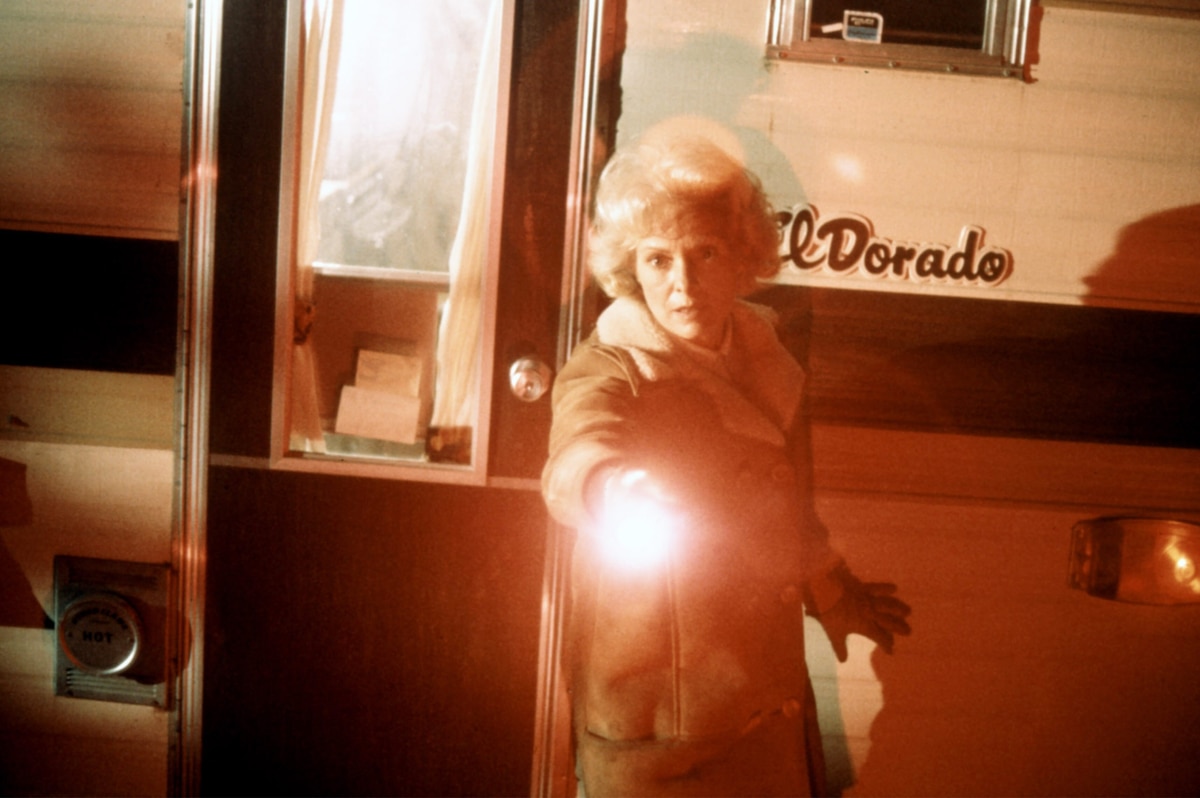
In the pressbook promotion for Night of the Lepus, Janet Leigh revealed one of her reasons for doing the movie. "The days when I could flit off to Europe to do a movie are over," she says. "The Night of the Lepus location in Tucson is only an hour from home by air. I was able to go home on the weekends, or the family came to me. I have turned down many a Broadway play because I think it is important to be with the girls while they are growing up, and Bob's [her husband, Robert Brandt] home base is in California. One makes sacrifices, of course, but they are happy ones."
Leigh, in an interview with Tom Weaver for his book Science Fiction Stars and Horror Heroes, said, regarding Night of the Lepus, "What no one realized was that, no matter what you do, a bunny rabbit is a bunny rabbit. A rat, that can be menacing - so can a frog. Spiders or scorpions or alligators - they could all work in that situation, and they have. But - a bunny rabbit? How can you make a bunny rabbit menacing, what can you do? It just didn't work."
Leigh also admitted that for some scenes "there was somebody they put a bunny suit on, to achieve some of the effects - I've forgotten as much as I could about that picture."
Someone in MGM's publicity department realized that rabbits are not generally considered menacing, and that the film they were making had ahead of it a significant hurdle in convincing audiences otherwise. So, the role of rabbits was effaced. The title was changed from Rabbits to Night of the Lepus, with a certain confidence that few in the target audience would cotton on to the Latin name for the little beasties. The posters were drawn up with nary a bunny in sight, just eyes in the night and a vague reference to "creatures." Even the trailer managed to avoid showing the critters on screen. Most press releases merely mentioned "mutants," neatly leaving off what sort of mutant they meant. Only the credit at the bottom of the poster, acknowledging Russell Braddon's book The Year of the Angry Rabbit as a source, gave the game away.
Not everyone got the memo, though. Just as one arm of the publicity unit strove to conceal the monster hares from the public, another went gaga sending out souvenir buttons and trinkets adorned with a rabbit's foot motif. So much for keeping it secret.
The rabbits used onscreen didn't help the cause, either. The real-life southwest is indeed plagued by wild rabbits, a gnarly breed of lagomorph that looks completely unlike the cuddly house pets that the filmmakers unwisely used for the effects scenes. The real thing might have looked a little menacing, in the right circumstance, but these fat friendly furballs do not.
Some of the grizzly items included in MGM's "Ever-Ready, All Purpose, Go Get 'Em Fright Kit" for theatre distributors showing Night of the Lepus included:
A) 100 Lepus foot necklaces dipped in blood that can be used for radio or TV contests as well as advance give-a-ways to newspaper editors, radio and TV personalities.
B) 500 hi-camp, pop art Lepus foot buttons. A "must give" to discotheques, teeny bops, college kids and wacked-out theatre patrons.
C) Two eye-catching Lepus sidewalk stencils. Let everyone know the LEPUS ARE COMING!
D) 500 Lepus foot stickers.
by David Kalat
Sources:
Russell Braddon, The Year of the Angry Rabbit, William Heinemann Ltd., 1964.
Tom Weaver, Interview with Janet Leigh, Return of the B Science Fiction and Horror Heroes, McFarland Press, 2000.
Night of the Lepus press kit, MGM, 1972.
Night of the Lepus publicity kit, MGM, 1972.
Insider Info (Night of the Lepus) - BEHIND THE SCENES
by David Kalat | March 05, 2008
SIGN UP FOR OUR NEWSLETTERS

CONNECT WITH TCM