After years of being available on DVD only in murky, grainy, public-domain editions from low-rent distributors,
director Fritz Lang's The Woman in the Window (1944) has finally been given a "real" release. Thanks to
MGM (and distributor Fox Home Entertainment), this issue has been struck from original film elements and looks a
million times better than what's previously been out there. Given the fame and importance of this picture, it's a
significant release.
The Woman in the Window is, simply, a classic film noir. Edward G. Robinson plays a New York college
philosophy professor who is rather bored with his steady, monotonous life. He has a wife and kids, but his only
outlet for fun seems to be his nightly visits to his club, where he talks with friends Raymond Massey and Edmond
Breon, playing, respectively, a district attorney and a doctor. One night, all three discuss their lust for the subject
of a portrait hanging in a window next to their club, and it's obvious that Robinson has fantasies and dreams that
will seemingly never come out and see the light of day. That changes when he leaves the club and has another
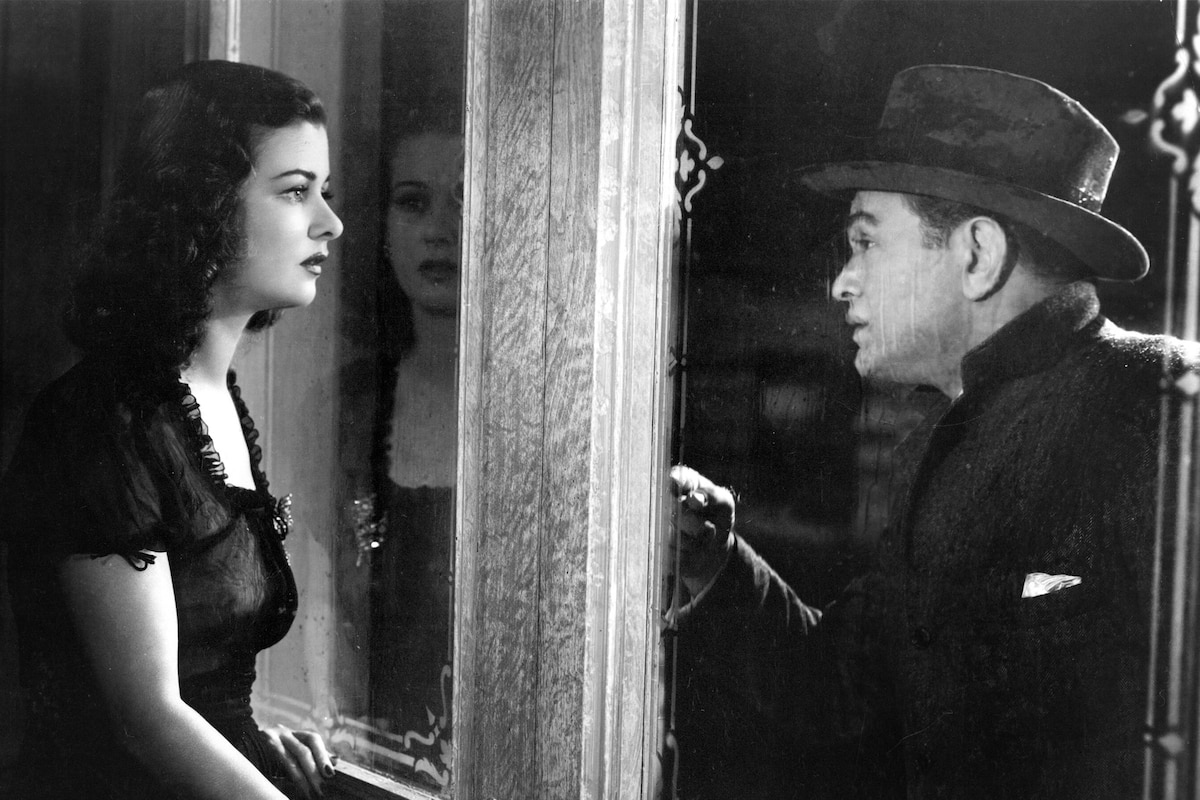
long look at the painting while standing on the sidewalk, only to have the subject herself - Joan Bennett -
suddenly appear beside him.
He turns to look at her and is of course smitten. A friendly drink leads to a friendly visit back to her place, where
another man soon walks in and attacks Robinson in a fit of jealousy. Defending himself, Robinson kills him, and
now the story really begins as Robinson and Bennett cover up the incident. Their struggle to determine how to
proceed, followed by Robinson's time-consuming disposal of the body, is presented completely and methodically.
Lang is smart not to cut this section down for it allows us to fully align with Robinson and what he is going
through inside, and to share the paranoia of the situation. That in a nutshell is what Lang was especially good at
throughout his career - making his audience enter the psyches of tortured, furious or obsessive characters - and
he does an exemplary job here. As Robinson's friend Massey leads an investigation into the murder, Robinson
does fine work at inadvertently drawing more and more suspicion onto himself thanks to his naivete, lack of
experience in concealing crimes, and general bad luck.
But in film noir of course, it's not really bad luck but rather fate that gets you in the end. Robinson here is a
decent and kind man who simply makes a bad (though innocent) decision, and from then on must pay a heavy
price as incident piles upon incident and he is pulled ever deeper into the mire. The Woman in the
Window positively oozes dread and paranoia, and it conveys a feeling of being in a nightmare over which
one has no control. Movies don't get much more noir than that.
Dan Duryea eventually enters the picture as an oily blackmailer, and he has some terrific scenes with Bennett,
but it's primarily through Robinson that we experience this story and the aforementioned dread. The movie is on
the way to seemingly the bleakest of endings before an unexpected and famous twist. Many feel the ending is a
cop-out, but somehow it works, and it certainly doesn't invalidate the feelings the movie has evoked up to that
point.
The Woman in the Window is a masterful achievement by all concerned and is worth the rather high
DVD price, which is especially so considering there are no extras. Picture and sound are very good.
Lang, Robinson, Bennett and Duryea would reunite a year later for the even-better Scarlet Street
(1945).
For more information about The Woman in the Window, visit MGM Home
Entertainment.
To order The Woman in the Window, go to
TCM Shopping.
by Jeremy Arnold
The Woman in the Window - Joan Bennett & Edward G. Robinson in Fritz Lang's Film Noir, THE WOMAN IN THE WINDOW.
by Jeremy Arnold | June 28, 2007
SIGN UP FOR OUR NEWSLETTERS

CONNECT WITH TCM