Frank Perry directed about fifteen films between his 1962 debut with David and Lisa and his death in 1995.
Few viewers would call them classic cinema, but they're certainly a varied group, ranging from eccentric dramas
like The Swimmer and Play It As It Lays to the thriller Man on a Swing and the western
Rancho Deluxe, not to mention the bizarre biopic Mommie Dearest, which does for Joan Crawford
what Godzilla did for dinosaurs.
David and Lisa, available on DVD from Image Entertainment, holds up nicely as one of Perry's best
pictures. Adapted by his wife Eleanor Perry from the fact-based novel Lisa and David by author and
psychiatrist Theodore Isaac Rubin, M.D., it cost less than $200,000 to make and went on to earn many multiples of
that low figure, grossing a reported $1 million in its first week. It also gave a major boost to the fledgling film
careers of Keir Dullea, who'd appeared in one previous picture, and Janet Margolin, who made her feature debut
here.
The movie begins with an atmospheric shot of a spacious, slightly spooky old building in the woods, just the place
for some sort of mystery or melodrama to unfold. We quickly learn that it's a boarding school for mentally disturbed
adolescents, including David Clemens, who's arriving for an indefinite stay. He's an immaculately groomed young
fellow with an air of quiet assurance-until someone innocently touches him, whereupon he goes berserk,
shrinking with terror and yowling that "a touch can kill." Whatever this institution has to offer, it's clear David
needs a whopping dose of it.
br>
So does Lisa Brandt, who's already at the school when David arrives. Lacking the easy intelligence that David
displays, she expresses herself through two alternating personas. Most of the time she's childish Lisa, amusing
herself with crayons and speaking in clumsy rhymes; but at stressful times she becomes an alter ego called Muriel,
a dark and brooding figure who hardly communicates at all. A psychiatric worker named John continually urges
her to unify this divided self-image and become a single, whole individual. She's a difficult case, though, and it's
hard to imagine how he'll ever get through to her. The school's methods-dream interpretation, free association,
and so on-come from psychoanalysis, the "talking cure" based on verbal communication. Since talking and
listening are low priorities for Lisa, her therapist has a lot of work cut out for him.
Lisa is a central character in the movie, but the protagonist is David, who also seems like a tough person to reach.
He certainly knows he's troubled; in an early scene he sits alone his room and bursts into tears for no observable
reason. Yet his fear of being touched applies to his inner self as well as his outer surroundings, and this puts a huge
obstacle in the way of effective treatment. The chief of the school, Dr. Swinford, takes a particular interest in
drawing him out of his extremely tough shell, and little by little David opens up to him. A turning point comes when
he returns home to visit his parents, disorienting them so much with his slightly loosened-up behavior that they
immediately yank him from the school. By this time he realizes that Dr. Swinford is genuinely helping him, and a
change he would have welcomed a few months earlier now comes as a crushing blow. Lisa has her own crisis at
about the same time, brought about partly by her responsiveness to David's friendship. The question now becomes
whether these two will help each other to a better future, or succumb again to illnesses that are as stubborn as they
are severe.
The visual style of David and Lisa is simple and spare, presenting generally brief scenes with a minimum
of fuss and not a fancy flourish in sight. Even the sequences depicting a recurring nightmare David has, in which he
cuts off his enemies' heads with the razor-sharp hands of a giant clock, have a stripped-down look that contrasts
interestingly with recent cinema's high-tech approach to scenes like this. Perry didn't have the budget to create
more elaborate effects-the nightmare is more extravagant (and bloody) in Rubin's book-but he manages to make
a virtue of necessity.
Most of the story's emotional weight is carried by the acting, and the movie wouldn't work nearly as well without
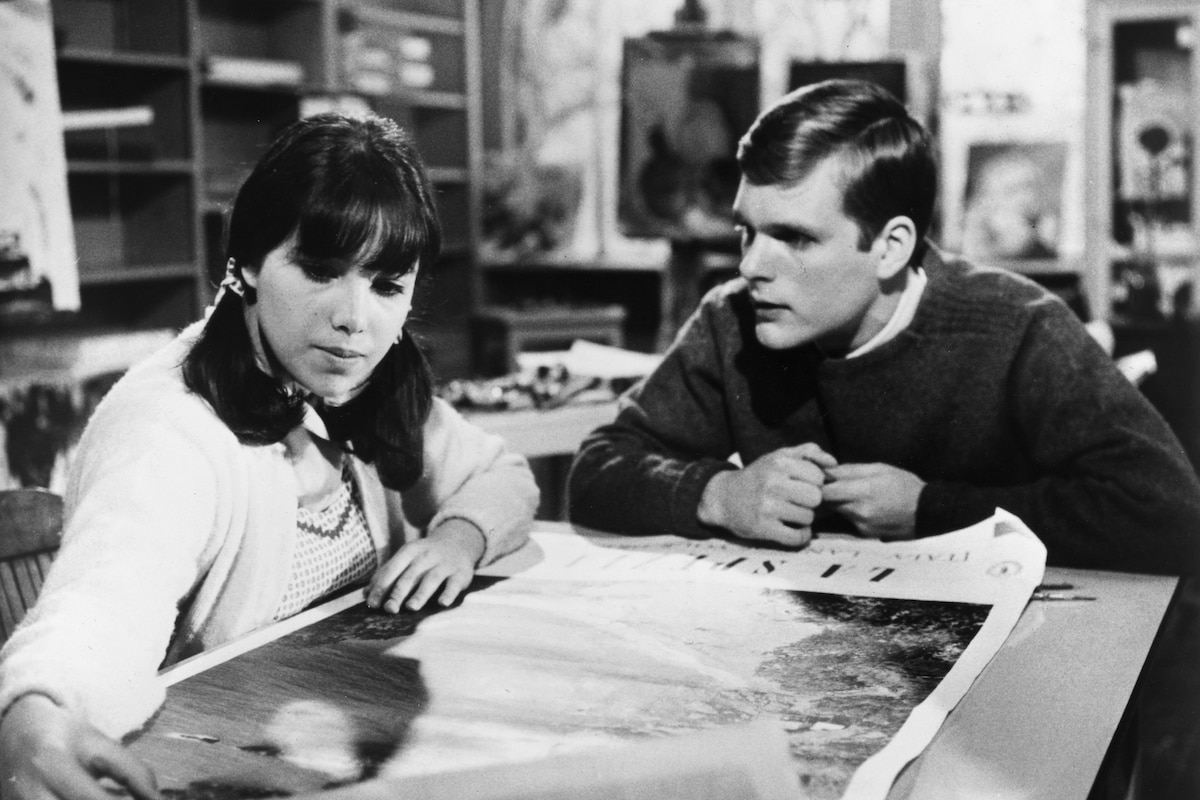
skilled performers in the leading roles. Dullea plays David as a very troubled but readily likable youngster, and
Margolin makes Lisa highly sympathetic as well as uncontrollably bizarre. The veteran actor Howard Da Silva is
perfect as the likable and generous Dr. Swinford, solidly supported by Clifton James as the clinician handling Lisa's
case. Richard McMurray and Neva Patterson are also effective as David's wimpy dad and overbearing mom. Yet
while these key roles are well acted, the film runs into problems with its secondary characters. Most of the school's
patients are written as stereotypes-the over-sensitive nerd, the tough-guy charity case, and so forth-and the
performances rarely bring them to life. This is a problem the Perrys brought upon themselves, since patients other
than David and Lisa are hardly even mentioned in Rubin's book. The movie earned Academy Award nominations
for both members of the Perry team-Frank for best directing, Eleanor for best adapted screenplay-and one
reason why neither of them won could be their weak handling of the less-important characters.
The only extras Image Entertainment provides are a scene-selection menu and optional English subtitles. This
makes the DVD as no-frills as the movie, but the movie is enjoyable enough to be worth the purchase
price.
For more information about David and Lisa, visit Image
Home Entertainment.
To order David and Lisa, go to
TCM Shopping.
by David Sterritt
David and Lisa - Keir Dulkea & Janet Margolin in DAVID AND LISA on DVD
by David Sterritt | May 03, 2007
SIGN UP FOR OUR NEWSLETTERS

CONNECT WITH TCM