Nagisa Oshima's second feature, Cruel Story of Youth, premiered in 1960, just fifteen years
after World War II ended with Japan's surrender to the Allied powers. Many critics have compared
it to Rebel Without a Cause, the 1955 classic by Nicholas Ray, starring James Dean as a
troubled teen caught in a soulless world. The comparison is fair, but Oshima's movie is more
hard-edged in its portrait of a materialistic society planting seeds of anomie and angst in its
younger generation. Although the plot touches on themes that are common to youth-oriented
movies-love, sex, family dysfunction, social estrangement, and what postwar Americans called
juvenile delinquency-in Oshima's hands they take on startling pungency. As riveting as the
characters and their adventures are, they're no more important than the failings of the culture in
which they live.
At the beginning of the story, a young woman named Makoto is indulging her habit of hanging out
in a bar, then cadging a ride home from some man she's met. But this time the man who gives her
a lift isn't content to drop her off at her destination. When she tries to say goodnight, he starts
forcing himself on her-until a stranger named Kiyoshi comes along, beats the guy up, and
demands money as payment for the trouble he's caused. So far the movie seems like a standard
damsel-in-distress drama, with Kiyoshi as the knight who comes to Makoto's rescue. But when they
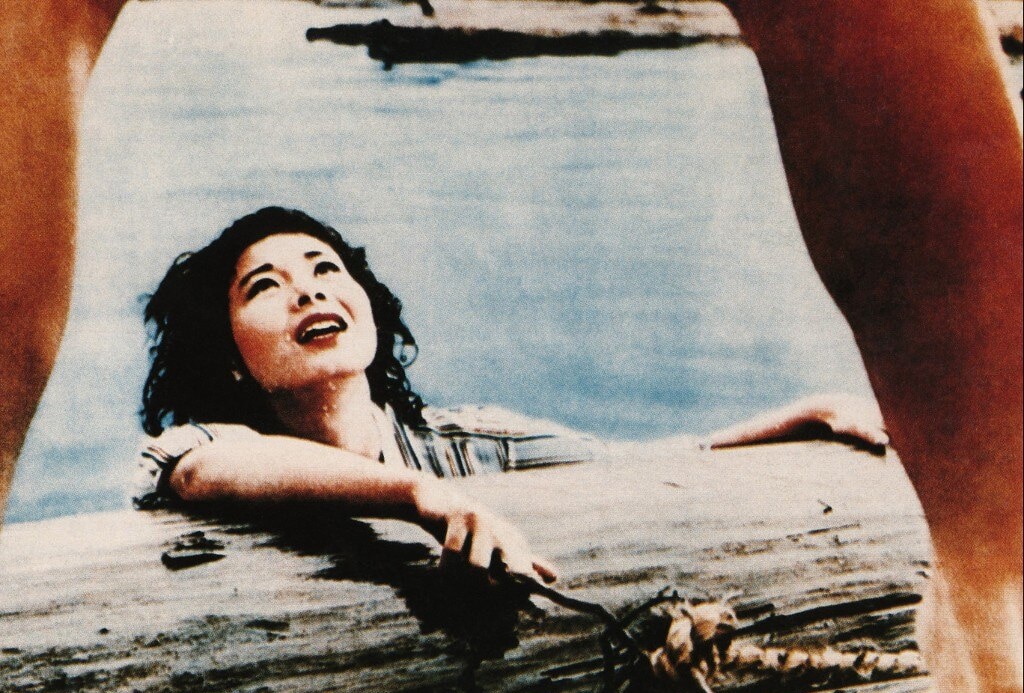
meet again, we learn that he's no guardian angel. He comes on to Makoto during a stroll along a
river, and when she gives him a slap instead of a kiss, he throws her into the water, relentlessly
pushing her away as she tries to clamber out. Stirred to curiosity as well as anger by this nasty
behavior, she keeps on seeing him, and they turn their first encounter into a regular money-making
scheme, with Makoto luring middle-aged men into compromising situations so Kiyoshi can "save"
her and extort their cash. Makoto also becomes Kiyoshi's lover and gets pregnant with his child. In
addition to all this, subplots bring politics into the picture: Kiyoshi's best friend is a student activist
and Makoto's older sister is a former protester whose onetime boyfriend, an idealistic physician,
gives Makoto an abortion at Kiyoshi's insistence. Most of the characters meet tragic ends.
As he prepared to start shooting Cruel Story of Youth, writer-director Oshima stated that the
movie would focus on the "cruelty" of contemporary Japan, and specifically on "youth as victims of
the contradictions" bred by Japanese society. When dealing with highly charged material like this,
he continued, a director must resist becoming "a cog in the automatic manufacture of films,"
heedlessly serving the mass-production needs of modern studios. Instead the director should
maintain "active involvement as an individual" in every shot, creating an equivalent of the
personal style found in the early French New Wave movies that Oshima greatly admired. A good
filmmaker isn't driven by the need for constant novelty and invention, Oshima declared. Rather, a
true auteur "invests each individual shot and scene with his philosophy."
Oshima's own philosophy had a lot to do with politics. This is most obvious in his openly political
movies, such as Death by Hanging (1968) and The Man Who Left His Will on Film
(1970), but it's also apparent in the melodramatic Cruel Story of Youth, where Makoto and
Kiyoshi are simultaneously victims of a heartless society and villains who perpetuate its
callousness. Born in 1932, Oshima came of age during Japan's arduous reconstruction after World
War II, which brought an array of problems ranging from shortages of essential goods to cold-war
paranoia about left-wing radicalism. He studied law at Kyoto University and was an outspoken
leader of the Kyoto Prefecture Student Alliance in 1951, when the end of American occupation led
immediately to the hugely controversial mutual-security pact between Japan and the United States,
sparking fear among Japanese liberals that their country and its new ally might be moving Japan
back toward the paternalism and militarism that had so recently brought the nation to grief.
Finding dependable jobs was difficult for young professionals (and left-wing protestors) in the
middle 1950s, so despite his legal training Oshima decided to follow up his recent interest in drama
by joining a training program at the Shochiku Ofuna studio, which was then concentrating its
energies on Hollywood-influenced entertainments that Oshima disliked intensely. The restless new
director and the conservative old studio were an unlikely couple, but Shochiku's desire for fresh
young talent allowed Oshima to become an assistant director, a screenwriter, and then a director
in his own right-and a valued one after Cruel Story of Youth became a critical success
and box-office hit.
Looking back on Cruel Story of Youth ten years after its premiere, Oshima called it "a
happy work" despite its unhappy subject matter. The film met with some backlash, he admitted. Yet
support for it grew, he said, because "in the midst of their rebellion against authority during the
upheaval over the security treaties, many Japanese were discovering a surprising newness inside
themselves" that jibed with the newness of his filmmaking approach. A group of journalists even
held a party to congratulate the young director--paying for it themselves, to his amazement and
delight.
Oshima entered film as an opponent of the cinematic status quo, even when practiced by a master
like Yasujiro Ozu, who earned the younger director's scorn for both his formal refinement and his
embodiment of an old-school obliviousness that, as Oshima saw things, anybody in touch with the
times must wholeheartedly reject. In four decades of filmmaking Oshima has never mellowed into
a defender of conventions or traditions, including the ones he himself has originated or developed;
instead he has changed his styles and subjects at will, risking the charge of lacking a distinctive
vision for the sake of keeping his work in a state of permanent revolution. Some of his movies have
caused a furor-most notably his 1976 drama In the Realm of the Senses, which glides along
the boundary between art film and pornography-while others have come and gone without
special notice. Cruel Story of Youth was the picture that put him onto the international
map, and it remains an important offering from a very important artist.
Producer: Tomio Ikeda
Director: Nagisa Oshima
Screenplay: Nagisa Oshima
Cinematographer: Takashi Kawamata
Film Editing: Keiichi Uraoka
Production Design: Koji Uno
Music: Riichiro Manabe
Cast: Miyuke Kuwano (Makoto), Yusuke Kawazu (Kiyoshi), Yoshiko Kuga (Yuki), Fumio Watanabe
(Akimoto), Shinji Tanaka (Yoshimi Ito), Shinjiro Matsuzaki (Terada), Toshiko Kobayashi (Teruko),
Jun Hamamura (Masahiro), Shinko Ujiie (Masae Sakaguchi), Aki Morishima (Yoko Ishikawa), Yuki
Tominaga (Toshiko Nishioka), Kei Sato (Akira Matsuko), Kan Nihonyanagi (Keizo Horio), Asao Sano
(inspector).
C-96m.
by David Sterritt
Cruel Story of Youth (Seishun zankoku monogatari)
by David Sterritt | April 10, 2007
SIGN UP FOR OUR NEWSLETTERS

CONNECT WITH TCM