The "women in prison film" genre began as early as the 1930s with pre-Code crime melodramas such as Howard Bretherton and William Keighley's Ladies They Talk About (1933) and continues in popularity today with the award-winning Netflix series Orange is the New Black (2013-2019). John Cromwell's famous Caged (1950), starring Oscar-nominated Eleanor Parker and cult favorite strongwoman Hope Emerson, has come to exemplify the genre, with its recognizable themes of sadistic female wardens and predatory lesbianism.
These themes came to be exploited by women-in-prison B movies made in the mid-1950s into the 1970s. Yet, British filmmaker J. Lee's Thompsons's Young and Willing (1954) (known as The Weak and the Wicked in England and formerly as Women Behind Bars) stands out for emphasizing the complex lives of incarcerated women over pulp melodrama and sensationalism - perhaps at the expense of showcasing the brutal realities of prison life.
Young and Willing is based on the prison experiences of author Joan Henry, a socialite and gambler, who was sentenced to 12 months in prison for a fraudulent cheque. Henry served eight of the 12 months, first at HM Prison Holloway in London and then at the more liberal HM Ashkam Grange, an open prison in North Yorkshire. At Ashkam Grange, she met and was deeply inspired by Mary A. Size, an Anglo-Irish penal reformer of the English prison system.
Henry's memoir about her time in jail, Who Lie in Gaol, was published in 1952 and became a bestseller. After reading it, Thompson, with the backing of Robert Clark, the head of production at Associated British, decided to turn it into a film. Both Henry and Size were brought on as advisors.
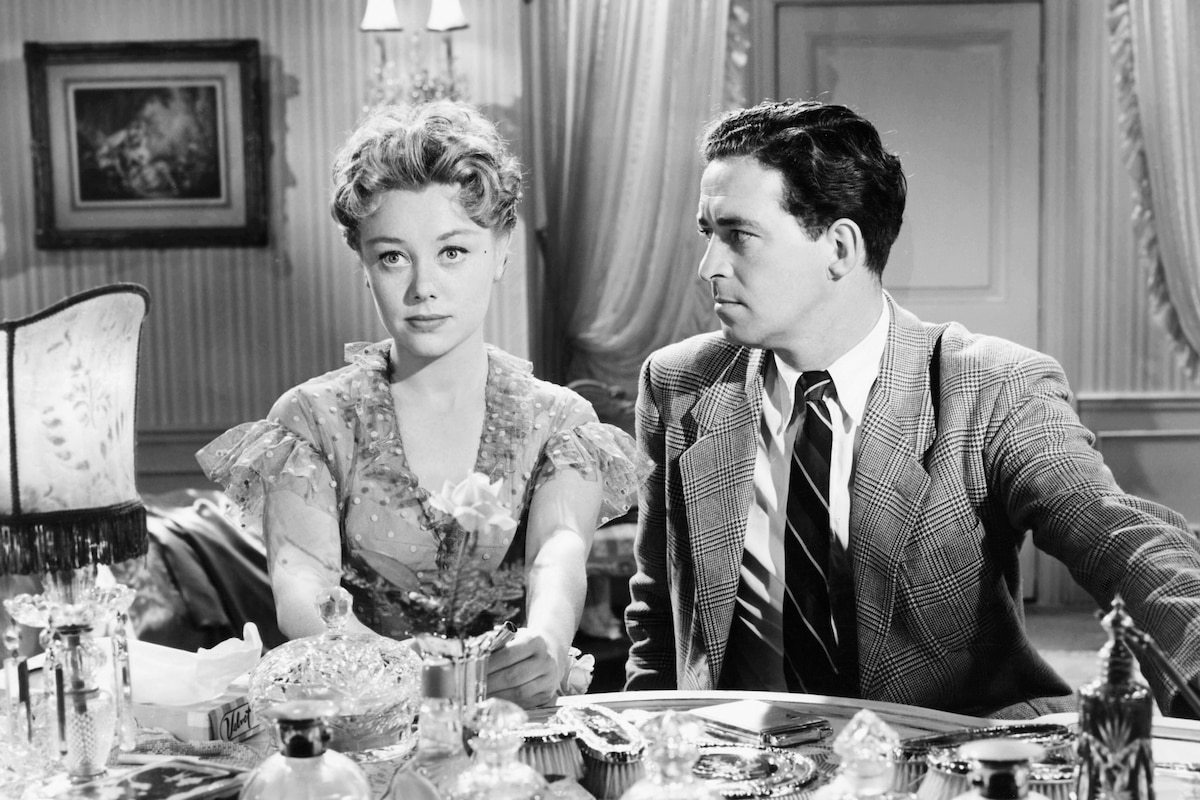
The film follows Jean Raymond (Glynis Johns), who is framed by a lender to settle a gambling debt. Like Henry, she is found guilty of fraud and incarcerated. In jail, Jean meets women who have been imprisoned for protecting their drug dealing lovers, shoplifting, blackmail and manslaughter. In a series of flashbacks, the women's lives are portrayed sympathetically but not tragically. Most poignant is the film's portrayal of pregnant inmates whose babies are given away for adoption nine months after being birthed - as if severing parenthood is part of the punishment.
As socially conscious as Young and Willing is, it is not a cautionary tale. Inching toward the exploitation style filmmaking that often marks its genre, the film cast Diana Dors as Betty Brown. Dors was hired only a few weeks after having been convicted in real life of stealing alcohol from a friend's house. The role was a shift for Dors, who was mostly known for her "blonde bombshell" style, sexy comedic roles and risqué modeling. Elstree Studios told Dors, "Audiences won't see your legs and figure this time. But you'll have the chance of proving you're a good actress, if you're game enough to shed your glamour." Resisting typecasting, Dors retorted: "I've been a dumb blond long enough." And the film seems to balance Dors' reputation by casting Glynis Johns, who Henry said was a fine actress but "a bit goody-goody." And perhaps Jean Raymond - with her reformatory marriage wish to "live for someone" and to someday "be a good wife" to her boyfriend on the outside - is more conservative than Henry. In any case, Henry's assessment seems prescient; Johns would go on to play Winifred Banks in Walt Disney's Mary Poppins (1964).
The film features a talented troupe of influential British actresses as a motley crew of female inmates: Olive Sloane as Nellie Baden, Jane Hylton as Babs Peters, Rachel Roberts as Pat and Athene Seyler as Millie Williams, with Sybil Thorndike as her friend Mabel Wicks. At times, Young and Willing revels in the all-female space of the prison, while highlighting it as a space of alternative gendering. Only allowed cream and powder, the women are denied cosmetics, rendering femininity a privilege and not given. And because they reside away from the men in their life, who often abandon them during their long sentences, these women forge identities and intimacies that are not based on recognizable gender roles. As queer film critic Jack Halberstam has pointed out, "Prison films always allow for the possibility of an overt feminist message that involves both a critique of male-dominated society and some notion of female community."
The film was a success. Like Thompson, audiences were taken by Henry's story. Indeed, Thompson was so taken that he wound up falling in love with Henry and left his wife and two children to marry her.
Director: J. Lee Thompson
Screenplay: Anne Burnaby and J Lee Thompson in association with Joan Henry, based on her book Who Lie in Gaol
Cinematography: Gilbert Taylor
Editing: Richard Best
Music: Leighton Lucas
Production Company: Marble Arch
Cast: Glynis Johns (Jean Raymond), Diana Dors (Betty Brown), John Grfegson (Dr. Michael Hale), Olive Sloane (Nellie Baden), Rachel Roberts (Pat)
By Rebecca Kumar
Young and Willing
by Rebecca Kumar | August 24, 2020
SIGN UP FOR OUR NEWSLETTERS

CONNECT WITH TCM