Director George Cukor prepared his cast for the filming of Born Yesterday by rehearsing the script for two weeks as if it were still a play. He even had a small theatre built on the Columbia back lot, where the cast gave six performances in front of a live audience of studio employees and any Hollywood insiders who could wrangle a ticket. This allowed him to get a better sense of where the laughs were coming, while also generating positive word-of-mouth within the industry.
Judy Holliday still had a hard time adjusting to filming the play without an audience. Although the crew often laughed during rehearsals, she had to play the scenes to total silence. Critics would later complain that some of the dialogue was so quickly paced that audience laughter drowned out lines.
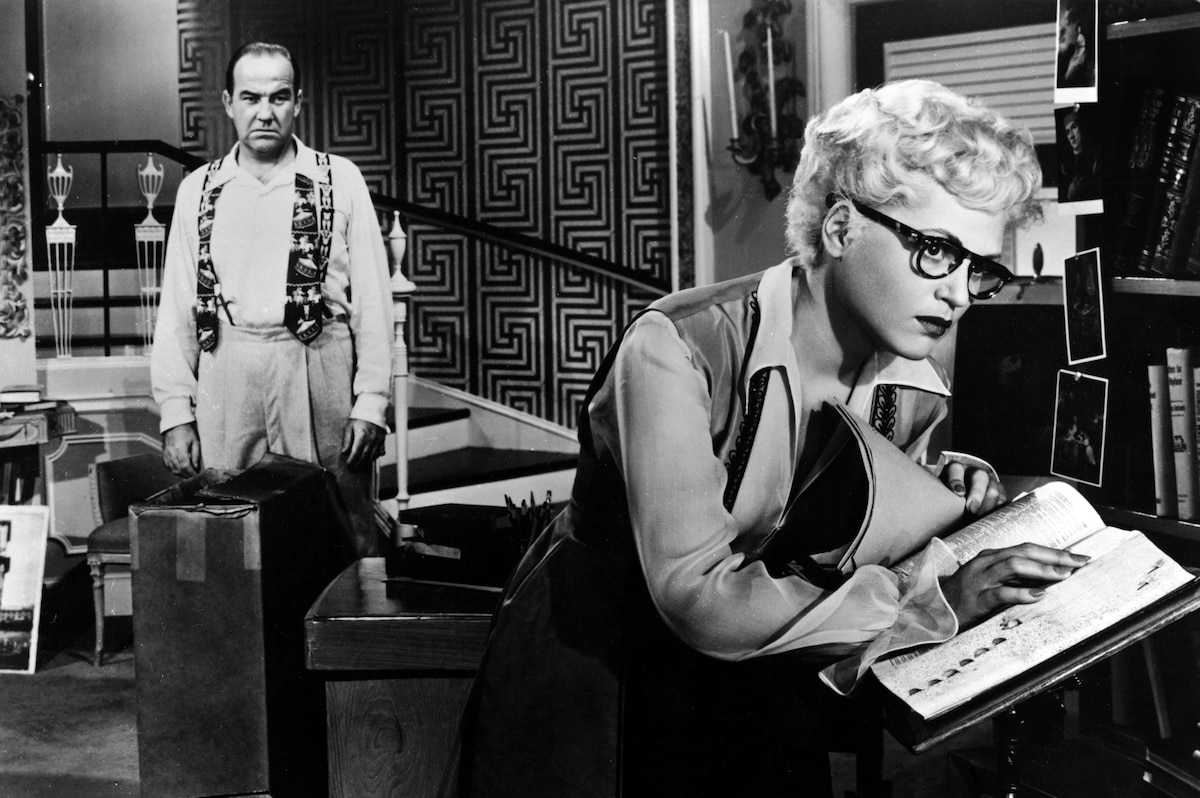
Cukor instructed production designer Harry Horner to approach the script as if it had never been a stage play. Instead of the play's one-room set, Horner constructed an entire hotel suite, allowing Cukor to move the action from room to room as the action would have dictated in real life.
Costume designer Jean Louis gave Holliday 13 outfits that became more stylish and tasteful as her character grew in knowledge and self-awareness.
Used to the honeyed tones of the typical Hollywood leading lady, the sound department tried to clean up the sound of Holliday's voice. When Cukor watched the first rushes, he complained that her voice sounded different. The sound engineer told him "We just cut out some of the crud in her lower register." Cukor told them to stop because "You've also cut out the comedy and the heart."
During location shooting in Washington, Cukor was so moved by the sight of the Jefferson Memorial, that he insisted on having Holliday and Holden visit it during their tour of the city.
Production on Born Yesterday ended in August 1950. Holliday stayed in town for some interviews, then returned to the East where she and her husband, classical musician David Oppenheim, had bought a country home near West Point.
The rough cut of Born Yesterday was so impressive that Cohn ordered the film completed earlier than scheduled so it would qualify for the 1950 Academy Awards®.
by Frank Miller
Behind the Camera
by Frank Miller | March 02, 2007
SIGN UP FOR OUR NEWSLETTERS

CONNECT WITH TCM