SYNOPSIS:
The Bennets are a rural family in early 19th century England with five unmarried daughters, a source of constant worry for the chattering, high-strung Mrs. Bennet. Her concern is that her husband's estate will fall into the hands of his supercilious cousin, Mr. Collins, since the legal entanglements of his will require it to be passed only to male heirs. When some eligible and wealthy young bachelors move into the area, Mrs. Bennet schemes to introduce her daughters, particularly the two oldest, delicately beautiful Jane and the headstrong and witty Elizabeth, to the potential suitors. Jane falls for the charming Mr. Wickham, but Elizabeth is put off by Mr. Darcy, whom she considers cruel and arrogant, despite his growing interest in her. Complications ensue, misunderstandings arise, and the two potential couples must learn to abandon pride and prejudice before they can come together in harmony and trust.
Director: Robert Z. Leonard
Producer: Hunt Stromberg
Screenplay: Jane Murfin, Aldous Huxley, based on the play by Helen Jerome and the novel by Jane Austen
Cinematography: Karl Freund
Editing: Robert Kern
Art Direction: Cedric Gibbons
Original Music: Herbert Stothart
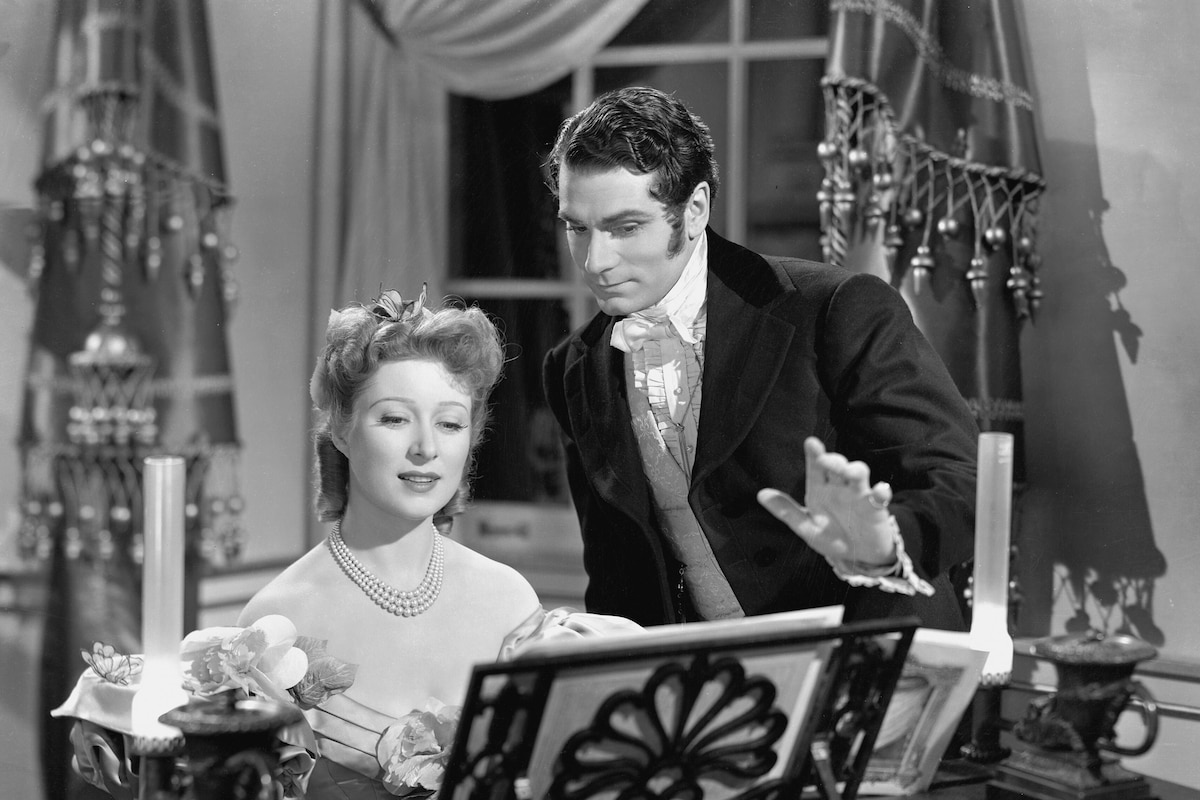
Cast: Greer Garson (Elizabeth Bennet), Laurence Olivier (Mr. Darcy), Mary Boland (Mrs. Bennet), Edmund Gwenn (Mr. Bennet), Edna May Oliver (Lady Catherine), Maureen O'Sullivan (Jane Bennet).
BW-118m. Closed captioning.
Why PRIDE AND PREJUDICE is Essential
Hollywood has often shown a lack of respect and reverence for the classic literary materials it plunders from time to time for source material. Characters are altered, sometimes beyond recognition, important storylines truncated or eliminated altogether, complex themes abandoned in favor of surface glamour and mass appeal. And no company of the Studio Era epitomized surface gloss more than MGM. When it announced it would film Jane Austen's classic novel Pride and Prejudice, devotees of the author's work must have cringed in anticipation of the final product.
Certainly there are things to carp about in the film adaptation of Austen's novel. A movie, any> movie, of a novel must take certain liberties to distill a sprawling story of several hundred pages into two hours or less of screen time, while maintaining a balance between the structural realities of cinematic narrative and the expectations of those familiar with the source material. In this case, liberties were definitely taken. Austen's sharp social satire was softened somewhat in favor of romantic comedy, memorable scenes (such as the key episode at Pemberly) disappeared completely, the period of the story's setting - the late 18th/early 19th century - was pushed forward a few decades to accommodate certain design considerations. Its central character, Elizabeth Bennet, was integrated more smoothly into her period and family life, rather than being depicted, as she was in the book, as a forceful and determined young woman at odds with her society and background. To top it all off, MGM cast in the role an actress whose age, 36, made her more suitable to play Elizabeth's mother than the late adolescent of Austen's imaginings. It shouldn't have worked, but somehow it did.
Reviews at the time of Pride and Prejudice's release seemed almost surprised to note how much of Austen actually made it to the screen, and in a form that was sure to delight even the most casual acquaintance of Austen's work. The fact alone that the script was entrusted to noted screenwriter-playwright Jane Murfin and renowned British writer Aldous Huxley was evidence the studio had higher intentions, and the writers obliged by keeping much of Austen's biting, witty dialogue and convoluted plot intact. Yet the project was lavished with enough of MGM's trademark style to please moviegoers with little or no interest in the original novel. The film's rich, elegant look was created by the studio's roster of A-list designers and technicians under the direction of Robert Z. Leonard. The latter was a MGM contractee who could always be counted on to deliver box office successes with efficiency but without a strong personal style that might obscure the studio's trademark glamour and gloss.
The result may not have been high art, but the success of Pride and Prejudice was enough to cement the American stardom and heartthrob appeal of British actor Laurence Olivier and establish Greer Garson as one of the studio's top leading ladies. The favorable critical reception added to the notion that classics could be adapted with taste without losing their basic appeal and that Jane Austen's work still spoke to modern audiences. Thanks in no small part to MGM's production of Pride and Prejudice - the first feature film version of her book - her writings would become not only more widely read but an important staple of big-budget period films. And more than forty ears later, numerous adaptations of her stories would constitute something of an Austen renaissance.
by Rob Nixon
Pride and Prejudice - The Essentials
by Rob Nixon | March 02, 2007
SIGN UP FOR OUR NEWSLETTERS

CONNECT WITH TCM