Sorry, Wrong Number began filming on the Paramount lot in January of 1948. It was a quick three-month shoot with director Anatole Litvak focused on delivering the film on time.
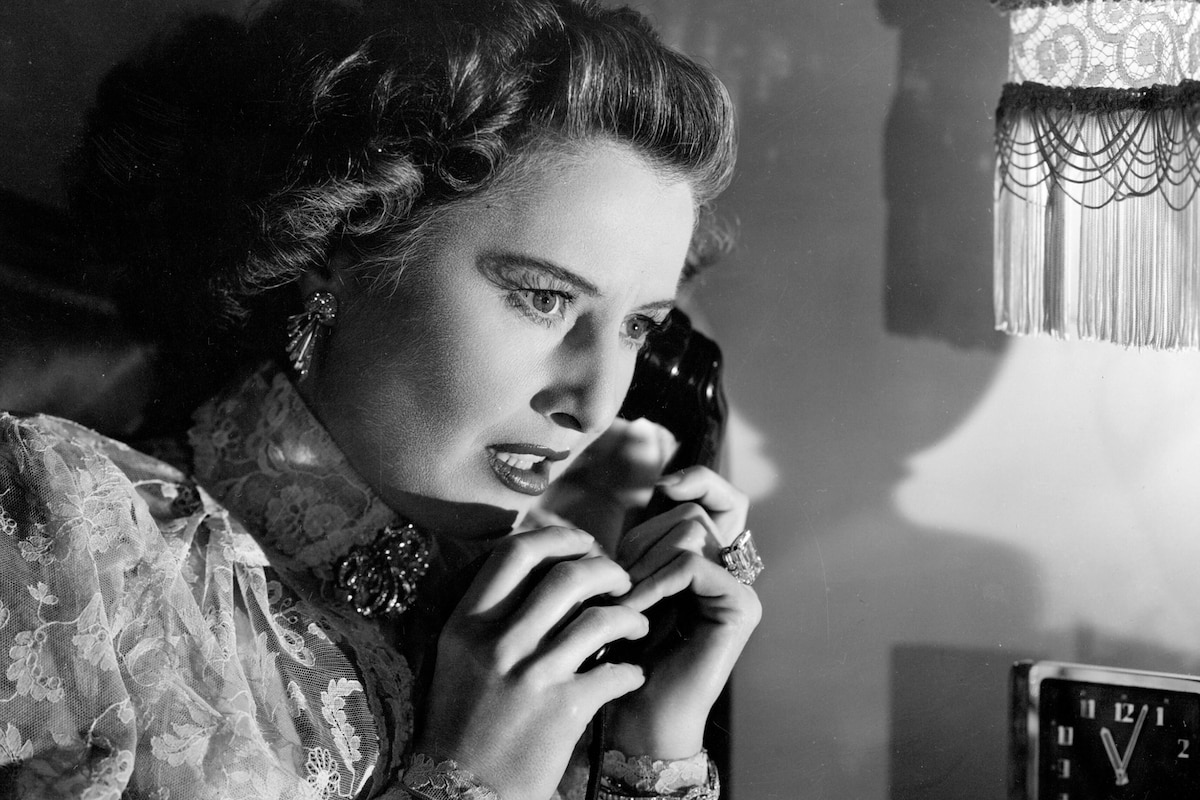
Barbara Stanwyck shot her part over an intense twelve-day period. Since her character was mostly confined to her bed with only the company of a telephone, it presented a challenge for the actress. Litvak, whom Stanwyck liked and trusted, asked her how she would prefer to shoot her scenes. Stanwyck chose to shoot them in chronological order. Doing this, she believed, would help her build the terror of her character most effectively. "Almost from the word go," said Stanwyck, "she is way up there emotionally, and stays there day after day...I decided I'd prefer to jump in, bam, go, stay there, up, try to sustain it all the way and shoot the works."
Stanwyck found that sustaining that level of emotion all week long and then going home on the weekend was a draining experience. "Five days I was handling it, starting the next day's work where I'd picked up, sustaining it all, and then I had two whole days to relax and not to worry about the character, and I tell you it was strange," said Stanwyck. "It was really hard to pump myself up on Monday morning to try to feel that desperate tension."
For Stanwyck's scenes in her apartment, cinematographer Sol Polito utilized the confined spaces and dark shadows of the black and white photography to make the posh Manhattan apartment seem like her prison.
Reportedly, director Litvak and Burt Lancaster butted heads over how to play the role of Henry. Things got so heated between the two that Lancaster threatened to walk off the picture altogether. They managed to iron out their differences enough to complete the film, but the two never worked together again.
Litvak and Stanwyck, however, got along swimmingly. "We didn't have a very long schedule and Barbara had to work practically every day from morning to night. There was never a word of complaint-only encouragement and enthusiasm, which certainly influenced and helped not only me in my work but everyone connected with the film."
The intense shoot resulted in one of the most riveting suspense classics of all time. Barbara Stanwyck received an Oscar® nomination for her performance, and Burt Lancaster's risky decision to play against type paid off; he began to receive more versatile roles and acting offers that weren't based solely on his physical appearance.
by Andrea Passafiume
Behind the Camera
by Andrea Passafiume | March 02, 2007
SIGN UP FOR OUR NEWSLETTERS

CONNECT WITH TCM