After a successful career producing low-budget comedy shorts with such stars as Laurel and Hardy, Thelma Todd, Zasu Pitts and the Our Gang Kids, Hal Roach was interested in expanding into feature film production. Given his background in comedy, a screwball comedy seemed the logical choice. He found the perfect property in Thorne Smith's somewhat risqué 1926 novel The Jovial Ghosts.
Initially, Roach met resistance in the industry from filmmakers who thought a comedy about two madcap ghosts would be considered either distasteful or morbid.
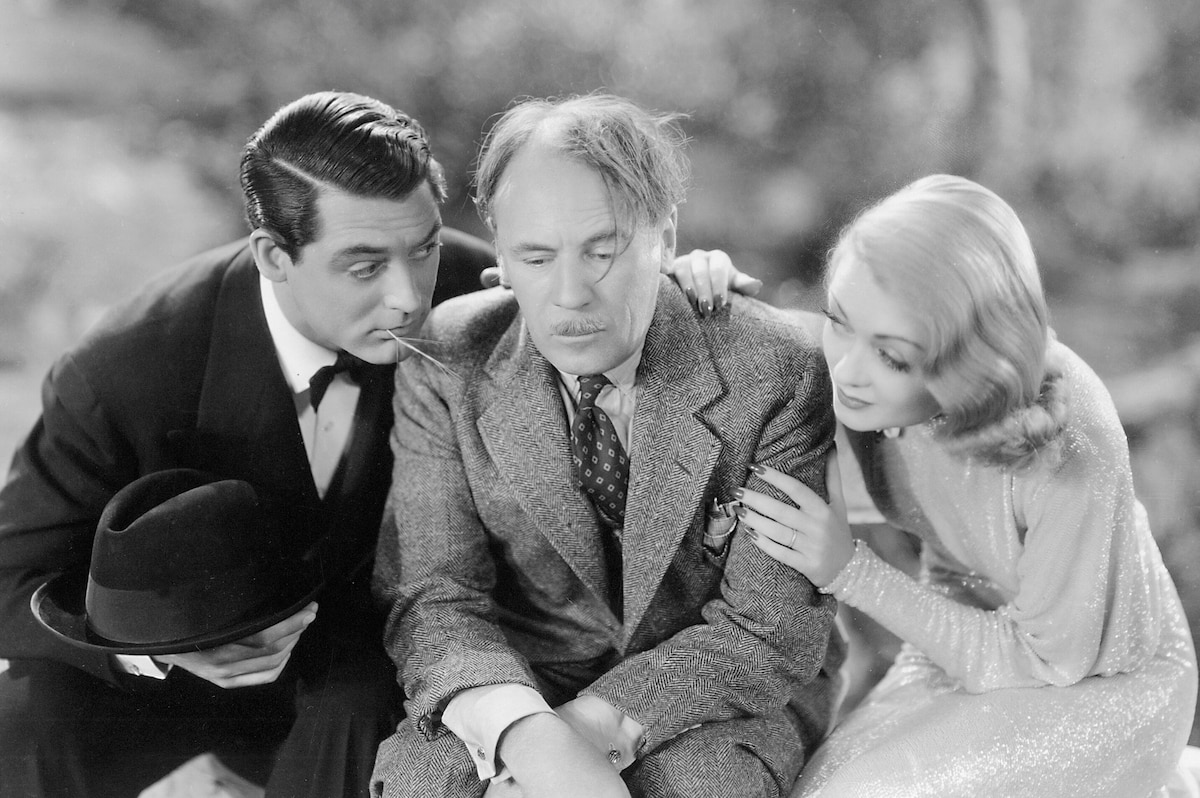
Cary Grant was always producer Roach's first choice to play George Kerby, but the actor initially declined the role, concerned that the supernatural story elements wouldn't work. Roach won him over with his argument that the film was really a screwball comedy rather than a ghost story and the offer of $50,000 for his performance.
Roach's original choices to play Marion and Topper were Jean Harlow and W.C. Fields. Harlow was too ill to accept the role (she would die a month before the film's release), and Fields refused to accept the role.
Bennett had been a major star during the early years of talking films in a series of confessional melodramas in which she had played fallen women forced to pay for their sins in glamorous gowns and meticulously designed apartments. When the taste for such films waned, however, she had found herself in a career slump. When Roach called to offer her the chance to play Marion Kerby, she was so impressed by the script that she agreed to a lower-than-usual fee of $40,000 for the film.
Director Norman Z. McLeod was already an expert on comic filmmaking, having scored hits with two Marx Brothers films, Monkey Business (1931) and Horse Feathers (1932), and Fields' It's a Gift (1934).
by Frank Miller
The Big Idea
by Frank Miller | March 02, 2007
SIGN UP FOR OUR NEWSLETTERS

CONNECT WITH TCM