After spending Christmas with Walter Huston and his family in the mountains, Wyler began production on Dodsworth in early 1936 at the Goldwyn studio in Hollywood.
Although Dodsworth was shot entirely in the studio, Wyler sent a camera crew to London, Paris, Vienna, Montreux and Naples for background shots that would be projected behind the sets to recreate the Dodsworths' European tour. Wyler knew many of the locales from personal travels and gave minutely detailed instructions about the kinds of shots he wanted, but many of them were rejected in the final cut in order to keep the film from feeling like a travelogue. Only those crucial to the story survived.
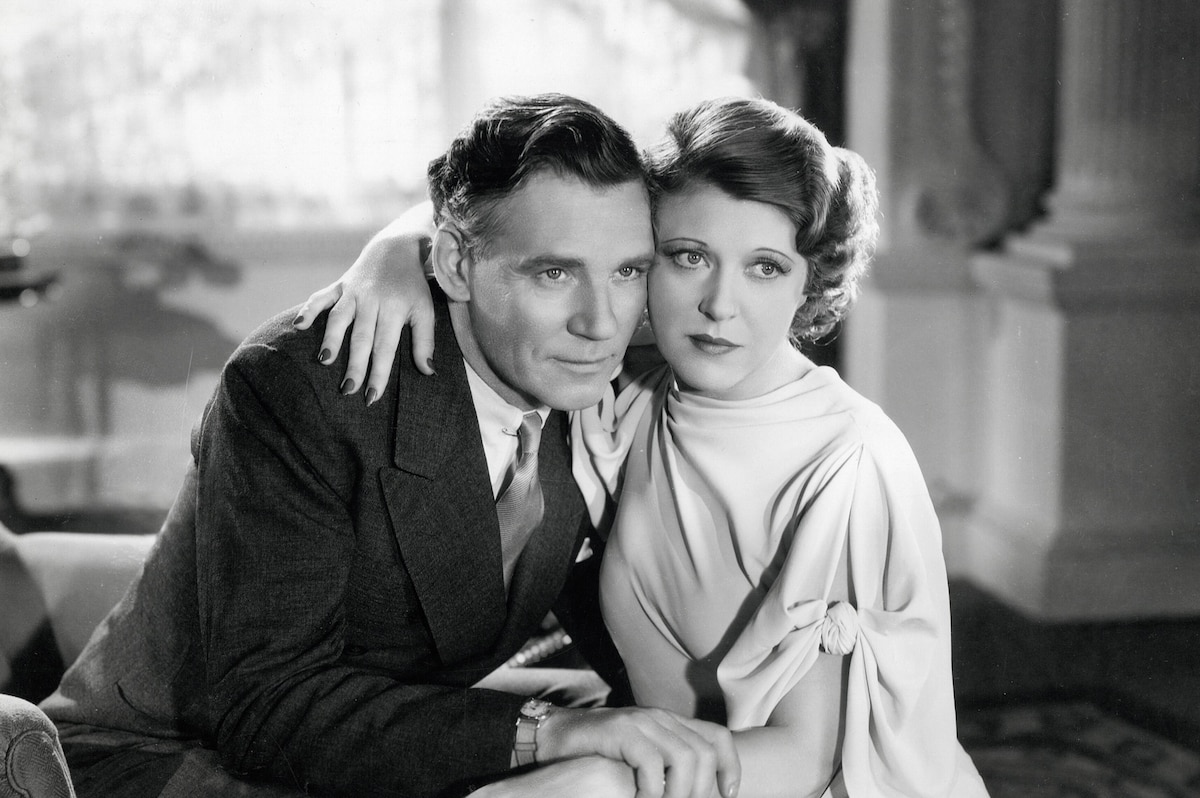
Wyler and Huston were friends who worked well together, especially since their ideas about screen acting perfectly meshed. "No acting ruses, no acting devices, just the convincing power that comes from complete understanding of a role," Wyler noted. He credited Huston's thousands of hours on stage in the role with making for a "letter-perfect" film performance.
Wyler did not enjoy the same easy relationship with Ruth Chatterton. The two fought bitterly day to day on the interpretation of Fran. Chatterton felt she should be played entirely as a villainess, whereas Wyler found reasons to sympathize with the character. The tension was also increased, according to co-star Mary Astor, by Chatterton's own desperation at her advancing age. At 43, she was far from an old woman but well past the age when actresses typically enjoyed continued audience appeal and their choice of roles. Once a big star on stage, and briefly one in films a few years earlier, her success was waning, and according to Wyler, she exhibited very "haughty" behavior on the set. She was self-conscious about her figure, her looks, insisting on daily facials to maintain a youthful glow. Her insecurities manifested themselves as hatred and fear toward Wyler and his multiple-take working method. At one point, she reportedly slapped the director's face and locked herself in her dressing room.
Another actor who did not enjoy the experience was David Niven in one of his first important, but relatively minor roles. Niven later said he was "bloody miserable" working with Wyler, whom he described as a "Jekyll and Hyde" and "a sonofabitch to work with." Although conceding Wyler could be "kind, fun and cozy" off the set, Niven said "he became a fiend the moment his bottom touched down in his director's chair." Wyler was not terribly impressed with Niven's talent either, later noting that he was little more than "a sort of playboy around town." But the director thought that since Niven was essentially playing himself on screen, he was perfect for the part of the charming cad Captain Lockert.
Mary Astor enjoyed working with Wyler, finding him to be "an inspirational director, tough and exacting but sensitive." She especially appreciated how he ended the film on a close-up of her, not strictly out of vanity but from the awareness that the audience would enjoy having the story end on the high note of Edith's radiance at seeing Sam return to her.
Astor's off-screen life at the time was tumultuous to say the least. Prior to signing on to play Edith, she had begun proceedings to gain custody of her daughter by her defunct marriage to Dr. Franklin Thorpe. Just a few weeks into production on Dodsworth, the private matter exploded into public scandal when portions of her diary were leaked to the press to discredit her. The passages that got the most attention were graphic descriptions of her affair with playwright George S. Kaufman, who was forced into hiding to avoid being hounded by reporters. Astor took the same evasive action by moving into her dressing room on the set. Executives at Goldwyn's studio insisted he invoke a morals clause in her contract and fire her from the picture. But Goldwyn came to her defense by declaring, "A mother fighting for her child, that's good."
Astor said the main strength she drew on throughout the ordeal was the role she was playing on screen, a character she saw as three-dimensional, a little foolish perhaps but completely human and possessed of the confidence Astor felt she was lacking herself. "When I went into court and faced the bedlam...that would have broken me up completely, I kept the little pot boiling that was Edith Cortright." The diary was ruled inadmissible in court, custody was divided between Astor and her ex, and the scandalous little book was burned.
Wyler spent an entire afternoon shooting a take of a letter crumpled by Fran and set aflame by her lover. He wanted it to blow gently along the length of the terrace of the villa she has rented, slowly at first, stop momentarily, and then flutter away as the shot goes to black. The hours of painstaking perfectionism paid off in a touching image emblematic of the failing marriage.
by Rob Nixon
Behind the Camera
by Rob Nixon | March 02, 2007
SIGN UP FOR OUR NEWSLETTERS

CONNECT WITH TCM