SYNOPSIS:
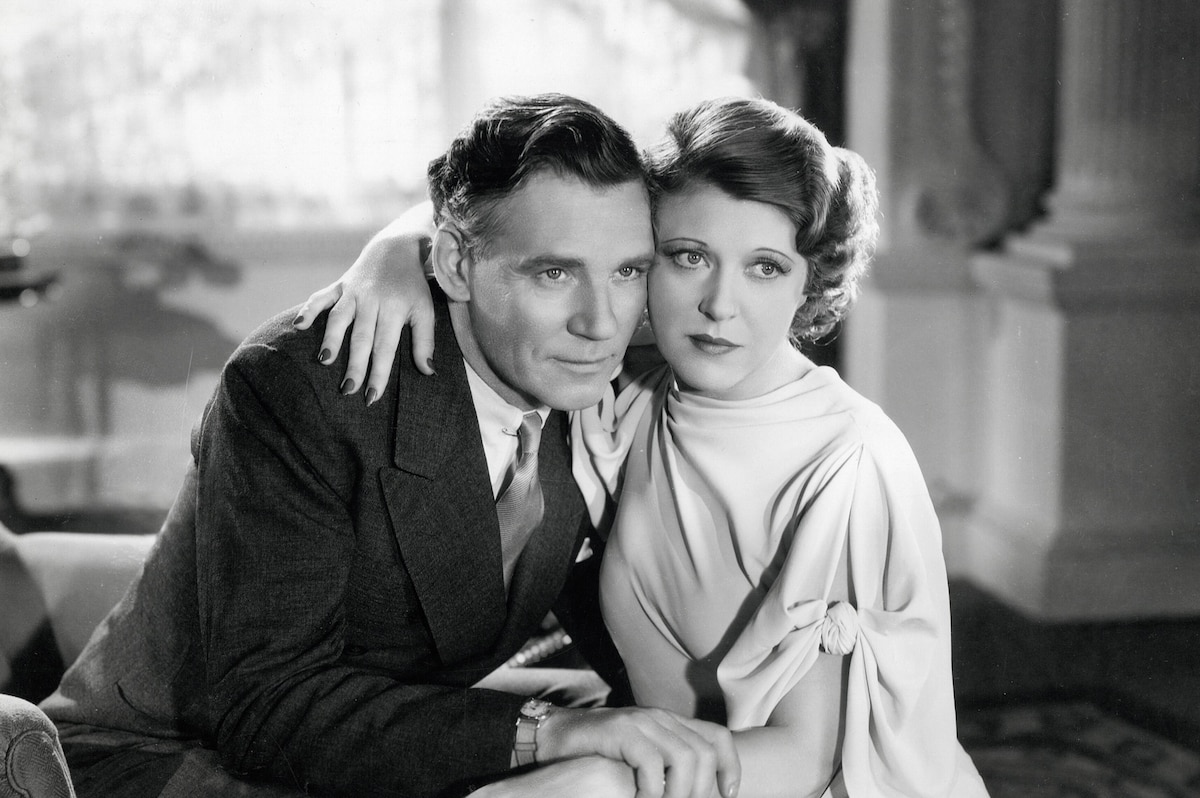
After years of hard work building an automotive empire, Midwesterner Sam Dodsworth decides to retire and take his wife Fran on an extended and long overdue trip to Europe. Sam, who has spent his life focused on work, is a wide-eyed American abroad, eager to take in the sights, experience new places, then return home to his comfortable, familiar life. Fran, however, is over 40 and frightened of growing old, a fear compounded by the birth of the Dodsworths' first grandchild. To hold middle age at bay, she engages in flirtations with mostly younger men, something her husband regards as essentially harmless at first. But Fran's desperation and her frustration with Sam's simple middle-class tastes and habits soon draw a wedge between them. As her affairs become more serious and more deluded, Sam finds himself torn between the urge to save his marriage and his attraction to a beautiful and sensitive expatriate, Edith Cortright.
Director: William Wyler
Producer: Samuel Goldwyn
Screenplay: Sidney Howard, based on his play and the novel by Sinclair Lewis
Cinematography: Rudolph Maté
Editing: Daniel Mandell
Art Direction: Richard Day
Original Music: Alfred Newman (uncredited)
Cast: Walter Huston (Sam Dodsworth), Ruth Chatterton (Fran Dodsworth), Mary Astor (Edith Cortright), Paul Lukas (Arnold Iselin), David Niven (Captain Clyde Lockert).
BW-101m. Closed captioning.
Why DODSWORTH Is Essential
When the great films of the 1930s are discussed, one rarely hears much about Dodsworth. Yet this overlooked movie is one of the most literate, sensitively acted and beautifully directed of its time. In fact, the film has barely dated at all; thanks to witty, insightful dialogue, restrained and natural performances on the part of the entire cast (especially star Walter Huston), and a production that does justice to the engaging, still relevant themes of the source material, Sinclair Lewis's 1929 novel, Dodsworth holds up remarkably well today as an adult drama with just the right mix of conflict and gentle humor.
Perhaps part of the reason for its neglect is its disappointing reception at the time of its release. Although it was not a total flop, producer Sam Goldwyn hoped it would be a bigger box office success; later in his career he would alternate between saying he made a fortune off Dodsworth and that it was a major money loser. It may have been simply too serious, too subtle, and too sophisticated for the taste of the general public.
In addition, Dodsworth bucked the accepted wisdom of the motion picture business of the time by casting non-stars in a story that pushed the limits of both the Production Code and audience expectations with its frank depiction of marital infidelity and the couple's inevitable breakup, two aspects of the narrative that make it all the more worthy of respect.
On the other hand, Dodsworth did garner favorable critical response - much of it for Walter Huston's performance - and a number of nominations and awards. And the film succeeded as a cinematically satisfying adaptation of a popular literary property, an important goal in Goldwyn's successful independent career. The producer was very interested in bringing important plays and novels to the screen, having less to do with his own intellectual reach than a desire to be seen as a filmmaker of refined taste and lofty ambitions.
In the early years of sound, studios often looked to the stage for new properties and talent, and 1936 saw the release of several theatrical adaptations with varying degrees of success. Dodsworth's director William Wyler, another filmmaker with a penchant for literary material, made two such films that year, the other being a bowdlerized version of Lillian Hellman's play The Children's Hour, released under the title These Three, which was also produced by Goldwyn. But it's hard to find an adaptation that not only stayed as faithful to its original but amplified it as well as Dodsworth. The result is neither a bastardization of its source nor an embalmed reproduction, as many too often were, but a richly textured work that stands entirely on its own as a film.
by Rob Nixon
Dodsworth - The Essentials
by Rob Nixon | March 02, 2007
SIGN UP FOR OUR NEWSLETTERS

CONNECT WITH TCM