AWARDS & HONORS:
The New York Film Critics Association awarded The Lost Weekend Best
Director, Best Actor, and Best Picture.
The liquor industry, at first hostile to the picture, decided to praise The Lost Weekend, once it became clear the picture was a unanimous critical and popular success. A House of Seagrams ad went to bat for the picture during its Oscar campaign, when it said, "Paramount has succeeded in burning into the hearts and minds of all who see this vivid screen story our own long-held and oft-published belief that...some men should not drink!, which might well have been the name of this great picture instead of The Lost Weekend."
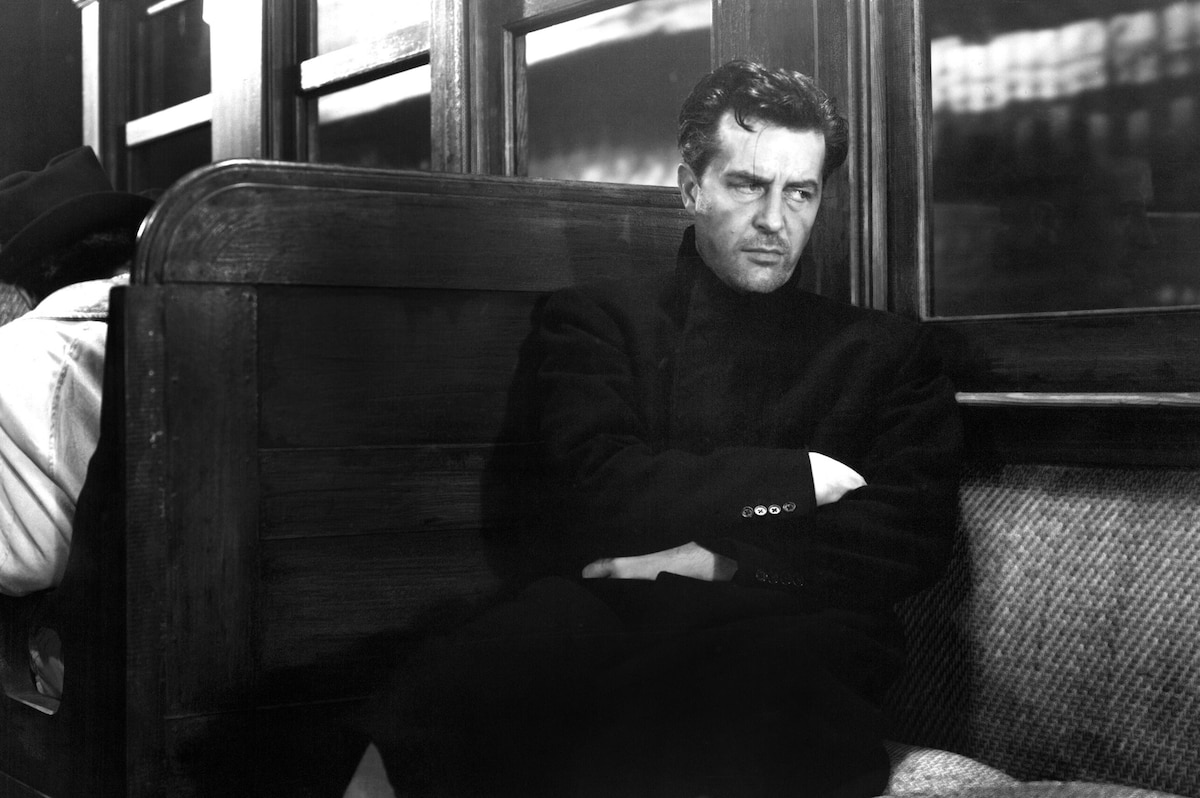
The Lost Weekend also made its way into the winner's circle at the Academy Awards ceremony. Ray Milland won Best Actor, and deservedly so, while the film also received Oscars for Best Picture, Best Director, and Best Screenplay. The film also received nominations for Best Score, Best Editing, and Cinematography.
When Billy Wilder and Charles Brackett returned to the studio after the pair's big Oscar win, their colleagues paid them a special tribute by hanging dozens of liquor bottles outside the windows of their Paramount offices.
THE CRITICS CORNER:
Film Daily found The Lost Weekend to be the "Best Film of the Year," while the message film placed #2 and #9 respectively on the "Ten Best" lists over at the National Board of Review and the New York Times. The New York Daily News raved that it was "the most daring film that ever came out of Hollywood."
Gossip columnist Hedda Hopper claimed The Lost Weekend "tops them all. Ray Milland's portrayal is an engraved invitation for an Academy Award."
Variety hailed it as an "outstanding achievement," one that is "intense, morbid, and thrilling." The review, wielding the vernacular of the day, said that the film "atom bombs" in its depiction of the Bellevue hospital alcoholic ward. The trade was also taken with Ray Milland's performance, calling it a portrayal that would be "reckoned with when filmdom makes its annual awards."
Jane Wyman was recognized for her honest portrayal which went against the grain of her stereotyped screen persona - the sunny, perky screen ingenue. Bosley Crowther of the New York Times commented that Wyman "assumes with great authority a different role," while the World-Telegram stated that she displayed "unsuspecting talent."
Crowther ended his glowing review of the film itself with a helpful postscript: "We would not recommend this picture for a gay evening on the town. But it is certainly an overwhelming drama which every adult moviegoer should see."
The New York Herald Tribune proclaimed it "a milestone in moviemaking...every inch a cinematic masterpiece." Cue compared the "deeply stirring and memorable picture" to The Informer (1935), The Grapes of Wrath (1940), and The Ox-Bow Incident (1943).
James Agee, the influential critic with Nation, attributed both accolades and caveats for The Lost Weekend when he called the movie "unusually hard, tense, cruel, intelligent, and straightforward," and yet a picture that was nothing "new, sharply individual, or strongly creative." Agee ended his review with a wink, though, when he commented on the heat the picture was getting from the liquor industry: "I understand that liquor interesh...innerish...intereshtsh are rather worried about thish film. Thash tough." Ironically, Agee had a serious drinking problem himself, one that contributed to his early death at the age of 45.
Charles Jackson praised the film version of his novel, The Lost Weekend, when he said, "They thought of things I wish I had thought of first - they were that good."
Life magazine claimed The Lost Weekend inspired the popular saying, "Let's lose a weekend," a catchphrase for going out for a drink.
Compiled by Scott McGee
The Critics Corner: THE LOST WEEKEND
by Scott McGee | March 02, 2007
SIGN UP FOR OUR NEWSLETTERS

CONNECT WITH TCM