SYNOPSIS
Carl Denham, an arrogant documentary filmmaker, organizes a trek into uncharted territory in the hopes of discovering a unique animal that he can capture, bring back to civilization, and exploit for profit. After hiring Ann Darrow, an attractive blonde, to help him on his mission, Denham leads his crew to mysterious, fog-enshrouded Skull Island where they encounter something tall, dark, and very hairy.
Director: Merian C. Cooper, Ernest B. Schoedsack
Producer: Cooper & Schoedsack
Screenplay: James Creelman, Ruth Rose
Based on a story by Merian C. Cooper and Edgar Wallace
Cinematography: Edward Linden, Vernon L. Walker, J.O. Taylor
Editing: Ted Cheesman
Art Direction: Carroll Clark, Al Herman, Van Nest Polglase
Music: Max Steiner
Cast: Fay Wray (Ann Darrow), Robert Armstrong (Carl Denham), Bruce Cabot (John Driscoll), Frank Reicher (Capt. Englehorn), Sam Hardy (Charles Weston), Noble Johnson (Native Chief), Victor Wong (Charlie), Jim Thorpe (Native Dancer), Madame Sul-Te-Wan (Handmaiden).
BW-104m.
Why KING KONG Is Essential
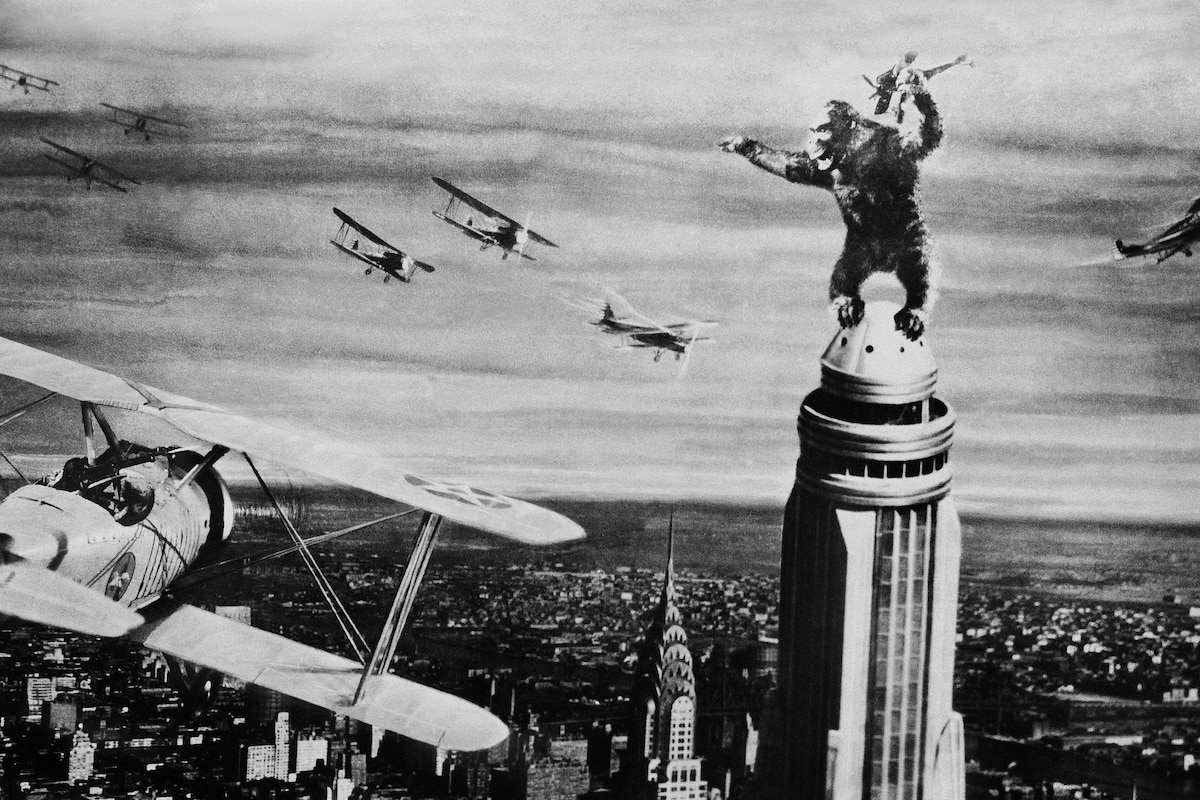
Though he was just a series of animated models given life through special effects technology, Kong, with his doomed loved for Ann Darrow, has become one of the most famous of all movie characters, revived in remakes, sequels and rip-offs. He has become a part of contemporary culture as a symbol of both unleashed savagery and nobility brought down by greed.
King Kong was the first of any kind to become a hit with an animated leading player. Willis O'Brien's pioneering stop-motion animation would inspire such later special effects artists as Ray Harryhausen and Jim Danforth and pave the way for contemporary CGI effects.
King Kong is often credited as the first to use miniature rear projections to create special effects sequences. Footage of the actors was projected on a small screen, one frame at a time, behind the models as they were animated.
The film also was one of the first to use Linwood Dunn's newly created optical printer to matte together shots of the animated models and live actors.
King Kong was one of the first films to have a musical score composed specifically for it and one of the most influential. The film was one of Max Steiner's first Hollywood assignments, leading the way to a long career in which he would write music for everything from Casablanca and Now, Voyager (both 1942) to the teen romance A Summer Place (1959). His use of themes in the film, including a love theme for Ann and Kong, was extremely influential.
The success of the film's 1952 reissue, in which it out-grossed many current A pictures, inspired Warner Bros. to make The Beast from 20,000 Fathoms (1953), the film that triggered the giant monster film genre of the '50s.
by Frank Miller
King Kong - The Essentials
by Frank Miller | March 02, 2007
SIGN UP FOR OUR NEWSLETTERS

CONNECT WITH TCM