Director Archie Mayo was so impressed with Charles Chaplin's climactic speech, he had it reprinted in his Christmas cards.
The Great Dictator's success made Chaplin one of the most visible critics of Fascism during the war years. Lecture offers from progressive groups would haunt Chaplin in later years, when conservatives branded him a Communist sympathizer and he was denied reentry into the U.S. after a European vacation.
General Dwight Eisenhower requested copies of The Great Dictator, dubbed into French, to be shown in France after the Allied victory.
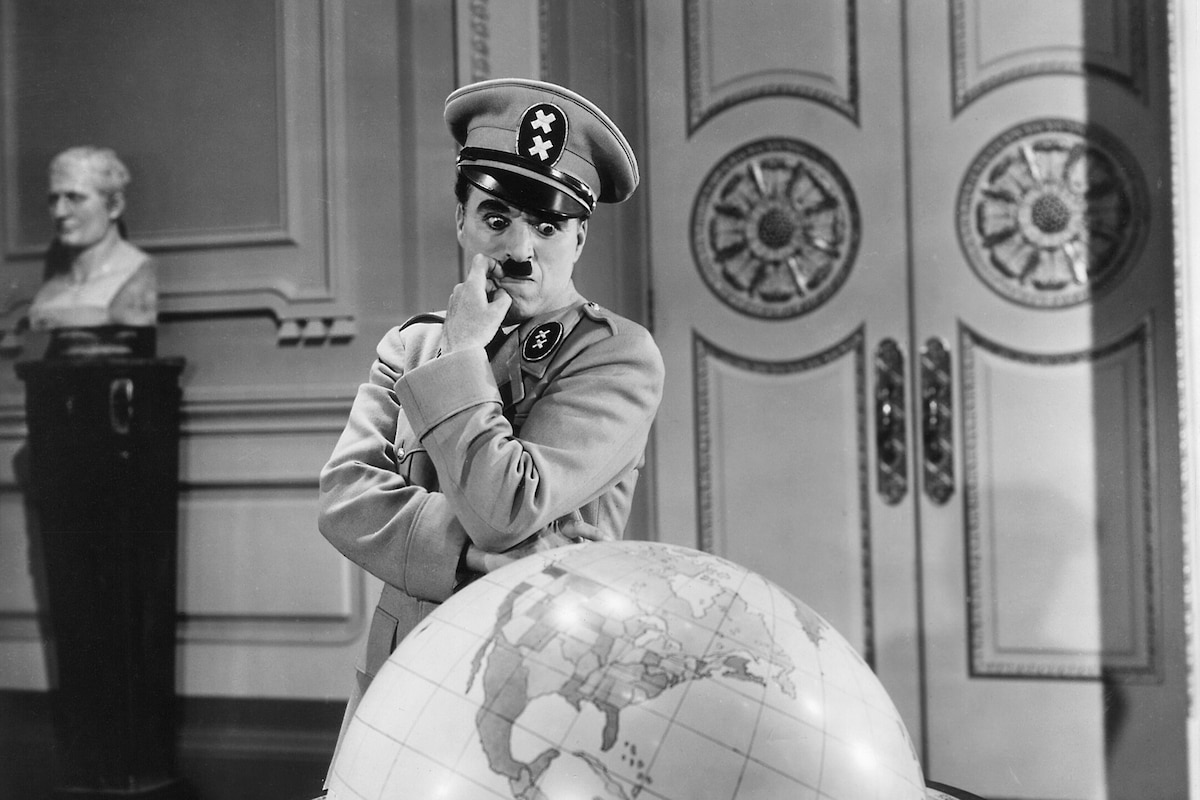
Film researchers Kevin Brownlow and David Gill found a rare home movie from a 1929 party at Pickfair in which Chaplin, dressed as Julius Caesar, dances with a large globe. They included the scene in their documentary Unknown Chaplin (1983) to show the genesis of one of the most famous comic bits in The Great Dictator.
Brownlow produced a 2002 documentary on the film's making, The Tramp and the Dictator, which featured an interview with Chaplin's son, Sydney Chaplin. The 58-minute film is included in The Chaplin Collection, Vol. 1, a 2003 collection of four films -- The Gold Rush (1925), Modern Times (1936), Limelight (1952) and The Great Dictator -- and the 2003 restored DVD of The Great Dictator. The latter also includes Sydney Chaplin's color behind-the-scenes footage of the film's production.
On seeing The Great Dictator, Hitler's architect, Albert Speer, commented that it was the most accurate representation of Hitler ever put on screen. He also stated that Hitler had also owned a globe in the form of a balloon, though it was much larger than the one Chaplin danced with in the film.
by Frank Miller
Pop Culture 101: THE GREAT DICTATOR
by Frank Miller | March 01, 2007
SIGN UP FOR OUR NEWSLETTERS

CONNECT WITH TCM