Even if you've never seen Black Caesar before, chances are you've heard its theme song, "Down and Out in New York City," by legendary soulster James Brown.
Brown was not originally slated to do the soundtrack to the film-that gig was to have gone to Stevie Wonder. Director Larry Cohen screened the rough cut of Black Caesar for Wonder, who worried about associating himself with something so dark and violent. James Brown had no such objections, and took the assignment with gusto.
Perhaps too much gusto. Given a three minute scene to score, Brown recorded five minutes; given a five minute scene, Brown recorded seven minutes of music. Cohen and his editor George Folsey, Jr. struggled to figure out how to fit the overlong passages into the film, and called Brown's manager to explain their predicament. "So James Brown gave you more than you needed," he retorted, oblivious, "What's the problem?"
In addition to James Brown, Cohen found himself working with another larger than life talent on the project-Rick Baker. Still a decade away from his first of many Oscar® wins, the make-up magician created realistic bullet holes and a gory severed ear for Black Caesar. Cohen still has that rubber ear, a souvenir of the shoot.
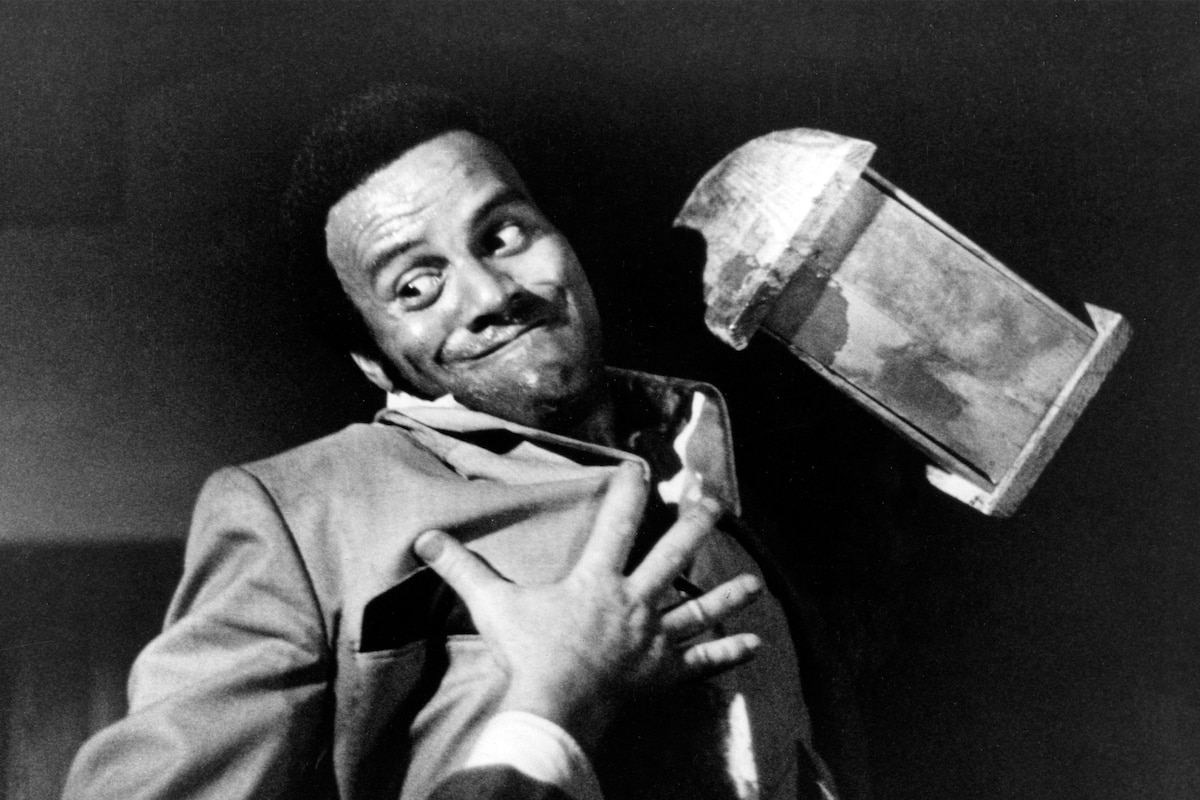
One of the supporting players in the picture was D'Urville Martin, an outstanding character actor who played alongside Williamson in numerous blaxploitation flicks--The Legend of Nigger Charley (1972), The Soul of Nigger Charley (1973), and Blind Rage (1978). D'Urville Martin followed the career trajectory of so many of Black Caesar's personnel and became a filmmaker and producer in his own right. In 1975, Martin directed Rudy Ray Moore's cult classic Dolemite.
Many of Larry Cohen's films have a marked satirical edge. His dark sense of humor has held him in good stead over the years, and indeed he got his professional writing start as a comedy writer, selling jokes to standup comics when he was just a teenager.
It was comedy that launched his directing career, as well. In 1972, Cohen wrote a pitch black comedy thriller called Bone, which he shopped to various studios with a unique pitch: "If you let me make the movie, I only need $85,000 to get started," he offered, "If you don't want to put up the rest of the money, you don't have to, and if you don't get your $85,000 back, I'll write you a free screenplay." Although Bone never did earn its $85 grand back, it got Cohen's foot in the door-and led directly to Black Caesar. Producer Sam Arkoff saw Bone and hired Cohen because it showed he "really knew how to direct those black actors." Although this puzzled Cohen (in what way would black actors be different to direct? And assuming they were, Bone only had one black actor, Yaphet Kotto, in it), he didn't look the gift horse in the mouth-and the commercial success of Black Caesar gave Cohen (and so many of his coworkers) the ability to go on to bigger things.
by David Kalat
Sources:
Brett McCormick, "Fred Williamson: The Hammer Strikes!" Psychotronic Magazine
Darius James, That's Blaxploitation, St. Martin's Griffin
Gerald Martinez et al, What It Is...What It was!, Hyperion Books
Larry Cohen, commentary track on the MGM Black Caesar DVD
Patrick McGilligan,
Stanley Winter, Dark Visions: Conversations with the Masters of the Horror Film, Avon Books
Steve Ramos, "It's Hammer Time Again," City Beat
Steve Ryfle, "The Last Action Hero," Shock Cinema Magazine
Tony Williams, "Larry Cohen," Senses of Cinema
In the Know (Black Caesar) - TRIVIA
February 28, 2007
SIGN UP FOR OUR NEWSLETTERS

CONNECT WITH TCM