The formula of a modern girl on her own in the big city wrestling over her attraction to a man despite her standards, moral and otherwise, had worked well for Doris Day in her two previous mega-hits with Rock Hudson, Pillow Talk (1959) and Lover Come Back (1961). So why not continue the successful formula?
Stanley Shapiro was one of the writers on Pillow Talk and writer/producer of Lover Come Back. The latter film was still a top box office hit when Shapiro put together his next project in the successful Doris Day formula. To help with the screenplay, he pulled in Nate Monaster, whose previous credits had been exclusively on TV, except for the Jerry Lewis film The Sad Sack (1957).
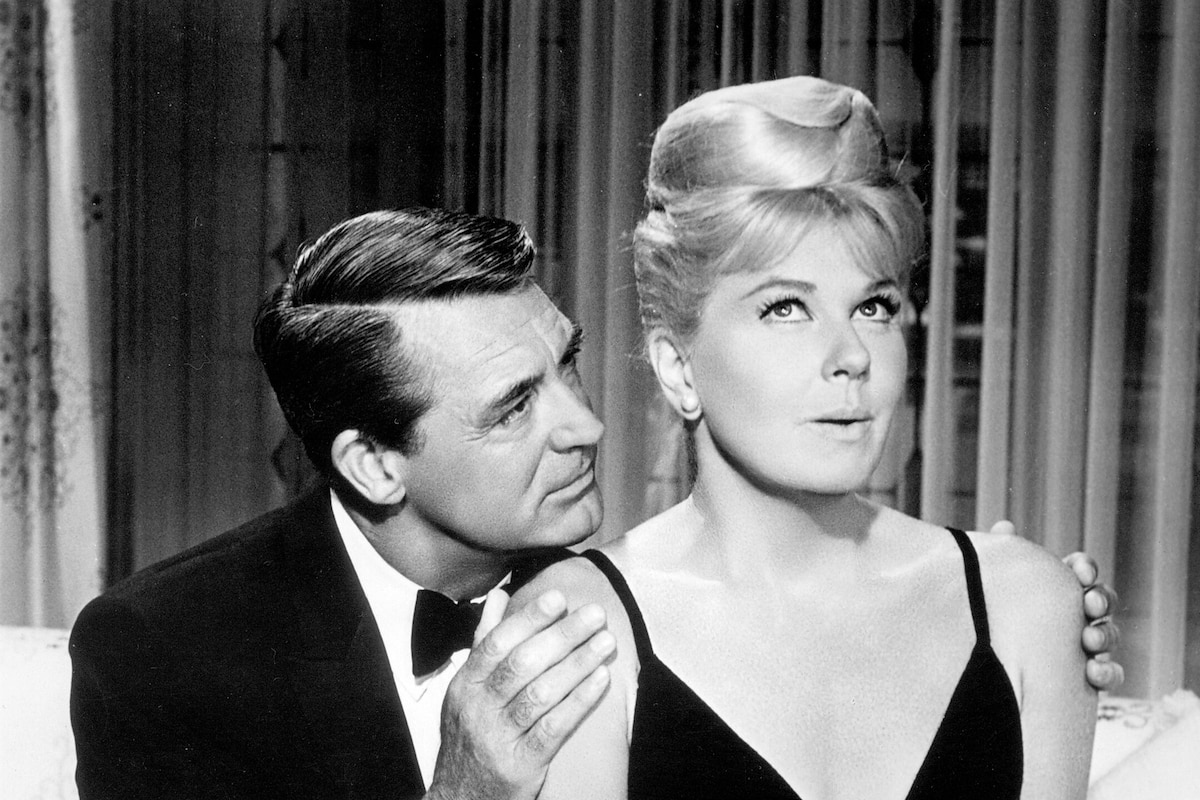
The major coup in putting together this project was getting Cary Grant to co-star with Day. Grant had been in pictures for 30 years at this point and remained one of Hollywood's biggest stars. As the man who set the standards for romantic leads, he was a natural choice for this sort of latter-day screwball sex farce. In fact, when That Touch of Mink was released, one reviewer noted that the only difference between this and the earlier Day comedies was that in those, Rock Hudson had played the Cary Grant part, while in this, "the Cary Grant part is played by Cary Grant. When it comes to playing Cary Grant, nobody can beat Cary Grant."
Grant was responsible for having Audrey Meadows signed. The brassy redhead with the nasal voice had made her mark in the mid 1950s as Jackie Gleason's long-suffering wife Alice on the legendary sitcom The Honeymooners. Grant was a big fan of that show, and years earlier, upon meeting Meadows by chance, expressed how much he wished he could just "walk through the door and be in that set with all of you." Meadows later wondered how he would look "in that broken-down terrible set, the way he dressed and the way he looked." A few years later, Meadows' agent read the script for That Touch of Mink, which called for "an Audrey Meadows type." The agent contacted Grant, who was already attached to the project, and Grant pushed for Meadows in the role.
An actor sometimes noted for his Cary Grant-like appeal at the beginning of his career in the early 1940s, Gig Young found himself relegated to supporting roles in the sixties, usually providing light comic relief in such films as Desk Set (1957) as well as two Doris Day vehicles, Teacher's Pet (1958) and The Tunnel of Love (1958). He was brought in to fill what was essentially the Tony Randall role in the Doris Day formula, that of the neurotic sidekick to the dashing male lead. Shapiro and Monaster gave the part a somewhat more antagonistic twist, however, making Young an academic who bitterly resented being lured by Grant into the corporate world, despite its financial rewards.
by Rob Nixon
SOURCES:
Evenings With Cary Grant: Recollections in His Own Words and by Those Who Knew Him Best by Nancy Nelson
Cary Grant: A Biography by Marc Eliot
Doris Day In Her Own Words by A.E. Hotchner
Final Gig: The Man Behind the Murder by George Eells
The Big Idea
by Rob Nixon | February 28, 2007
SIGN UP FOR OUR NEWSLETTERS

CONNECT WITH TCM