When MTV launched in 1981, a pop culture revolution began that altered the way we consumed our music, as increasingly extravagant music videos became a vital part of how the Billboard Hot 100 operated throughout the decade. Among the many bands and vocalists that shot to stardom with this platform (which has since dispensed with music videos almost entirely in the current millennium), most of the focus remained on megastars like Madonna, who scored a hit in film with Desperately Seeking Susan (1985), and Prince, who essentially played a variation of himself in Purple Rain (1984). One of the most eccentric MTV-connected star vehicles from the era is Vibes (1988), an oddball comedy adventure that marked the first and only leading studio role for Cyndi Lauper.
A number of music video-based acts drew attention for their outrageous, gender-bending appearance ranging from Annie Lennox to Boy George, but the Brooklyn-born Lauper trumped them all when her debut album, She's So Unusual, dropped in 1983 featuring cover art of her sporting wildly colorful hair and clothing. The artistic craft backed up her outrageous image with infectious singles like "Girls Just Want to Have Fun," "Time After Time," "All Through the Night," "Money Changes Everything" and the controversial, boundary-pushing "She Bop." Lauper's connection to Hollywood came soon after when she recorded the single "The Goonies 'R' Good Enough" for Richard Donner's The Goonies (1985). The video went into nearly nonstop rotation that summer. Following the release of her second album, True Colors, in 1986, as well as a prominent HBO concert in 1987, Lauper was ready to make the leap to moviedom with Vibes. In keeping with the trend at the time, she performed a song intended for the soundtrack entitled "Hole in My Heart (All the Way to China)," which ended up being released only as a standalone single that reached #54 on the Billboard Hot 100 chart.
Soundtrack duties for this film instead were handled by the score composed by James Horner, a young composer who had cut his teeth on several Roger Corman films at the start of the decade and broke through to the mainstream with Star Trek II: The Wrath of Khan and 48 Hrs. in 1982. In the interim before Vibes, Horner had landed major gigs on films like Cocoon (1985), Aliens (1986) and An American Tail (1986), but the year of this film's release saw him working at a fever pitch with his other 1988 scores, including Willow, The Land Before Time, Red Heat and Cocoon: The Return. However, his work on Vibes finds Horner in a playful mode using expressive woodwinds to echo the Incan setting of the story, and the score has become a cult favorite among film music collectors, earning a slot as one of the first CD releases in Varese Sarabande's CD Club line in 1990 and commanding enormous sums of money due to its limited nature (despite a subsequent 2014 reissue that has also become quite scarce). Of course, Horner would go on to win two Academy Awards for Titanic (1997) and remained in high demand until his tragic death in a 2015 plane crash.
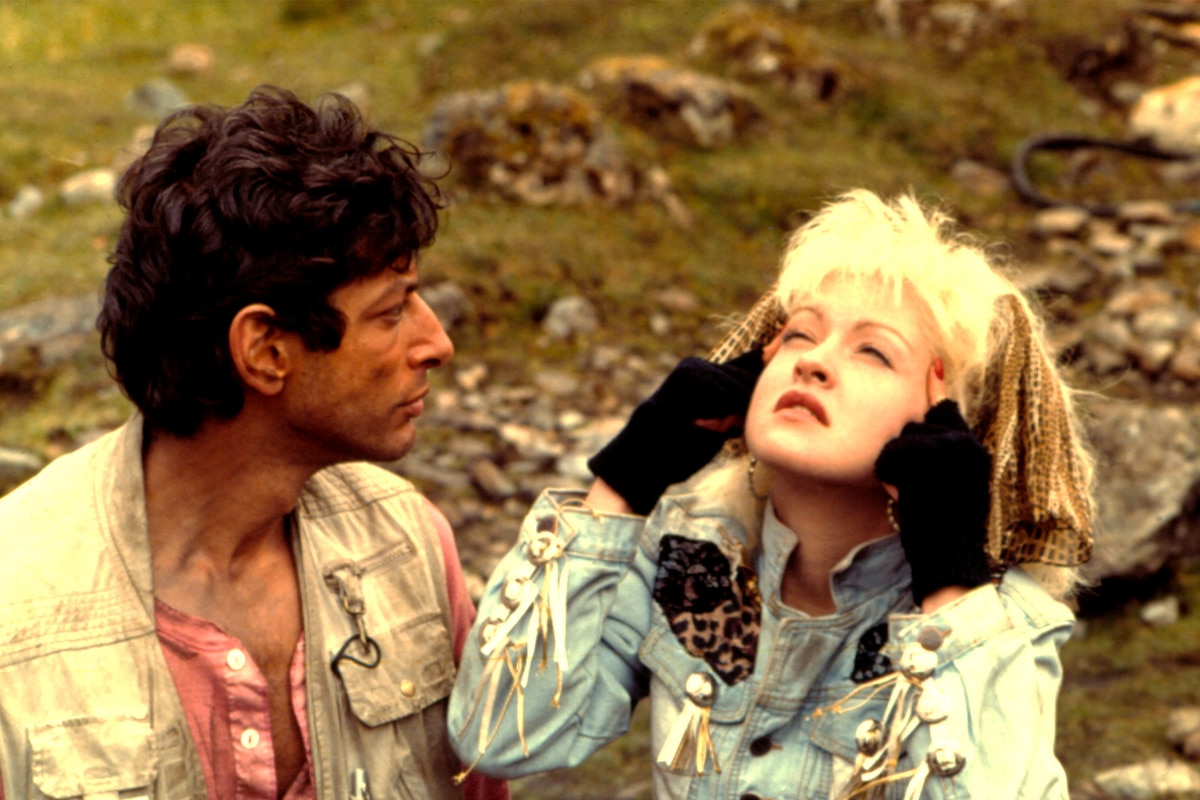
In interviews for the film's publicity, Lauper expressed an affinity for her character, Sylvia Pickel, a romantically unlucky psychic who relies on a spirit guide named Louise. Offered a job by the mysterious Harry (Peter Falk) to find his missing son, she recruits fellow psychic Nick (Jeff Goldblum) to accompany her on a trip to Ecuador only to find that they are embroiled in a perilous quest for a lost city of gold. Stepping in after the departure of original leading man Dan Aykroyd, Goldblum had been a busy character actor since his grimy debut appearance in Death Wish (1974), with his acclaimed role in David Cronenberg's The Fly (1986) briefly establishing him as leading man material. His role as Nick here seems tailor-made for his unique cadence and wry screen persona, which also served him well in another MTV-influenced film that year, Julien Temple's Earth Girls Are Easy (1988), which reunited him with his wife at the time, Geena Davis.
Though Vibes was not warmly received by audiences or critics when it rolled out on August 5, 1988 from Columbia Pictures, it later developed a following via wide VHS and frequent cable airings. Goldblum has since remained a steady fixture on the screen, while Lauper's recording career continued unabated with occasional supporting acting roles turning up in films like Life with Mikey (1993) and The Opportunists (2000)--though her only other starring role came with the troubled comedy Off and Running (1991), which was buried in the collapse of Orion Pictures. Vibes remains her highest-profile film to date, and if anything, it's more fascinating and endearing now than when it was originally released and stands as an example of a kind of filmmaking truly for a bygone era.
By Nathaniel Thompson
Vibes
by Nathaniel Thompson | June 22, 2020
SIGN UP FOR OUR NEWSLETTERS

CONNECT WITH TCM