As the Big Band Era in American music drew to a close, Hollywood produced a string of nostalgic films depicting the lives and legacies of the great musicians and bandleaders of the era: The Fabulous Dorseys (1947), The Glenn Miller Story (1954), The Benny Goodman Story (1956), The Gene Krupa Story (1959). Each of them catered to the legend of its principal subject while, to varying degrees, playing freely with the facts.
Following the trend, Paramount released this musical biopic very loosely based on the life of cornet player and bandleader Ernest Loring "Red" Nichols (1905-1965), who began playing at a young age and became one of the most influential jazz musicians of the 1920s, both for his embrace of the "hot" Dixieland style and for giving a start to all of the music legends portrayed in the films listed above. With a bit of word play on his last name, the various configurations of Nichols' groups through the years were known as the Five Pennies, giving this picture its title.
Despite his early success, and a hit 1927 recording of "Ida, Sweet as Apple Cider," Nichols never reached the fame of those musicians who had come through his early bands and moved on to careers of their own. He quit the business suddenly in 1942 when his daughter contracted polio, and he worked in military shipyards until the end of the war, when he formed a new band. They started playing in small clubs in the Los Angeles area, soon followed by gigs in larger and more prestigious venues. Nichols also showed up in recording sessions with singers like Peggy Lee, whose solo careers had begun to eclipse the popularity of the Big Bands that once featured them. Even as the swing style started to wane, Nichols was able to ride the crest of nostalgia for his distinctive approach.
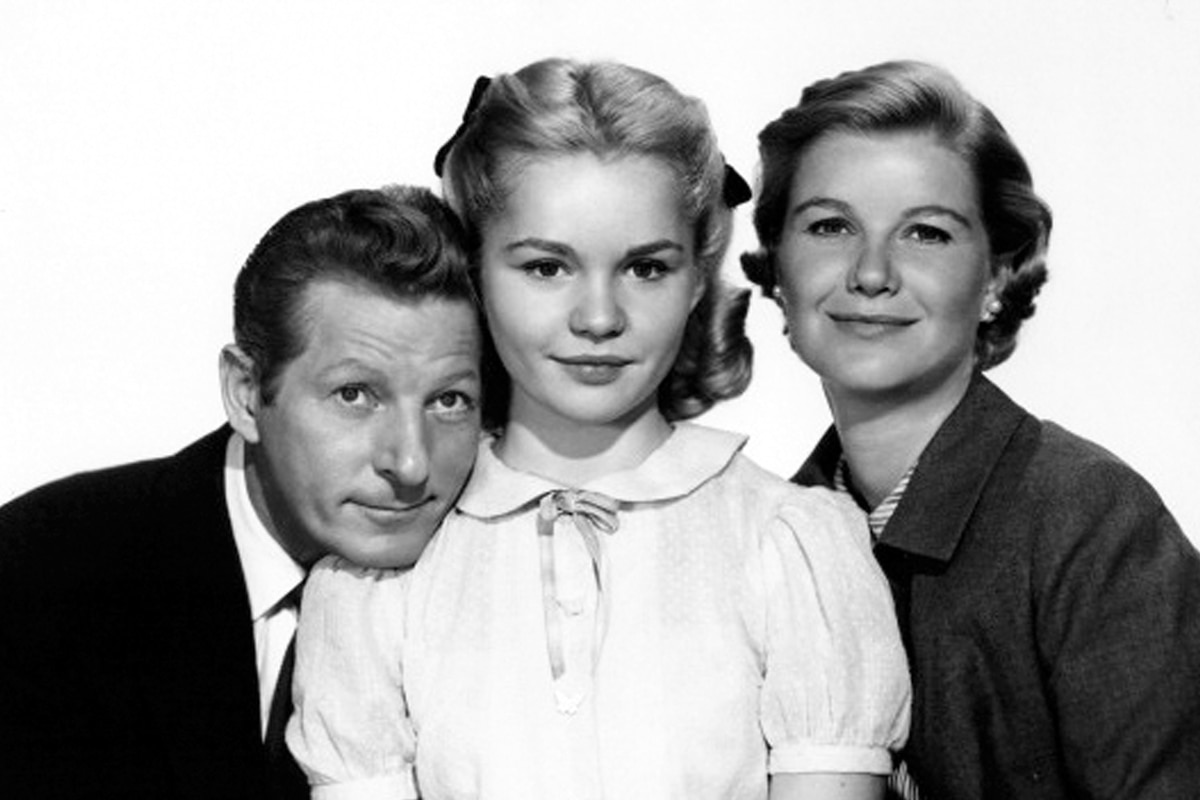
The film traces the basic contours of his life but is on the whole fictional. Danny Kaye plays Nichols as a lovable ne'er-do-well always getting into trouble, when in fact the real-life musician was known to be very responsible and disciplined. Nichols himself supplied the cornet playing for the soundtrack, and the actor spent months learning the musician's fingering techniques. A musical comedy star, Kaye sang several of the songs, although Nichols never sang in performance. Neither did his real-life wife, Willa Stutsman, a dancer portrayed here by Barbara Bel Geddes as a singer (vocals dubbed by Eileen Wilson).
Kaye first became interested in playing Nichols in 1954 and signed an agreement to have his company co-produce with Paramount. The project proceeded in fits and starts over the next few years, sidelined first by "serious script trouble," according to a studio memo, then a strike that prevented musicians, such as Louis Armstrong (who played himself) from working on it. Pre-production eventually got going in earnest in late 1958 under the direction of Melville Shavelson, who had recently directed biopics of vaudevillian Eddie Foy (The Seven Little Foys, 1955) and New York Mayor Jimmy Walker (Beau James, 1957). Both of those starred Bob Hope, who makes a brief cameo appearance here as himself. Nichols once briefly led Hope's orchestra.
The film received Oscar nominations for Best Cinematography (Color), Best Costume Design (Color), Best Original Song for "The Five Pennies" (written by Kaye's wife, Sylvia Fine) and Best Music, Scoring of a Musical Picture. In addition to a Golden Globe nomination for Best Motion Picture-Musical, it received a Grammy nomination for Best Soundtrack Album. A Golden Globe Award for Best Promising Newcomer went to 17-year-old Tuesday Weld as Nichols' daughter Dorothy.
The film features real-life musicians Ray Anthony (as Jimmy Dorsey), Bobby Troup, Bob Crosby and Shelly Manne, and was the final screen appearance of silent star Blanche Sweet. Nichols appears briefly in the picture, uncredited, as one of the Clicquot Club Eskimos, in the sequence in which Kaye sings "Back Home Again in Indiana" on various radio shows.
The picture was a hit and brought new attention to Nichols' career. The New York Times called it "highly palatable schmaltz served up with a Dixieland beat" that was "surprisingly edifying to the eye and ear."
In 1965, Red Nichols and the Five Pennies were playing in Las Vegas when he suffered a fatal heart attack in his hotel room.
Director: Melville Shavelson
Producer: Jack Rose
Screenplay: Jack Rose, Melville Shavelson; story by Robert Smith
Cinematography: Daniel L. Fapp
Editing: Frank P. Keller
Art Direction: Tambi Larsen, Hal Pereira
Music: Leith Stevens
Cast: Danny Kaye (Red Nichols), Barbara Bel Geddes (Willa Stutsman), Louis Armstrong (Himself), Harry Guardino (Tony Valani), Bob Crosby (Wil Paradise), Bobby Troup (Artie Schutt)
By Rob Nixon
The Five Pennies
by Rob Nixon | May 24, 2020
SIGN UP FOR OUR NEWSLETTERS

CONNECT WITH TCM