Moira Shearer is best remembered for her turn as Victoria Page in The Red Shoes (1948), but of the actress-ballerina's six feature films, her favorite was the comedy The Man Who Loved Redheads (1955). "I loved it," she later told writer Brian MacFarlane for his book An Autobiography of British Cinema. "Harold French directed, delightfully and easily, but had a little difficulty with his producer, Alex Korda, who announced he would redirect a certain sequence himself. And he did... It was [based on] a charming play by Terence Rattigan, originally called Who Is Sylvia?, and we had a marvelous cast, full of the best British character actors: Roland Culver, Harry Andrews, Denholm Elliott, and so on. I played several parts and wished I'd had more experience before tackling it. Timing is everything - a few years later I could have played those parts so much better, but it was the film I most enjoyed doing."
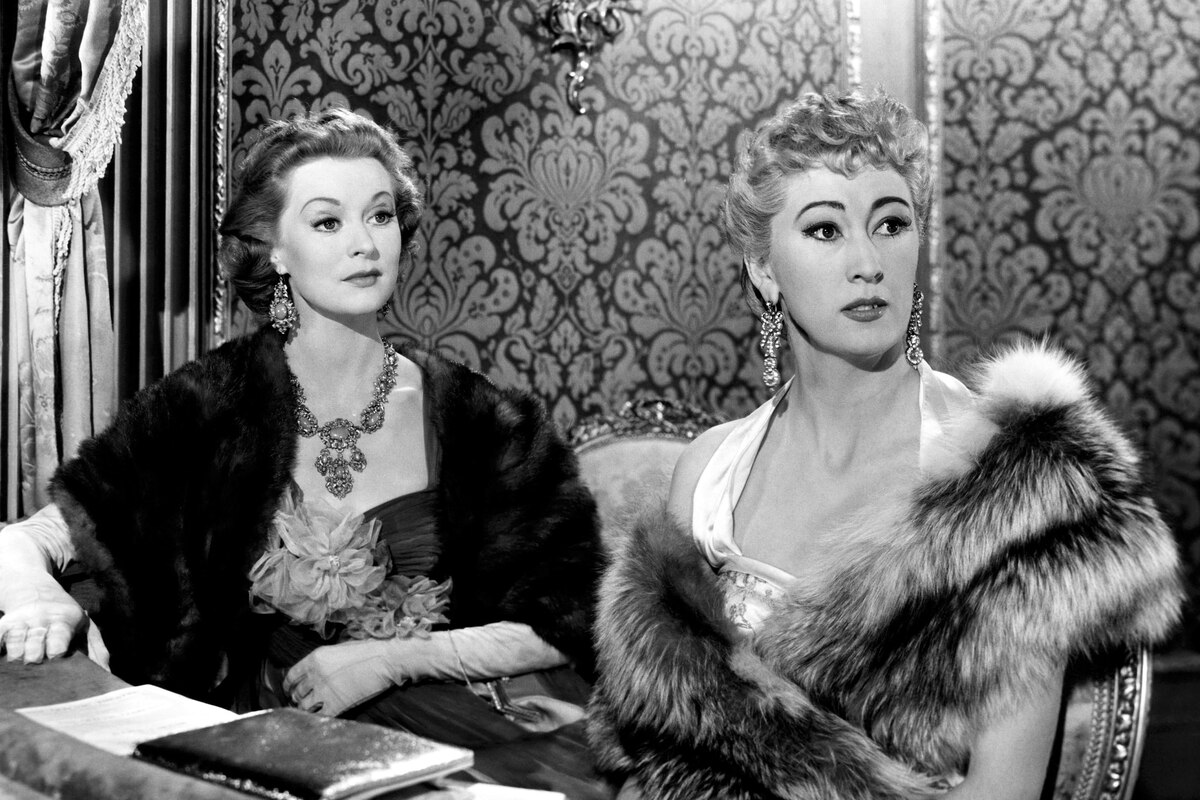
The red-haired Shearer plays four roles in the film, the third of whom is a dancer, affording her the opportunity to perform part of Tchaikovsky's "The Sleeping Beauty" ballet. All her characters are loved by the same man, the diplomat Lord Binfield, who is married but considers the image of Shearer to be his ideal woman; he pursues her in all her guises over nearly half a century. Binfield is played first by Jeremy Spenser as a 14-year-old, then later by John Justin (best known as Prince Ahmad in 1940's The Thief of Bagdad), who proceeds to age through the film.
Terence Rattigan's play opened in London in 1950 and ran for over a year. He adapted the screenplay himself, and the film was the last feature to be directed by actor-turned-director Harold French. French later said that he thought his cast wasn't strong enough and that he would have preferred Kenneth More to play Binfield; instead, More narrates the tale wryly from offscreen. Actors Roland Culver and Joan Benham were imported from the stage version. Denholm Elliott plays Binfield's son in one of his early screen appearances, and also notable is Gladys Cooper, who, French said, "steals the whole thing in the last few minutes."
The picture opened in the United Kingdom in February 1955, with an American release following five months later. It was well-received in the U.S., with Variety deeming it "a light and wholly enjoyable British comedy" and The New York Times describing it as "a charming lark, light as a zephyr and just as welcome." The Times review continued: "Terrence Rattigan must have drunk copiously of that mysterious nectar that inspires some playwrights to weave bright comedy out of what is often flimsy, run-of-the-mill material... [His] situations and dialogue never lack for color and his lightweight dig at dalliance is a pleasure... In essaying the roles of the 'redheads,' Moira Shearer has developed acting talents that are both surprising and refreshing. The ballerina...moves gracefully from the role of a dewy-eyed 16-year-old, to a mincing Cockney, to a temperamental but tender Russian première danseuse and, finally, to a smart manikin."
According to author Rebecca Prime's Hollywood Exiles in Europe, writer-producer Carl Foreman later said that he worked on this film's screenplay without credit. He had been blacklisted in Hollywood following High Noon (1952) and moved to London to continue his career there.
By Jeremy Arnold
The Man Who Loved Redheads
by Jeremy Arnold | May 06, 2020
SIGN UP FOR OUR NEWSLETTERS

CONNECT WITH TCM