Once to Every Woman (1934) was based on an A.J. Cronin 1933 Cosmopolitan short story, "Kaleidoscope in K," about the strained relationship between a young doctor and his chief surgeon during a 12-hour period. Columbia Pictures quickly purchased the film rights and gave Cronin his first film. They also hired him to adapt the story for the screen with screenwriter Jo Swerling. Lambert Hillyer directed a cast that included Ralph Bellamy as Dr. Jim Barclay; Fay Wray (in her second film for director Hillyer) as Nurse Mary Fanshane; Walter Connolly, one of the most in-demand character actors of the 1930s, as Dr. Walter Selby; Mary Carlisle as Doris Andros; Walter Byron as Dr. Preston; and Jane Darwell as Mrs. Wood.
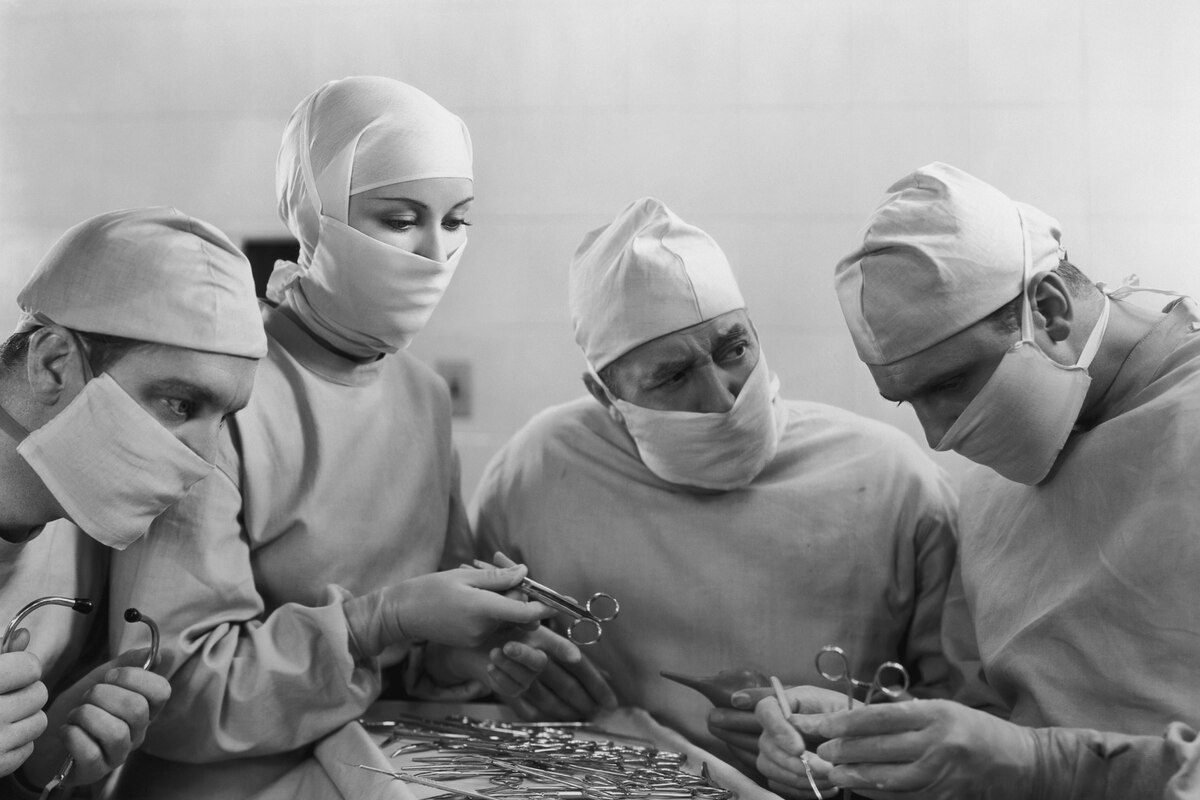
Newly retitled Once to Every Woman, Cronin's story was advertised in print ads with the slogan, "There comes a love so powerful, so elemental, that all about her are enveloped in its consuming flame." The Hollywood treatment clearly added a heavy love element to the medical drama by emphasizing nurse Mary's romance with Dr. Preston. When chief surgeon Dr. Selby nearly kills a patient in brain surgery, Preston's rival, Dr. Barclay saves the day and the patient. Barclay gets the chief surgeon's position when Selby retires, and Mary resents the professional threat he poses to Preston. However, Mary's feelings for Barclay soon change when she learns Preston is cheating on her with another nurse (Carlisle).
Cronin, a former military doctor, had long wanted to be a writer but found he never had the time to start. Fate intervened when he came down with an ulcer and was unable to practice medicine during an extended convalescence, so he used that time to write his first novel, 1931's Hatter's Castle, which was so successful that it was translated into five languages and would later be adapted for the screen in England under the title A.J. Cronin's Hatter's Castle (1942), starring Deborah Kerr, James Mason and Robert Newton. Cronin mostly specialized in medical dramas and several of his short stories and novels were adapted for the screen and later television, including, most famously, The Citadel (1938) starring Robert Donat, the Carole Lombard nurse drama Vigil in the Night (1940) and The Keys of the Kingdom (1944) with Gregory Peck.
Once to Every Woman was shot quickly and cheaply (as were most Columbia pictures) in only three weeks, from November 13th to December 4, 1933. It previewed and then went into wide release in the United States in March 1934. Variety, called it "An attempt to crash the hospital cycle and steal the thunder of Men in White [the 1934 Clark Gable, Myrna Loy film] which must await release until the legit play runs its course. This is a programmer which won't make the grade in key houses. Pretty heavy all the way through and insufficient break-up of the story with comedy. Yarn is not a bad one and it all works (as is true of Men in White) to a central surgical operation scene. [...] It's a bit silly to think that could be done and nothing said by anyone, but it looks pretty effective on the screen. [...] Cast is good all around, with Hillyer's direction commendable."
Mary Carlisle, playing the cheating nurse Doris Andros, was the last surviving cast member and one of the last surviving actors of Hollywood's Golden Era, passing away in August 2018 at the age of 104.
By Lorraine LoBianco
Once To Every Woman
by Lorraine LoBianco | April 22, 2020
SIGN UP FOR OUR NEWSLETTERS

CONNECT WITH TCM