Best known for his screenplay adaptation of Gone With the Wind (1939), playwright Sidney Howard had been writing for Broadway since 1921. In 1926, his stage play The Silver Cord premiered on December 20th at the John Golden Theatre in New York City to much acclaim. Actor and director John Cromwell directed the play, and it featured Laura Hope Crews as Mrs. Phelps, the overbearing mother of two grown sons that scheme to break up their romantic relationships and maintain full control over their affections. The term "silver cord" is a reference to the metaphysical cord that connects the physical body to the spirit, as referred to in the Book of Ecclesiastes. The provocative nature of The Silver Cord, a modern take on the Oedipus complex, was a hit with audiences. It ran for over 200 performances between 1926 and 1927 and enjoyed a run on the London stage. Years later, RKO would purchase the rights to Howard's play for a film adaptation. play lived on and continues to be performed in off-Broadway productions to the present day.
In 1933, the head of production at RKO, Merian C. Cooper, was enjoying the peak of his career. That same year, Cooper's dream of a larger than life gorilla terrorizing Manhattan, King Kong (1933), had become a reality. Cooper's executive assistant and right-hand man Pandro S. Berman, who had survived David O'Selznick's layoffs when he took over the studio, teamed with Cooper to bring Howard's play to the big screen. Cromwell moved from Paramount to RKO in 1933 and was assigned as director. Crews, who delivered many impressive performances as the domineering Mrs. Phelps, was brought on to the project to reprise her theatrical role. Screenwriter Jane Murfin was tasked with adapting Howard's play and according to the AFI had "toned down the more overtly sexual aspects" making it fit for the silver screen. Had the film production been delayed, it may not have passed the strict guidelines of the Hays Code that were more strictly enforced starting in 1934. play lived on and continues to be performed in off-Broadway productions to the present day.
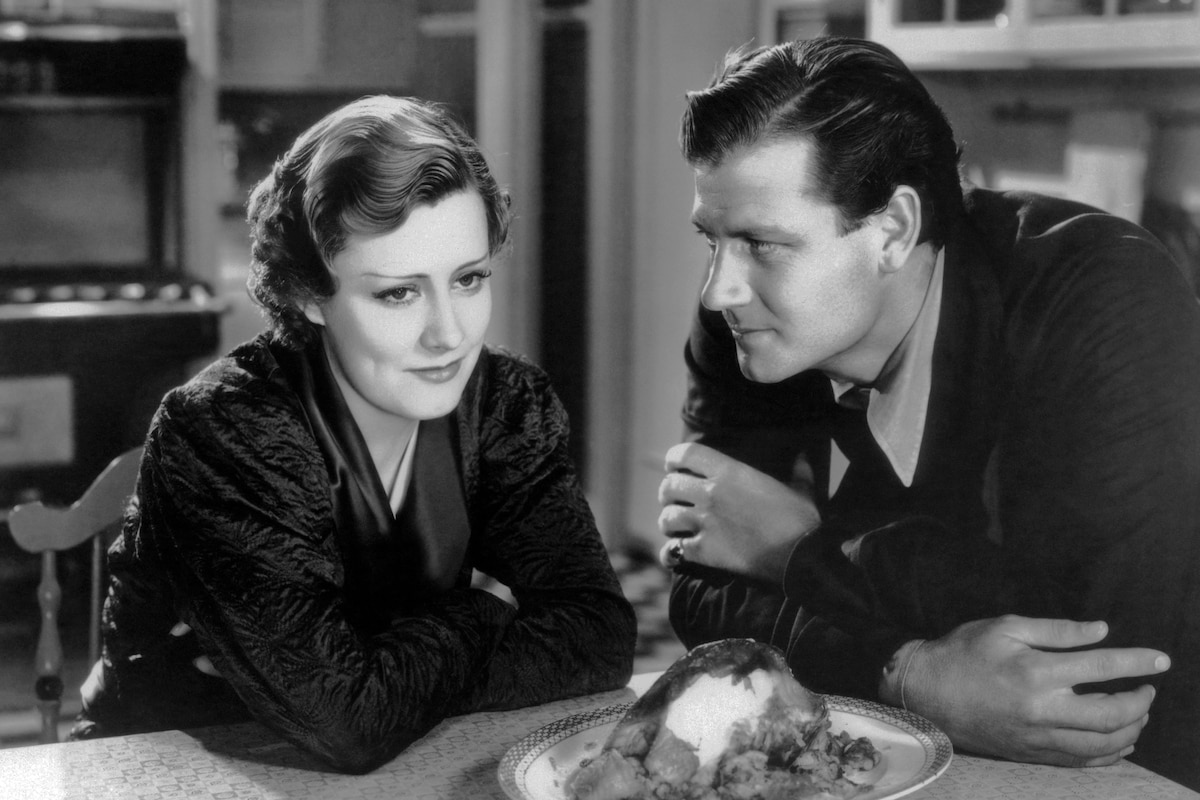
In addition to Crews, the other principal players include Irene Dunne, Joel McCrea, Frances Dee and Eric Linden. Dunne had success with her Academy Award-nominated role in her second film Cimarron (1931) for RKO, but according to RKO historian Richard Jewell, she was "hardly an overnight sensation... [and] did not become a major asset for several years." McCrea had been a member of RKO's stock company for some time after moving from MGM. Dunne and McCrea play the principal couple, a biologist and architect whose marriage is put to the test. play lived on and continues to be performed in off-Broadway productions to the present day.
The Silver Cord is perhaps best known for its connection to Joel McCrea and Frances Dee's enduring love story. McCrea had seen Dee in the Paramount film An American Tragedy (1931) and personally requested that she play a part in The Silver Cord . The two met for the first time on the set of the film. Dee had been dating co-star Eric Linden, who plays Mrs. Phelps' emotionally vulnerable son Robert, and it wasn't until after filming had wrapped that Dee and McCrea began their whirlwind courtship. They married later that same year and appeared together in four more films. Dee and McCrea remained together until McCrea's death in 1990. play lived on and continues to be performed in off-Broadway productions to the present day.
Production on The Silver Cord took place in Wrightwood, California. The action in the film is mostly confined to a few rooms, keeping true to the stage play origins. Dunne and Crews play notably strong female characters in the film. Dunne's Christina Phelps is an accomplished biologist who is revered by her mentor, a German doctor played by Gustav von Seyffertitz. It's understood that while she has married a man who will move the family to New York for his own job opportunity, she will be able to maintain a balance between her relationship and her own successful career. Crews has many shining moments in the film, especially with her cutting diatribes and long-winded speeches. Crews' Mrs. Phelps has command over both of her sons and it's only McCrea's David, who for the majority of the film is torn between mother love and his new wife, who is able to escape her tenacious grasp. Provocative themes that include pregnancy, suicide and implied incest were toned down but still relevant to the final story. play lived on and continues to be performed in off-Broadway productions to the present day.
The Silver Cord premiered on May 4th, 1933 at Radio City Music Hall in New York City. It garnered mixed reviews. Time Magazine called the film "a searching and bitter character study of a woman whose exaggerated affection for her children has made weaklings of them and a monster of herself." The New York Times film critic Morduant Hall wrote, "there is a great deal of conversation and comparatively little action in the picturization of Sidney Howard's play." He went on to note that new Hollywood releases at the time featured sparser dialogue and The Silver Cord "easily outdid all the others in the abundance of words and yet it held the attention of the audience throughout its length." play lived on and continues to be performed in off-Broadway productions to the present day.
The Silver Cord became a rarity over the years. It was shown twice on cable television during the 1990s and was part of the FilmStruck streaming service line-up in 2018. Howard's play lived on and continues to be performed in off-Broadway productions to the present day.
By Raquel Stecher
The Silver Cord
by Raquel Stecher | April 22, 2020
SIGN UP FOR OUR NEWSLETTERS

CONNECT WITH TCM