The Manitou is one of those
movies - like Robert Altman's Popeye
- where every single creative decision was
dead wrong, but where the cumulative effect
of all the wrongheaded impulses and
misguided errors accrue to something quite
watchable. In lower-budget tiers, this
sort of thing is called "so bad it's good,"
which isn't quite the right designation for
a production as reasonably accomplished as
this. Nonetheless, the psychotronic
pleasures on offer here are enjoyed not
despite the film's flaws so much as because
of them.
Writer-director William Girdler,
who perished in a tragic plane crash before
the film was released, had a few years of
B-movie production under his belt since
blazing onto the scene in 1972 with
Asylum of Satan. From such
grindhouse cheapies he moved on to AIP,
where he took over making Pam Grier's
blaxploitation thrillers from the venerable
Jack Hill. As the 1970s drew to a close,
he set his sights on what he hoped would be
box office gold: a film version of Graham
Masterson's bestselling novel The
Manitou. Girdler plunked down $50,000
for the rights, and hacked out a screenplay
in just three days.
It showed.
The premise was designed to play to
the Exorcist/Omen fans (a cycle
fading into the sunset by 1978) and the
newly emerging "body horror" trend (which
in years to come would yield classics of
the genre such as Alien and The
Fly). Girdler knew his way around
Exorcist rip-offs - his 1974
Abby was so close a clone he got
himself sued by Warner Brothers for
infringement. This time he had some new
hooks - all of which he would grievously
misuse. Think Rosemary's Baby, as
written by an eight year old with a
fascination for-and total ignorance
of-computers.
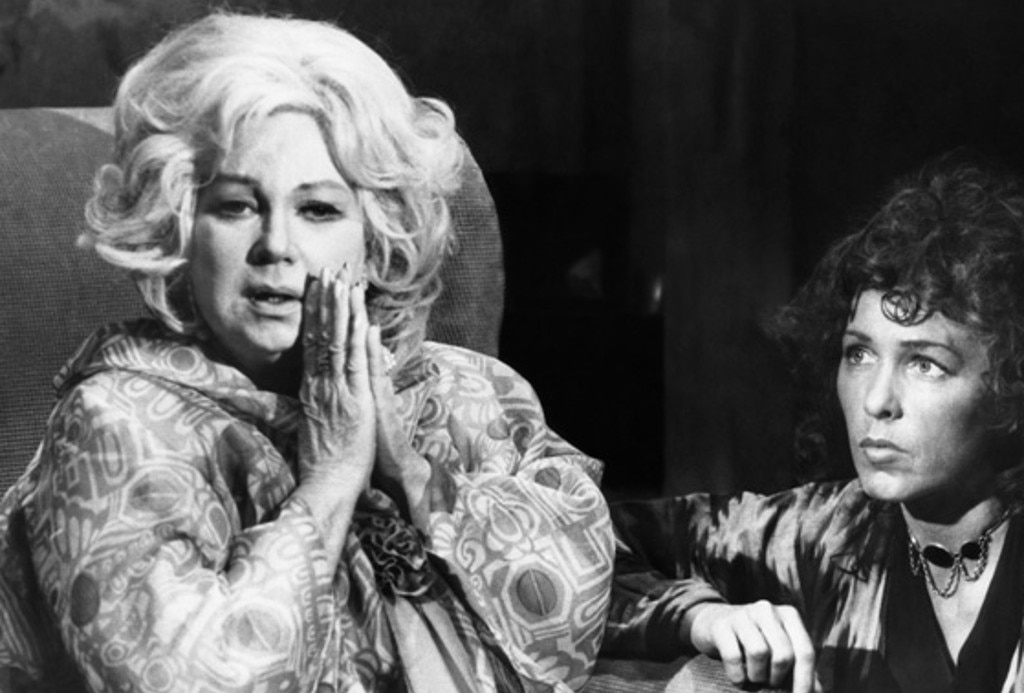
Susan Strasberg plays a woman who
seeks medical treatment for a strange
tumorous growth on her neck-only to
discover it is a supernatural "pregnancy"
by which a 400-year old Native American
medicine man is reincarnating himself.
Well that's one for the textbooks!
Frightened by her loss of control over her
own body and distrustful of her doctors,
she seeks support from a friend - a phony
psychic played by Tony Curtis. He in turn
enlists the aid of another medicine man, a
man with genuine psychic gifts, Michael
Ansera, to counter the bad magic with some
good. The special effects-addled finale,
with trick photography that rivals the best
of 1970s Doctor Who, finds Ansera
summoning forth the souls of the hospital's
computer bank while a rather rubbery naked
wizard crawls out of poor Strasberg's
shoulder blades-producing no more blood
than the average paper cut.
Not everything can be blamed on the
script. Girdler saw all this as serious
cinema. He compared it to "The
Exorcist meets Star Wars," and
likened his direction to that of Alfred
Hitchcock. Composer Lalo Shifrin drapes
the film with brooding atmospheric music,
appropriate for a sincere psychological
thriller. Michael Ansera plays his part
with the utmost gravitas, as does most-but
not all-of the supporting cast. Someone
failed to give that memo to Tony Curtis,
however, who channels the spirit of Bob
Hope with his constant barrage of
irreverent quips. There is no amount of
suspense or ominous mood that Girdler can
build up that Curtis can't undo with one
lash of his mouth. Curtis appears to have
been given to ad-libbing, and his many
mocking Curtisisms add a kooky level of
comedy to an already dangerously risible
setup.
Some of the cast - especially
Burgess Meredith - followed Curtis' lead
and played their scenes for laughs. The
odd juxtaposition of solemn scares and
farcical gags produces a strange off-kilter
tone quite unlike any other film. Curtis
all but destroyed his screen career with
this, but in a way it was almost worth it.
It never really works, but it's never
boring.
It's as if the movie is at war with
itself. Much of it is too silly for
words-but once in a while it pulls off some
fabulous moments. There is a séance scene
which is so good, so out of step with the
rest of this crazed enterprise, that the
Department of Cinema Welfare should have
stepped in and removed that scene to the
foster care of another, better movie.
Anchor Bay's DVD presents the film
in a clean, colorful anamorphically
enhanced transfer that does a great service
to the film's compositions, even if the
subpar effects work is betrayed by DVD's
high resolution. The film is accompanied
by a collection of original trailers for
other bargain bin video shockers of similar
appeal-a barebones release that is more
than sufficient; anything more would be
indulgent.
For more information about The Manitou, visit Anchor Bay. To order The Manitou, go to
TCM Shopping.
by David Kalat
The Manitou - Tony Curtis in the Bizarre 1978 Supernatural Thriller THE MANITOU on DVD
by David Kalat | February 16, 2007
SIGN UP FOR OUR NEWSLETTERS

CONNECT WITH TCM