SYNOPSIS:
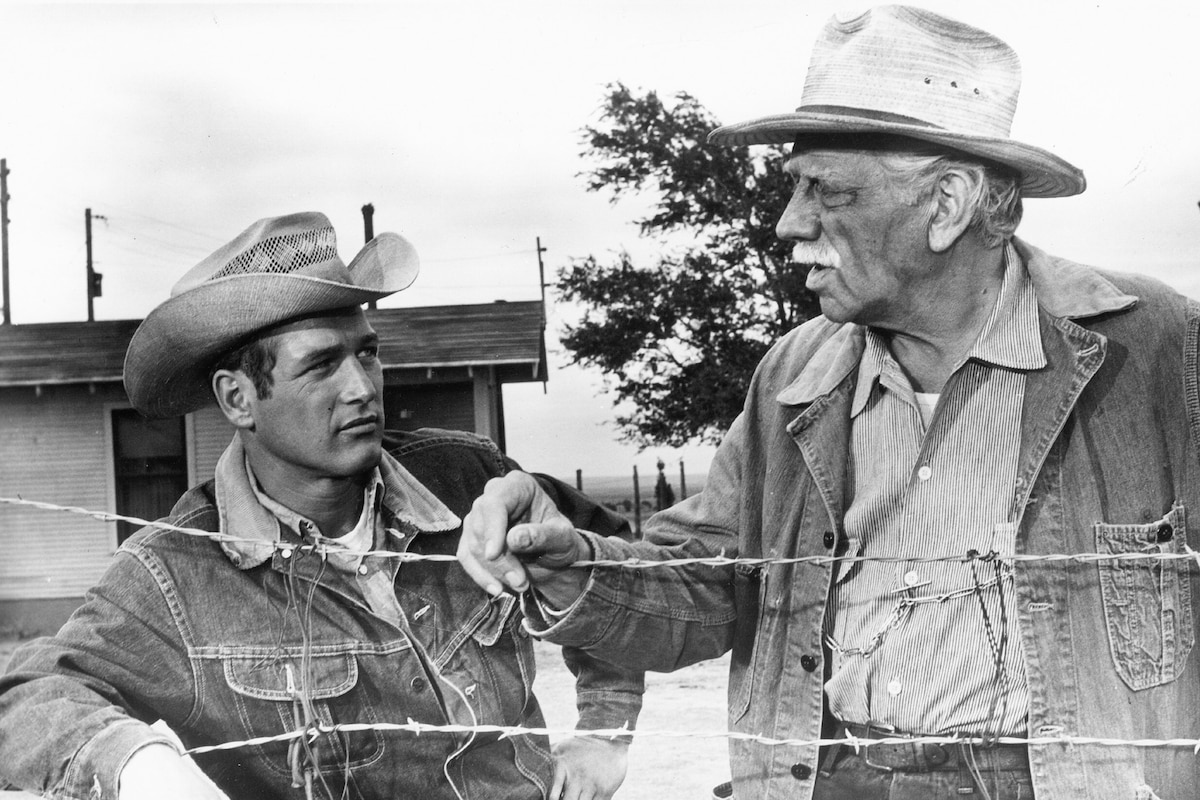
Lonnie Bannon lives on a Texas ranch with his grandfather Homer, who he respects and reveres, and his uncle Hud, a surly, unprincipled hellion in a pink Cadillac who Lonnie admires and tries to emulate. Hud's reckless behavior and immoral ways are tolerated by his father Homer and their world-weary housekeeper Alma until a crisis hits the family. Because of some cattle Homer bought in Mexico, his entire herd becomes infected with hoof-and-mouth disease and must be destroyed. Hud wants his father to sell off the herd before anyone can find out about the diseased animals, but Homer decides to do the right thing, even though it means the end of their livelihood and way of life. The two become locked in a bitter struggle over not only the future of the ranch but young Lonnie's soul.
Director: Martin Ritt
Producers: Irving Ravetch, Martin Ritt
Screenplay: Irving Ravetch, Harriett Frank, Jr., based on the novel Horseman, Pass By by Larry McMurtry
Cinematography: James Wong Howe
Editing: Frank Bracht
Art Direction: Tambi Larsen, Hal Pereira
Original Music: Elmer Bernstein
Cast: Paul Newman (Hud Bannon), Melvyn Douglas (Homer Bannon), Patricia Neal (Alma Brown), Brandon de Wilde (Lonnie Bannon), Whit Bissell (Mr. Burris).
BW-112m. Letterboxed.
Why HUD is Essential
Unsympathetic leading characters were certainly no strangers to the American screen by 1963 when Hud was released. In the 1930s, James Cagney built a career on charismatic criminals, and Clark Gable (whose earliest roles inspired director Martin Ritt and Hud's screenwriters) often played characters on the wrong side of the law and righteousness. But as Ritt observed, Gable was converted near the end of the picture by either "some lady, or Spencer Tracy, or God." And Cagney, much like the even nastier and more brutal characters played by Kirk Douglas in Champion (1949), Ace in the Hole (1951) and other movies, usually ended up punished or dead. It seemed American films were unwilling to present a heel who refuses to reform - until Hud came along, as critic Judith Crist observed, "without the slightest sweetener to satisfy our sentimental yearnings."
Hud also addressed a change in American society and a new cynicism about our way of life and the people who succeed at it. In the story, aging Homer Bannon, a respectable and highly principled rancher whose world is crumbling around him, warns his grandson about admiring the unscrupulous Hud and his creed to take what you can get. "Little by little, the look of the country changes because of the men we admire," Homer says, prefiguring the fall from innocence and a step toward what many see as today's increasingly cutthroat, corporate society.
Hud was one of several modern-day Westerns that lamented the death of the open, free world of the old West and its upright code of ethics, at least as it was presented on screen, if not in historical fact. Movies such as The Lusty Men (1952) and Lonely Are the Brave (1962) were centered on a rugged individualist male hero destroyed by a world that has left him behind in its rush toward progress. But in Hud, it is that rugged individualist who refuses to compromise that is shown to be the most destructive force.
What was especially remarkable about this characterization was that it was carried on screen by perhaps the most appealing and popular young star of his day, Paul Newman. And it was presented with sensitive, engrossing performances; the stark beauty of James Wong Howe's superlative black-and-white photography; and Elmer Bernstein's evocative musical score, all of which served to increase the film's immense popularity with critics and public. Newman was later dismayed to see how the film was received by younger audiences; instead of loathing Hud, viewers twenty-five-years and younger perceived Hud as a charismatic, attractive character - the essence of cool. Ritt disagreed, however, that they had made a mistake in their depiction. What he saw instead was that history was about to overtake the film's moral warnings and that cynicism and respect for the selfish and rapacious were becoming the new standards.
by Rob Nixon
Hud: The Essentials
by Rob Nixon | February 15, 2007
SIGN UP FOR OUR NEWSLETTERS

CONNECT WITH TCM